IB Maths AI HL starter questions: weeks 27–40
42 short questions to open a lesson for IB Maths Applications and Interpretation HL, weeks 27–40 of the teaching year, three or four a week. Each question is shown as an image with its text underneath; answers and mark schemes stay with teachers.
Week 27
Question 1: Review: Voronoi Diagrams
In a Voronoi diagram, what geometrical line separates two adjacent sites?
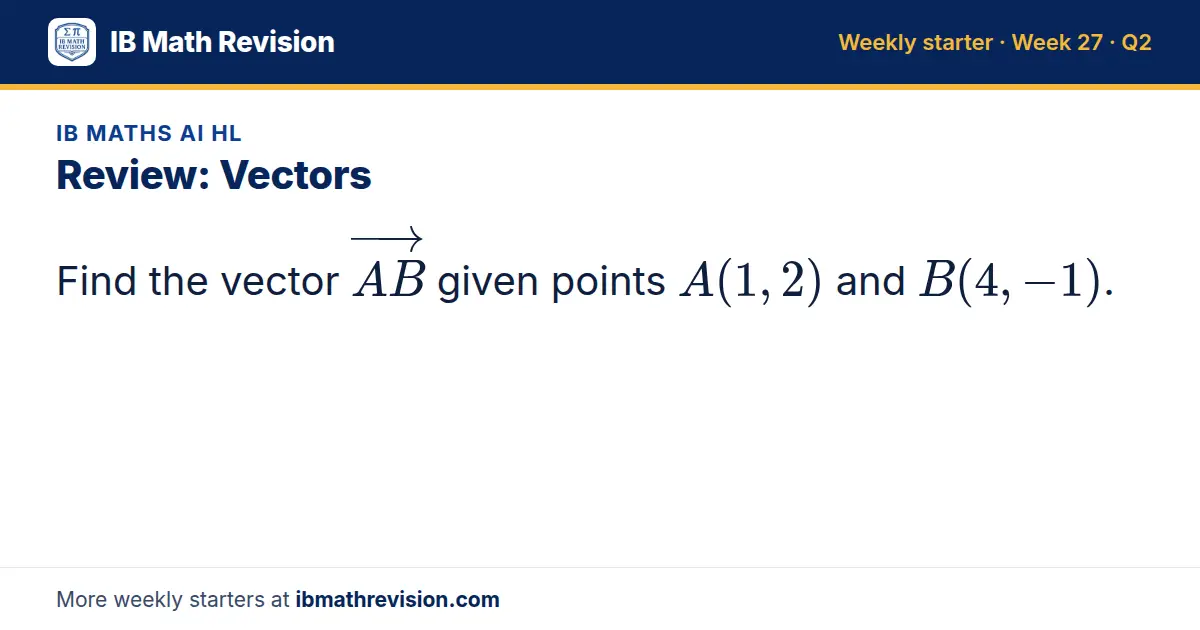
Question 2: Review: Vectors
Find the vector AB given points A(1,2) and B(4,-1).
Question 3: Review: Vector Angles
Calculate the angle between two identical non-zero vectors.
Week 28
Question 1: Review: Hamiltonian Cycles
Define a Hamiltonian cycle in a graph.
Question 2: Review: Complete Graphs
What does a complete graph K_4 indicate about its vertices?
Question 3: Review: Markov Chains
In a state transition diagram, what do the directed edges represent?
Week 29
Question 1: Review: Spearman Correlation
What is the possible range of values for Spearman's rank correlation coefficient r_s?
Question 2: Review: Coefficient of Determination
What does a coefficient of determination R² = 1 mean for a set of data and a regression model?
Question 3: Review: Correlation
Is Spearman's rank correlation coefficient highly sensitive to extreme outliers?
Week 30
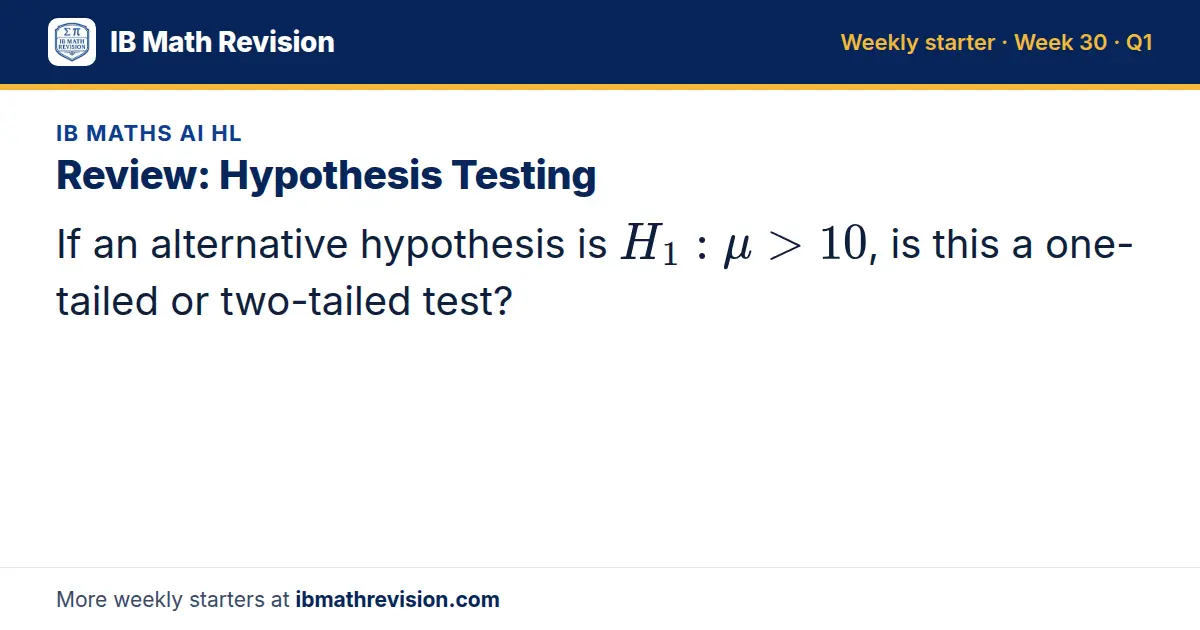
Question 1: Review: Hypothesis Testing
If an alternative hypothesis is H_1: μ > 10, is this a one-tailed or two-tailed test?
Question 2: Review: Chi-Square Test
For a ² goodness of fit test with 5 categories, what is the number of degrees of freedom?
Question 3: Review: t-tests
What test should you use to compare the means of two independent normally distributed populations with unknown variances?
Week 31
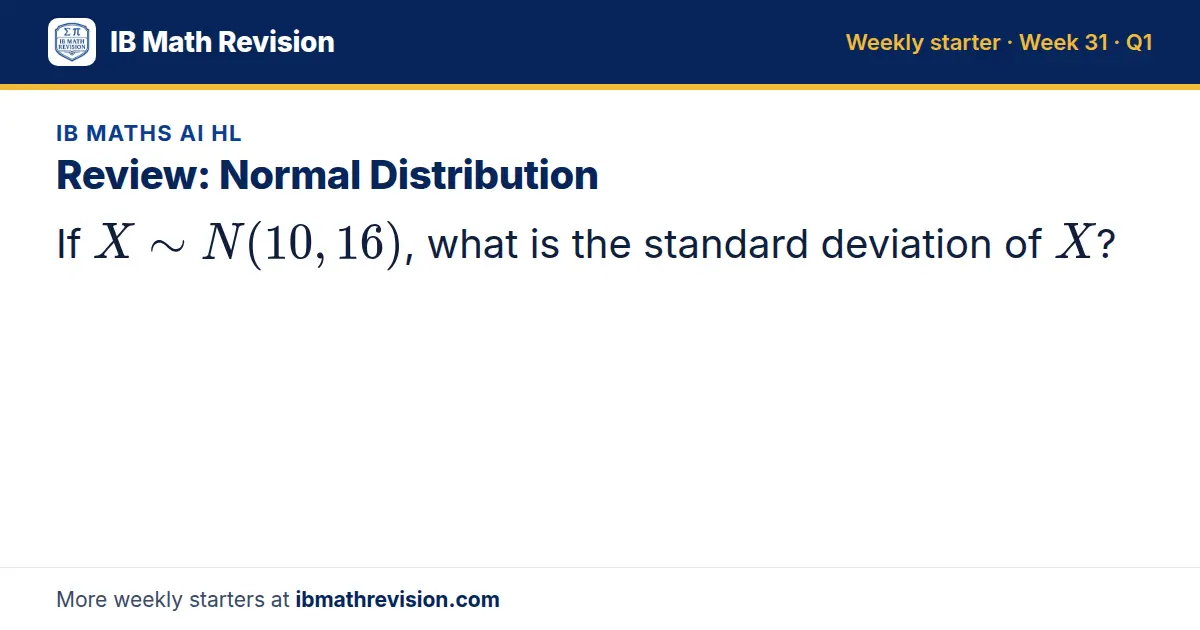
Question 1: Review: Normal Distribution
If X N(10, 16), what is the standard deviation of X?
Question 2: Review: Poisson Distribution
Which distribution models the number of independent events occurring in a fixed interval at a uniform average rate?
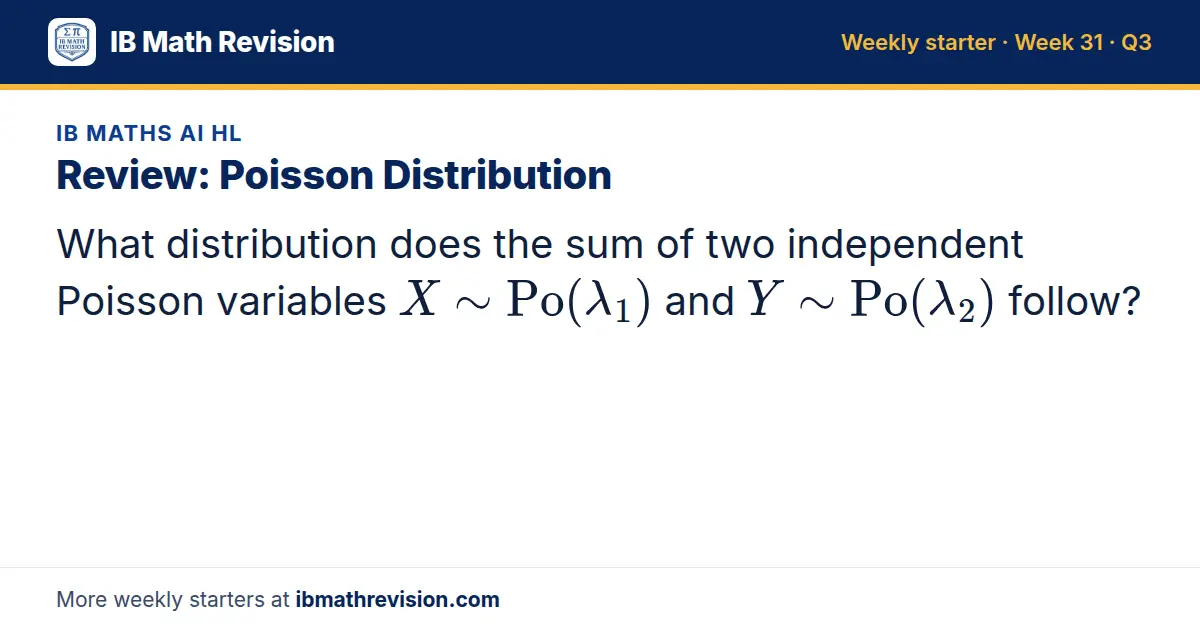
Question 3: Review: Poisson Distribution
What distribution does the sum of two independent Poisson variables X Po(λ_1) and Y Po(λ_2) follow?
Week 32
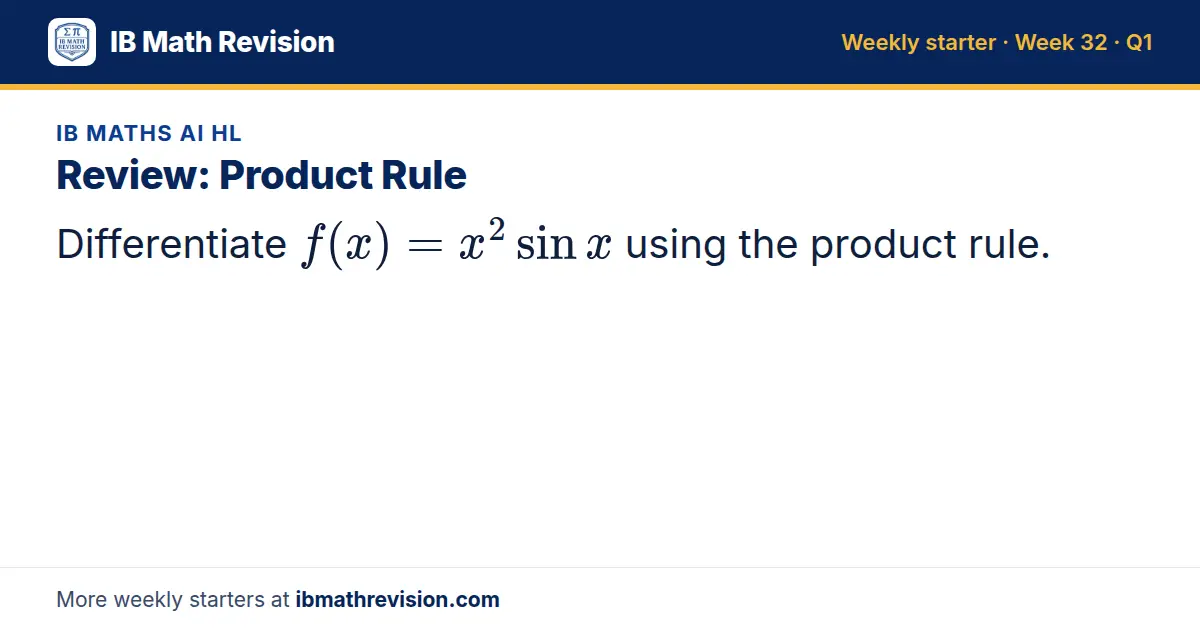
Question 1: Review: Product Rule
Differentiate f(x) = x² sin x using the product rule.
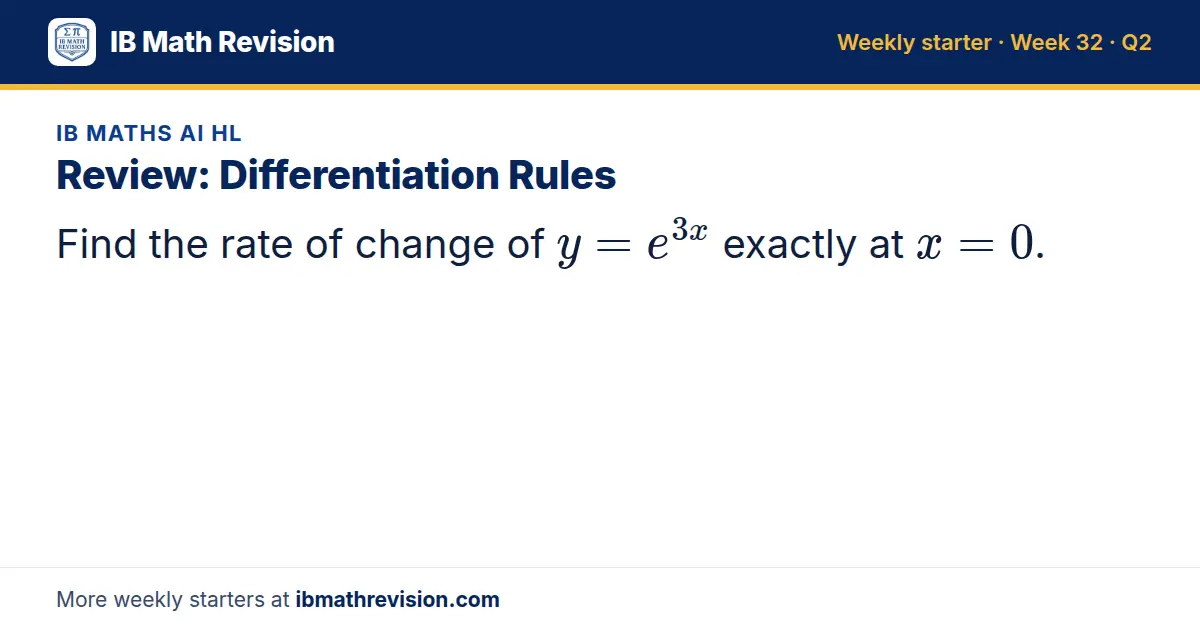
Question 2: Review: Differentiation Rules
Find the rate of change of y = e^(3x) exactly at x=0.
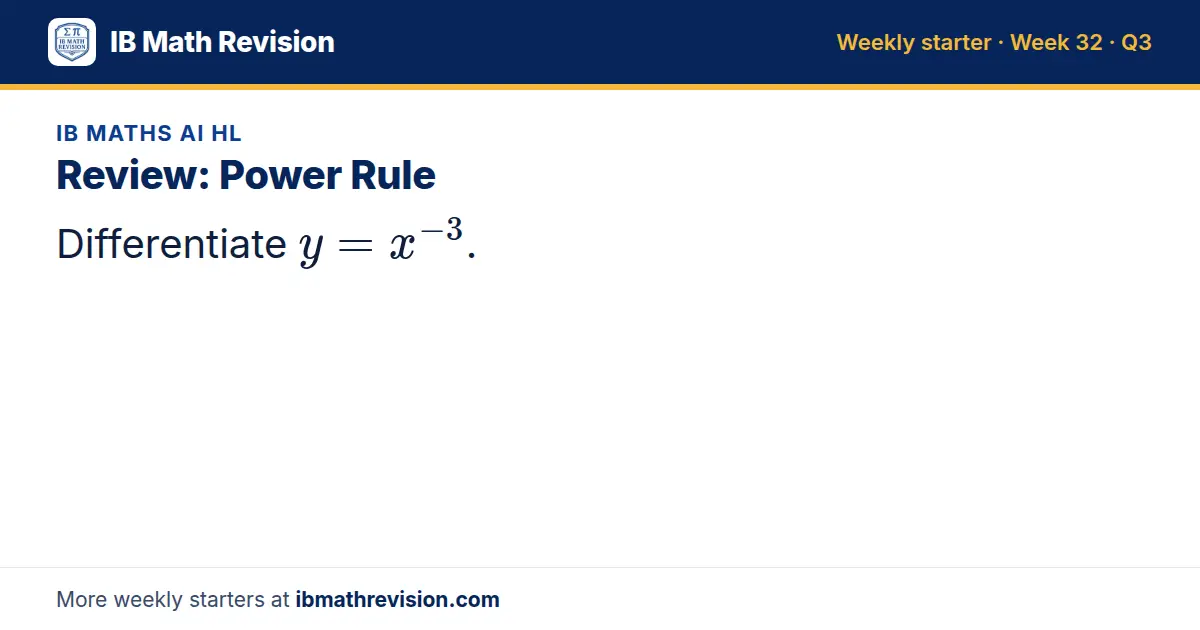
Question 3: Review: Power Rule
Differentiate y = x⁻³.
Week 33
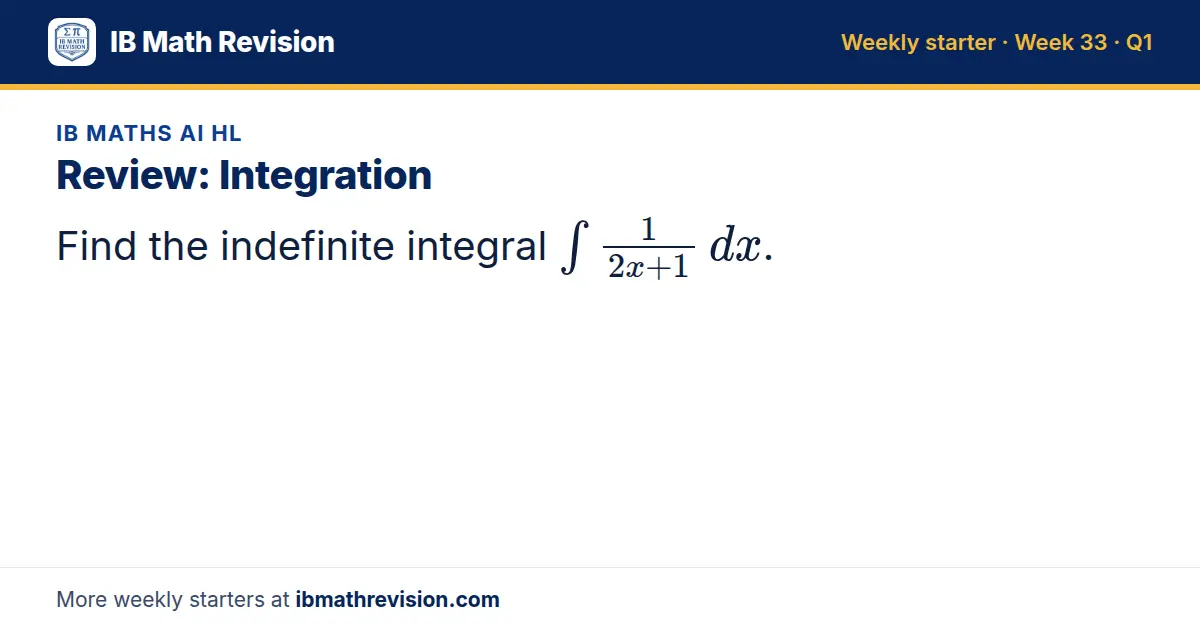
Question 1: Review: Integration
Find the indefinite integral ∫ 1/(2x+1) dx.
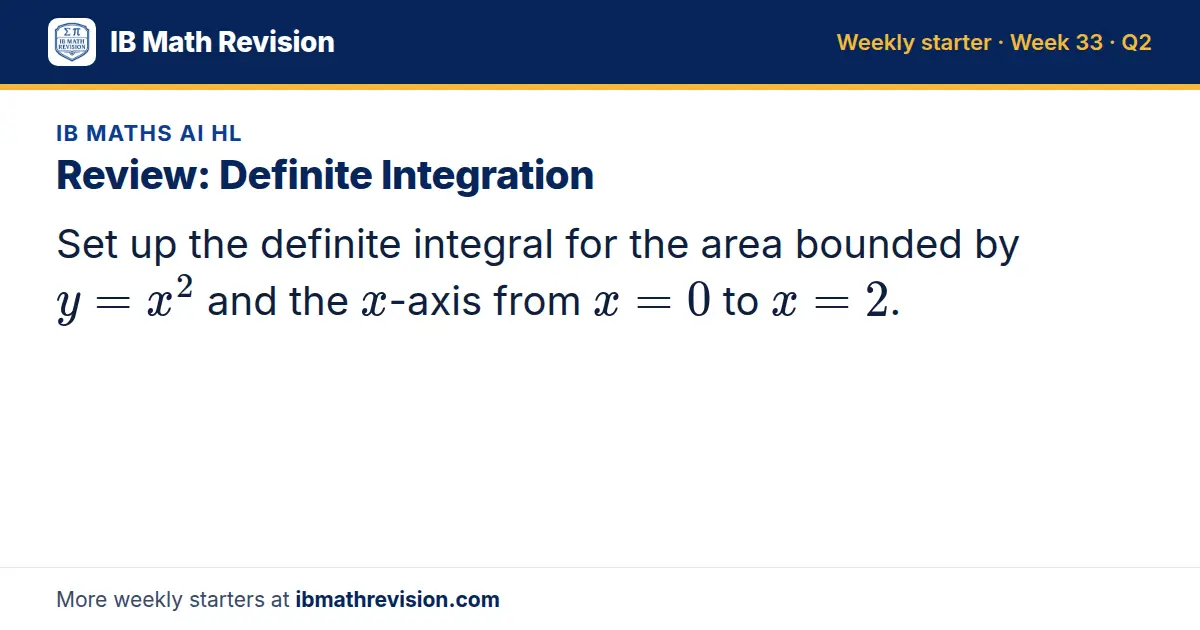
Question 2: Review: Definite Integration
Set up the definite integral for the area bounded by y=x² and the x-axis from x=0 to x=2.
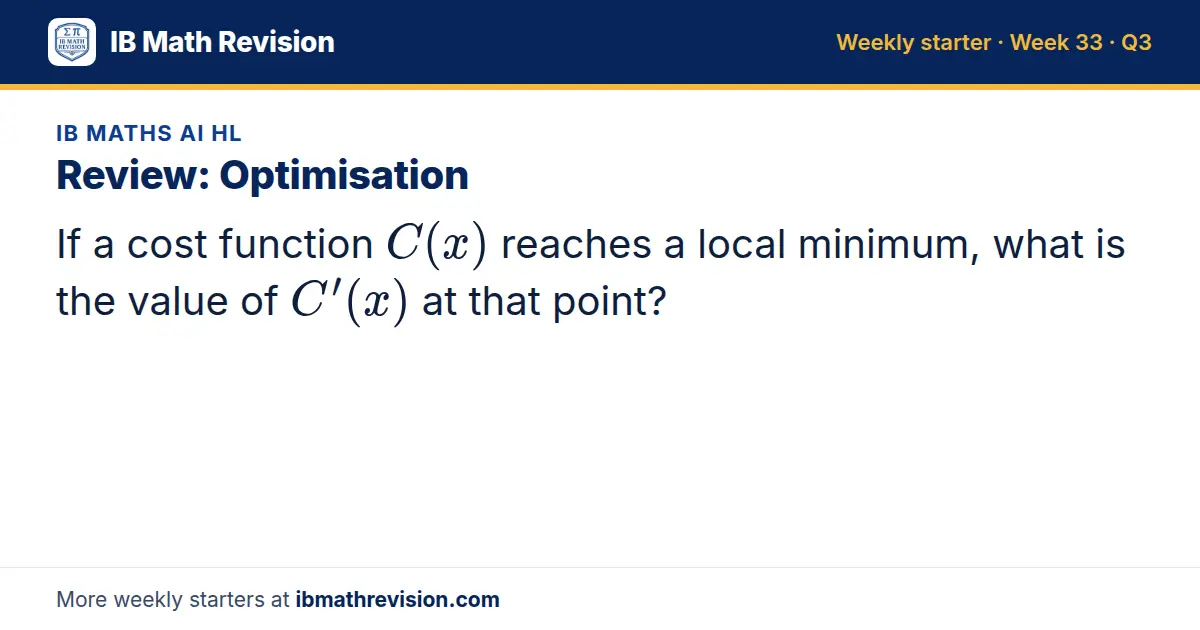
Question 3: Review: Optimisation
If a cost function C(x) reaches a local minimum, what is the value of C'(x) at that point?
Week 34
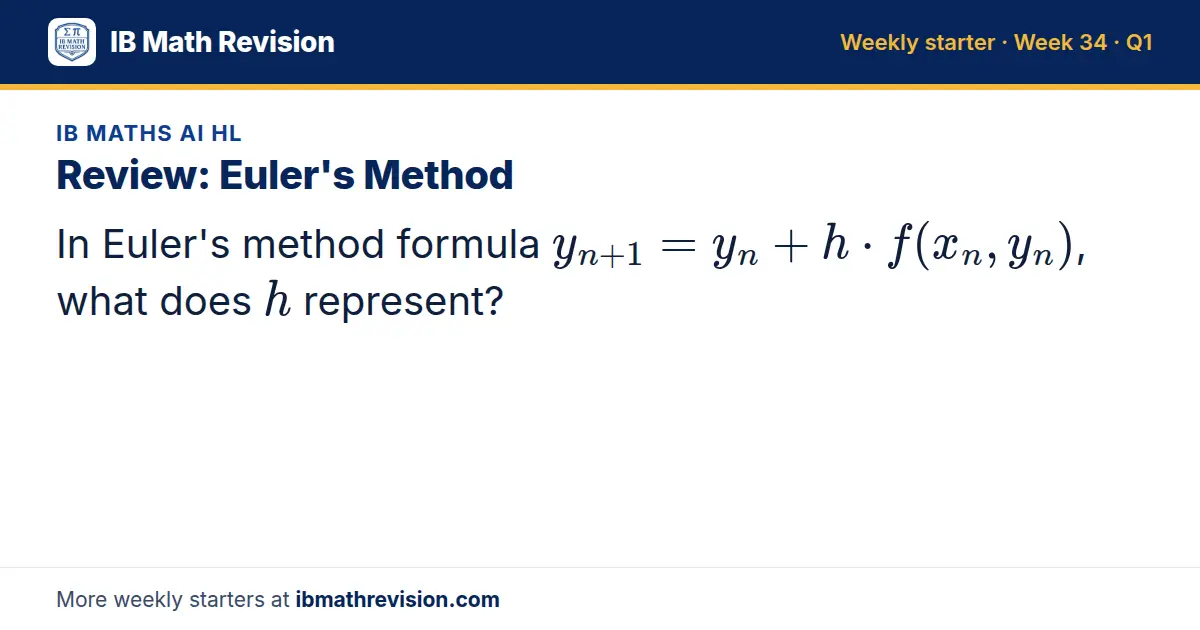
Question 1: Review: Euler's Method
In Euler's method formula y_n+1 = y_n + h · f(x_n, y_n), what does h represent?
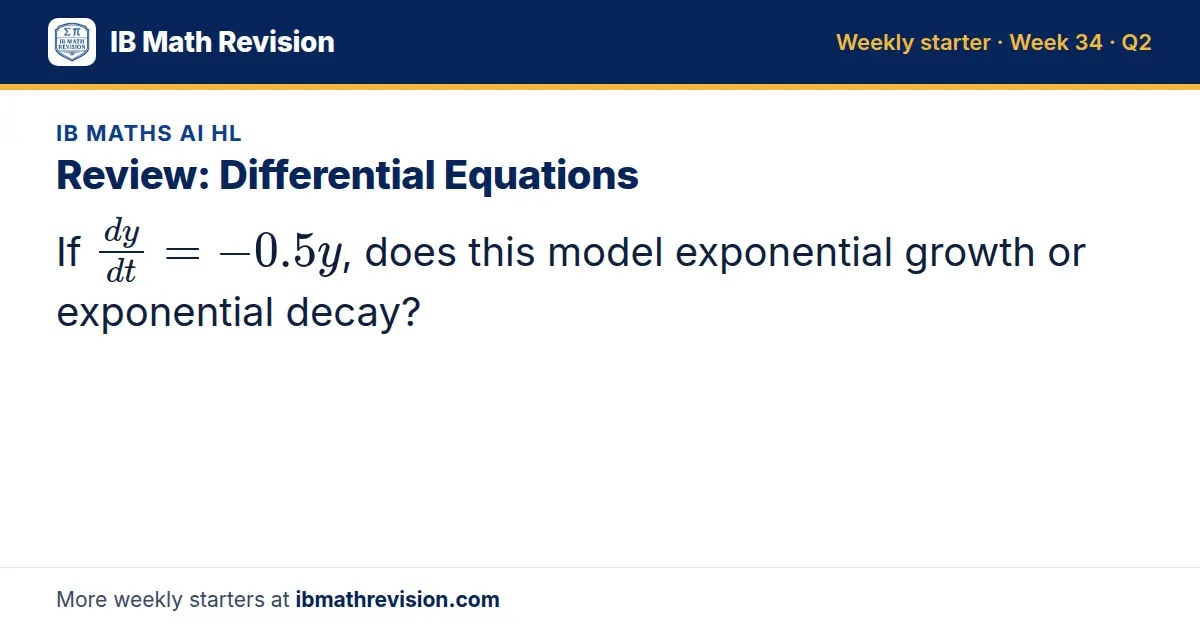
Question 2: Review: Differential Equations
If dy/dt = -0.5y, does this model exponential growth or exponential decay?
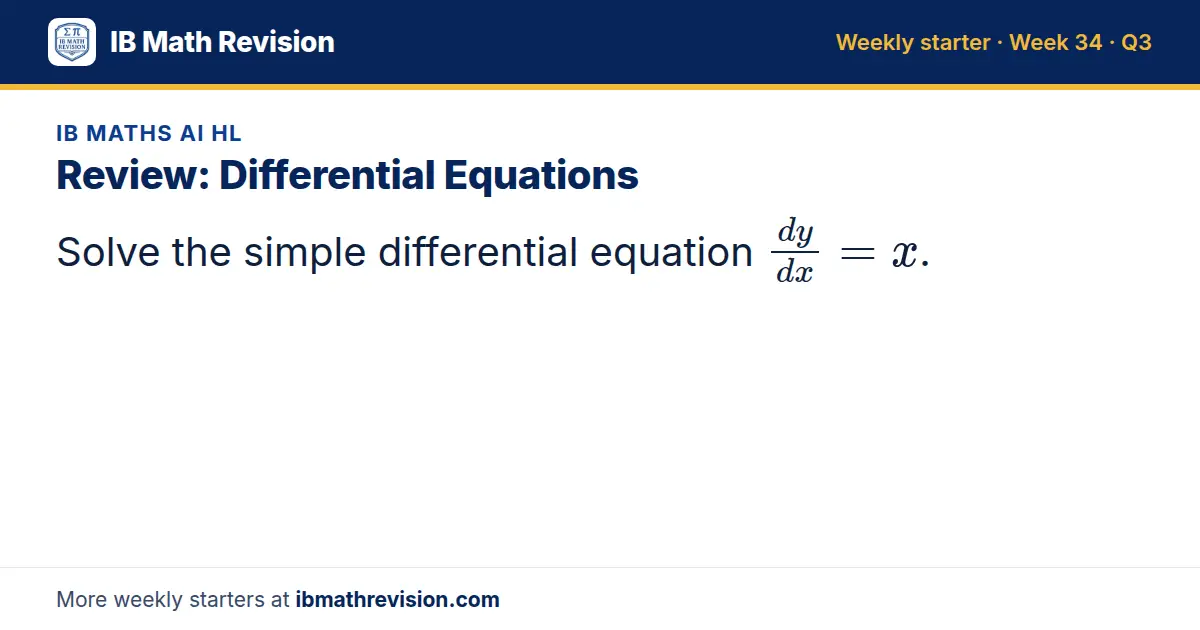
Question 3: Review: Differential Equations
Solve the simple differential equation dy/dx = x.
Week 35
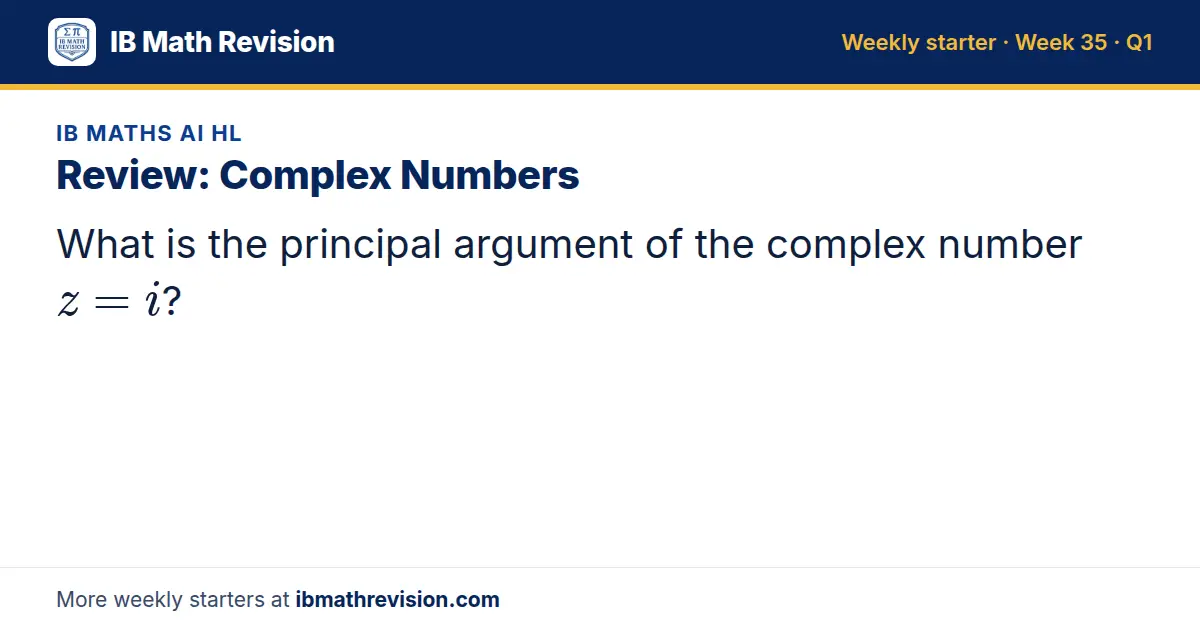
Question 1: Review: Complex Numbers
What is the principal argument of the complex number z = i?
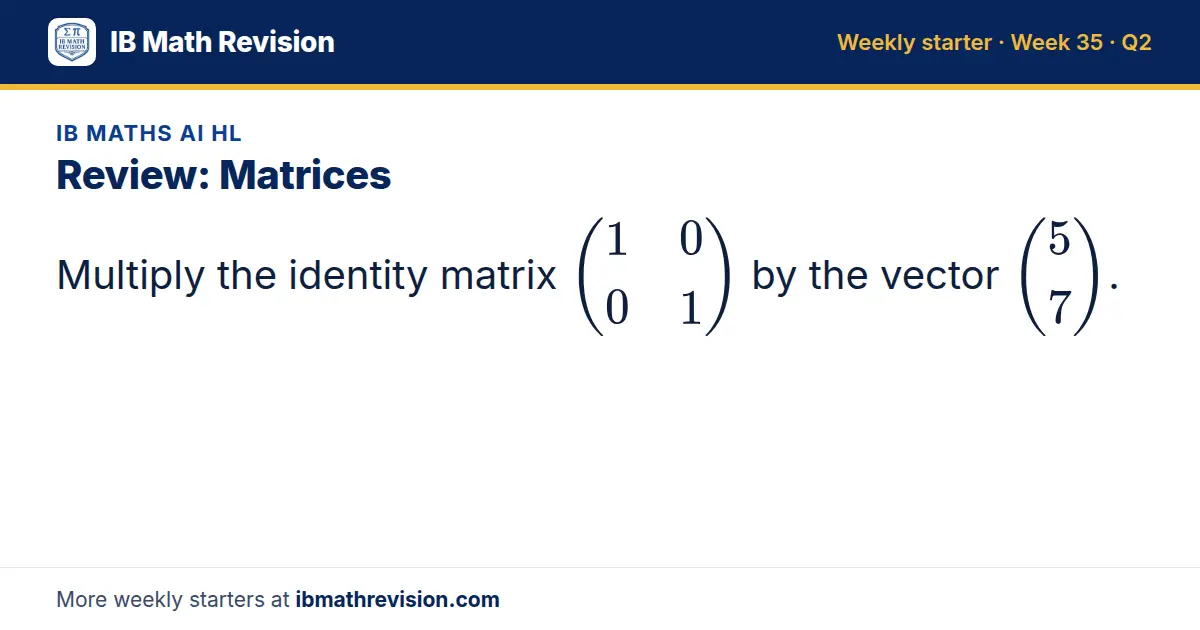
Question 2: Review: Matrices
Multiply the identity matrix 1 0; 0 1 by the vector 5; 7.
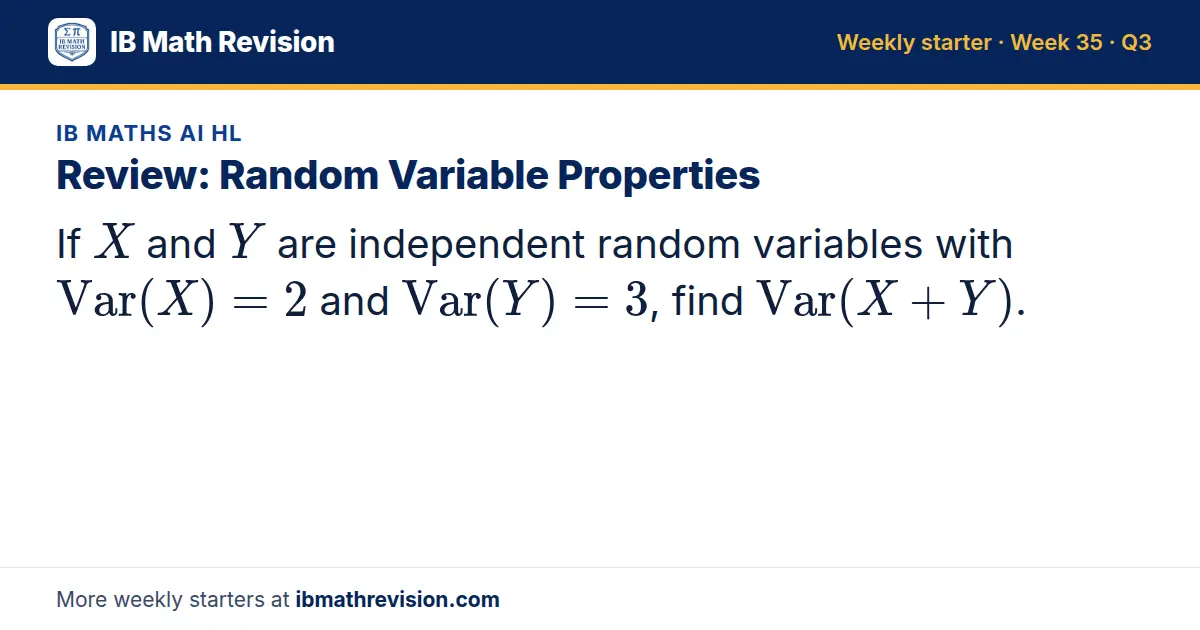
Question 3: Review: Random Variable Properties
If X and Y are independent random variables with Var(X)=2 and Var(Y)=3, find Var(X+Y).
Week 36
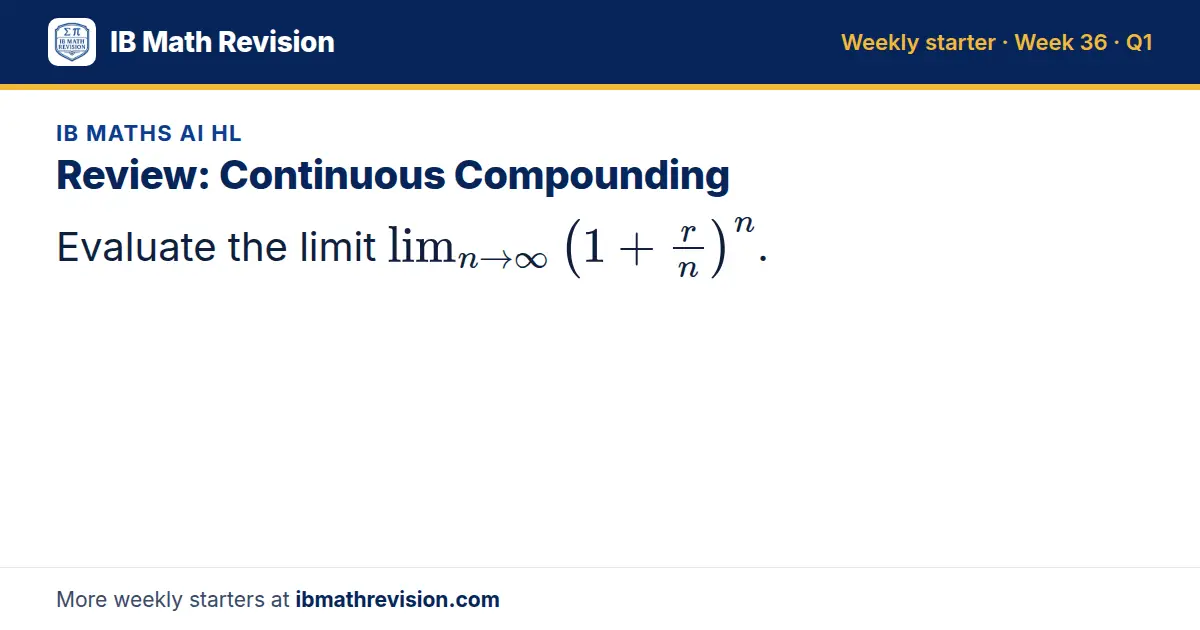
Question 1: Review: Continuous Compounding
Evaluate the limit lim_n → ∞ (1 + r/n)^n.
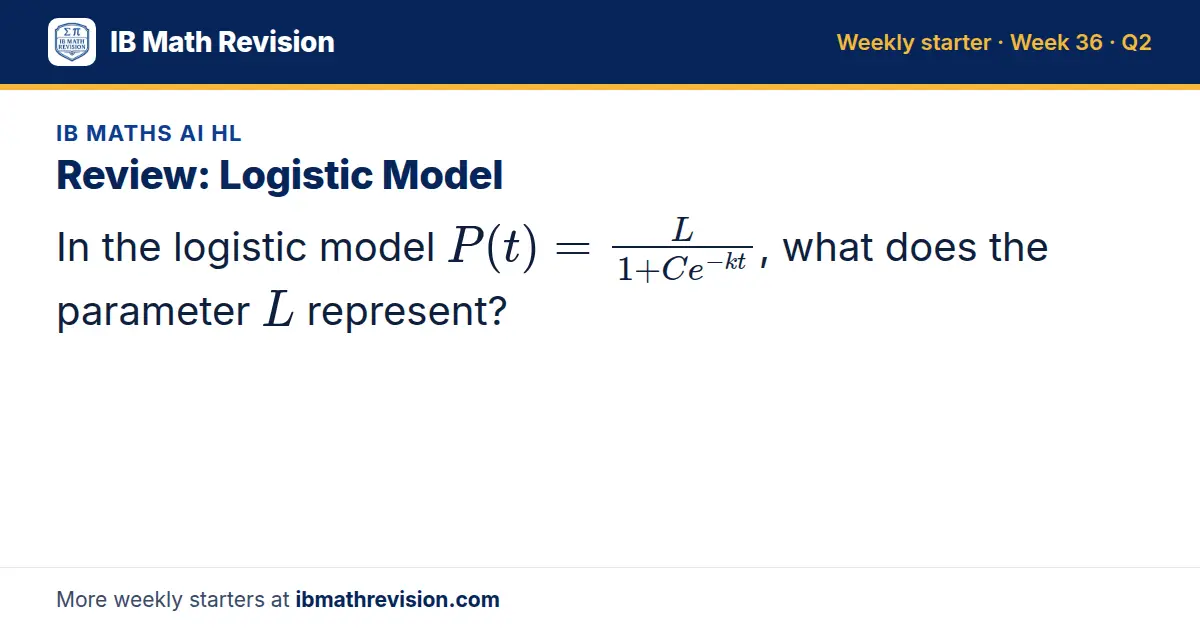
Question 2: Review: Logistic Model
In the logistic model P(t) = L/(1 + C e^(-kt)), what does the parameter L represent?
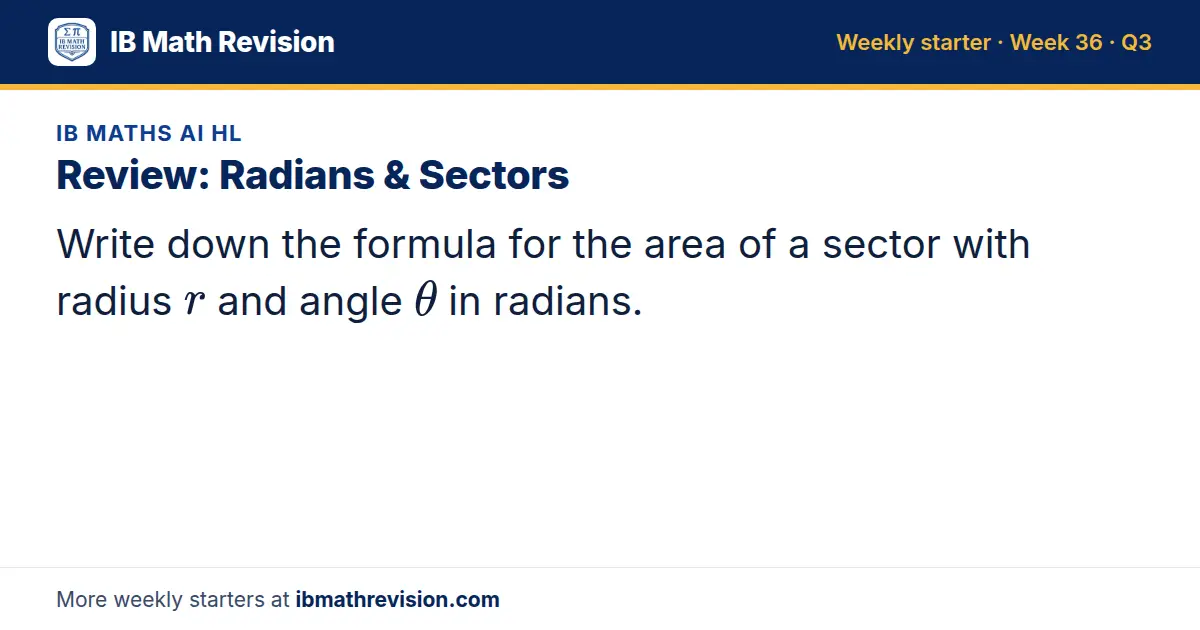
Question 3: Review: Radians & Sectors
Write down the formula for the area of a sector with radius r and angle θ in radians.
Week 37
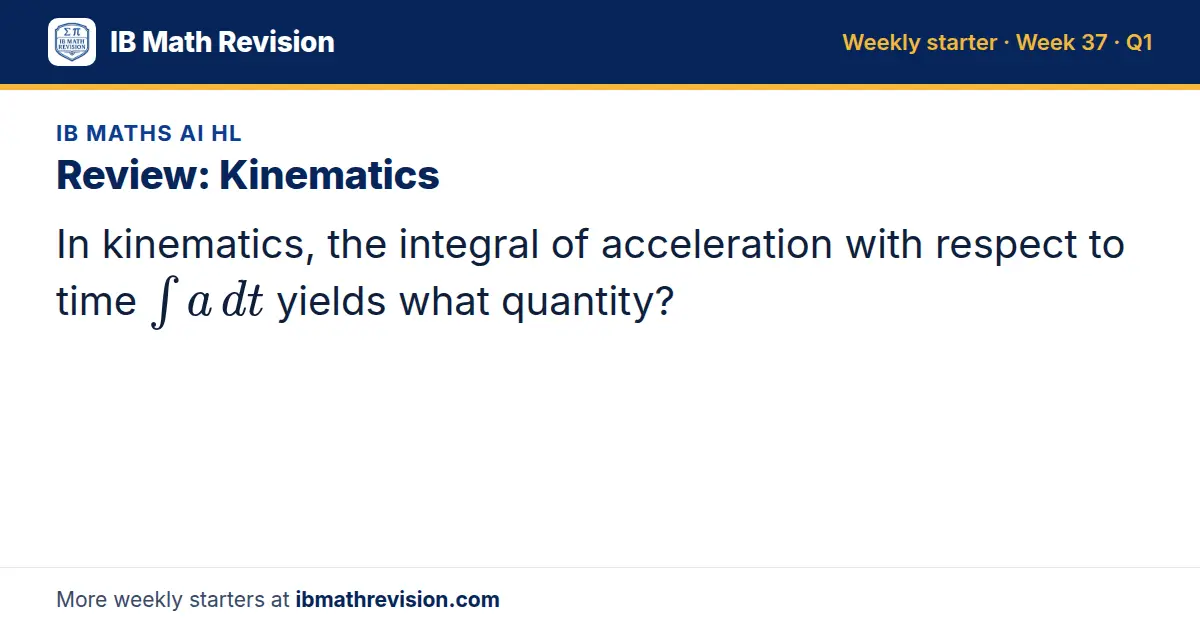
Question 1: Review: Kinematics
In kinematics, the integral of acceleration with respect to time ∫ a dt yields what quantity?
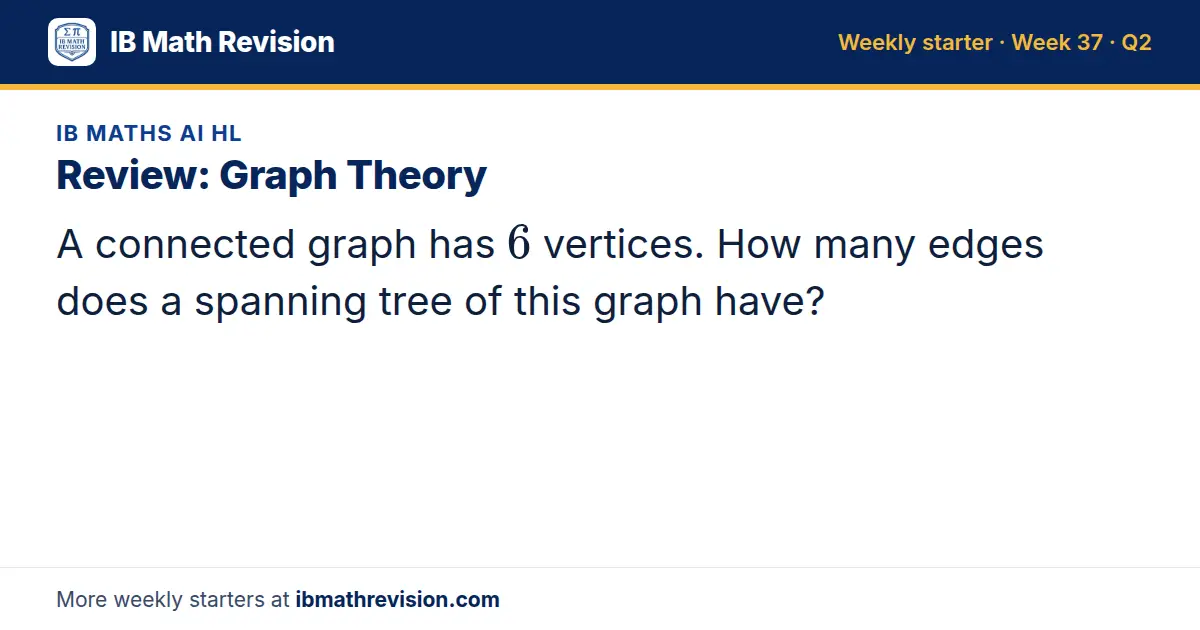
Question 2: Review: Graph Theory
A connected graph has 6 vertices. How many edges does a spanning tree of this graph have?
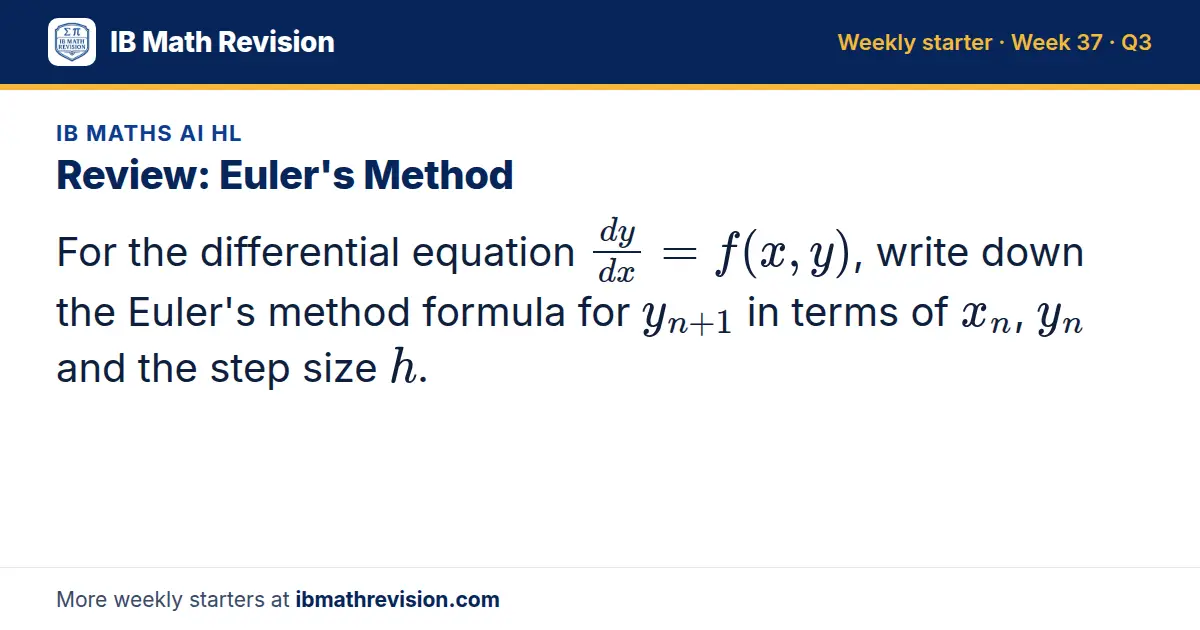
Question 3: Review: Euler's Method
For the differential equation dy/dx = f(x, y), write down the Euler's method formula for y_n+1 in terms of x_n, y_n and the step size h.
Week 38
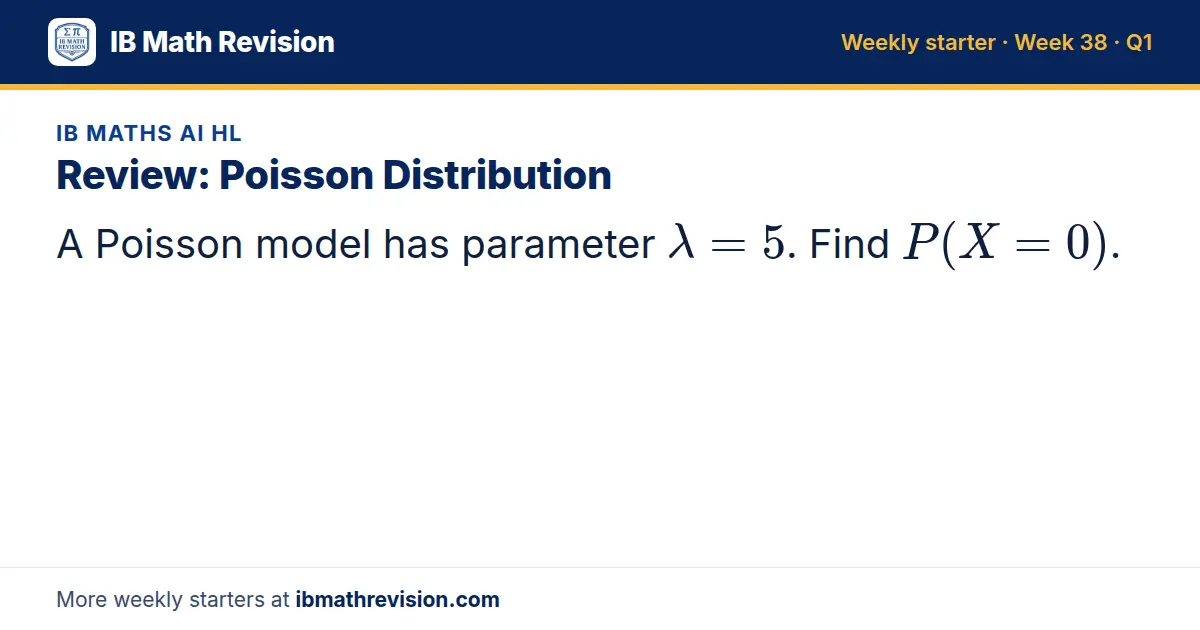
Question 1: Review: Poisson Distribution
A Poisson model has parameter λ = 5. Find P(X=0).
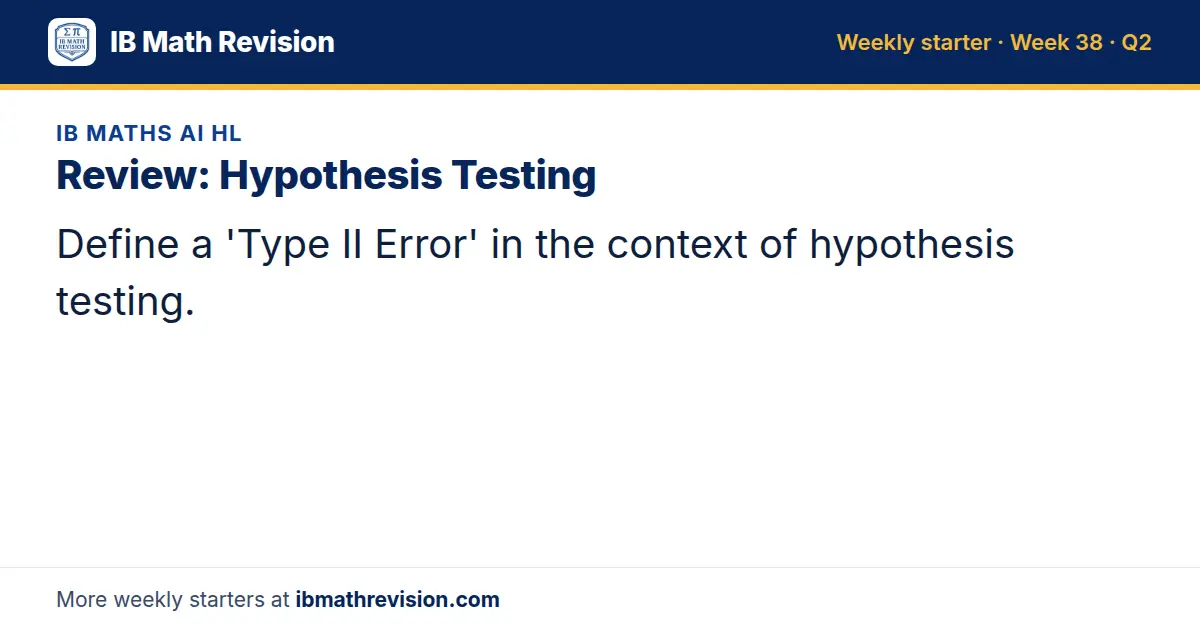
Question 2: Review: Hypothesis Testing
Define a 'Type II Error' in the context of hypothesis testing.
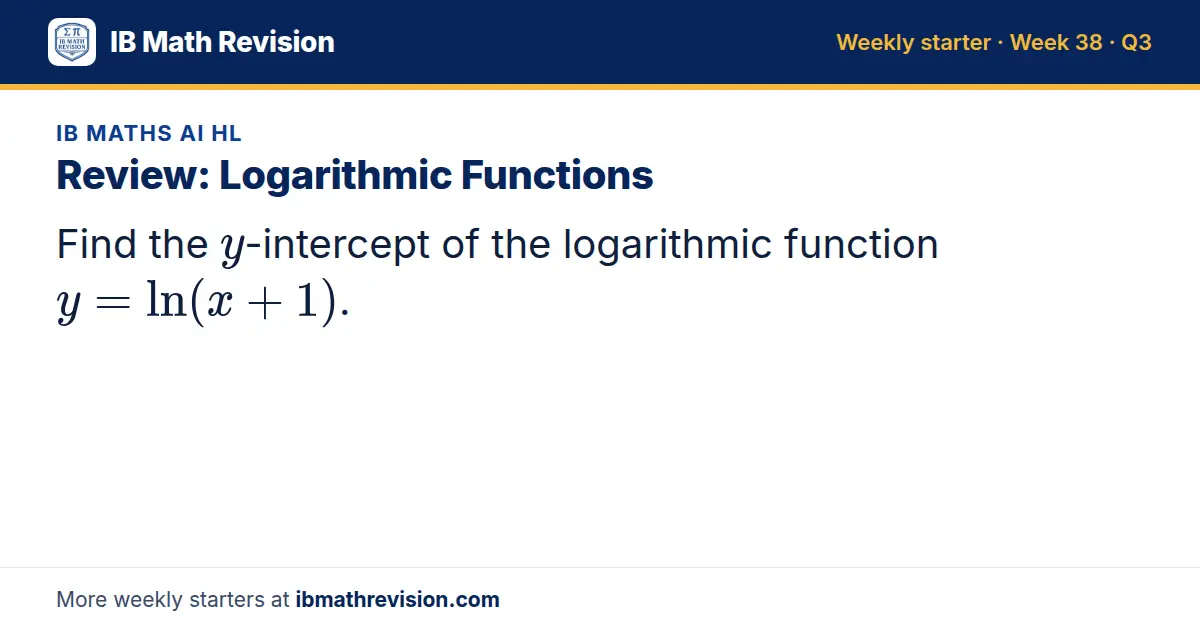
Question 3: Review: Logarithmic Functions
Find the y-intercept of the logarithmic function y = ln(x+1).
Week 39
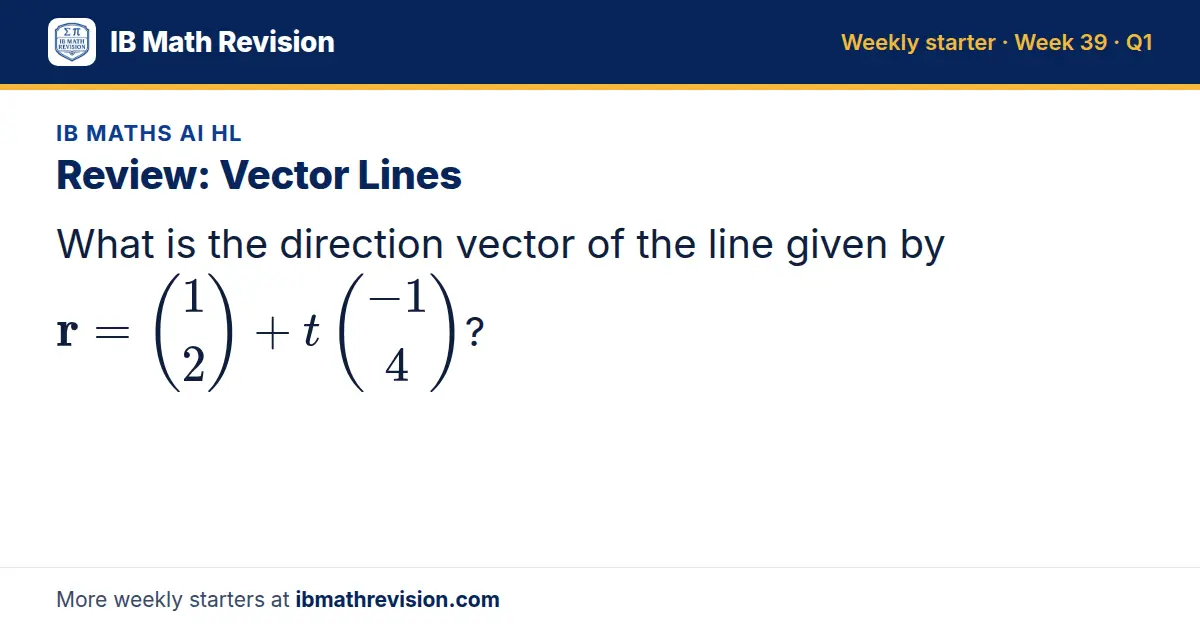
Question 1: Review: Vector Lines
What is the direction vector of the line given by r = 1; 2 + t -1; 4?
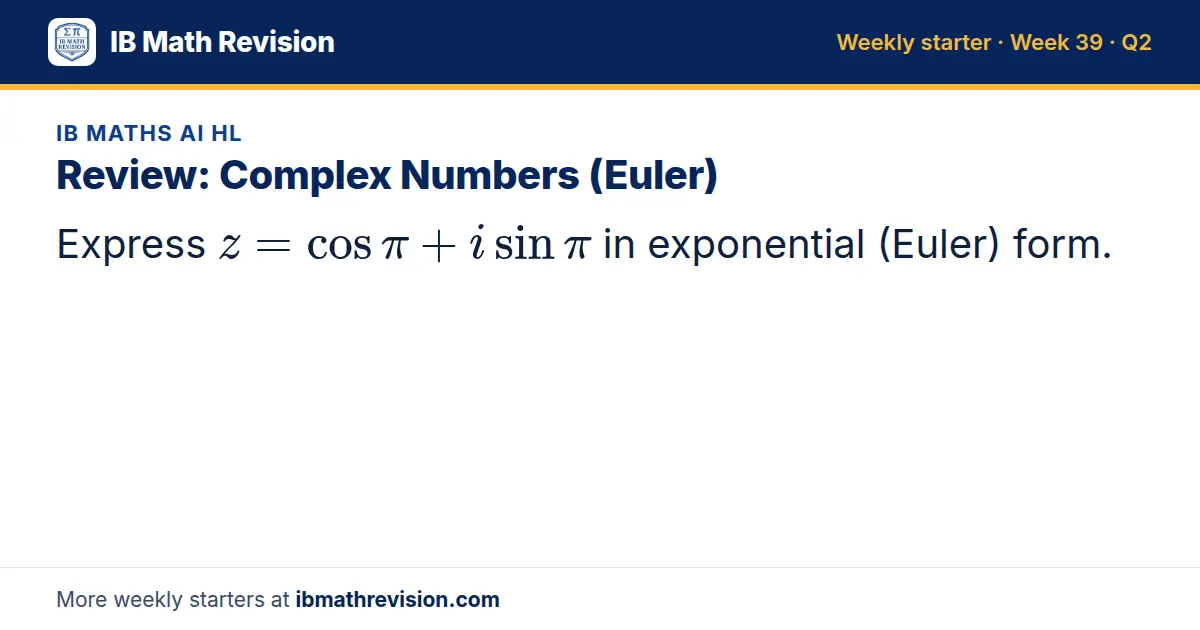
Question 2: Review: Complex Numbers (Euler)
Express z = cos π + i sin π in exponential (Euler) form.
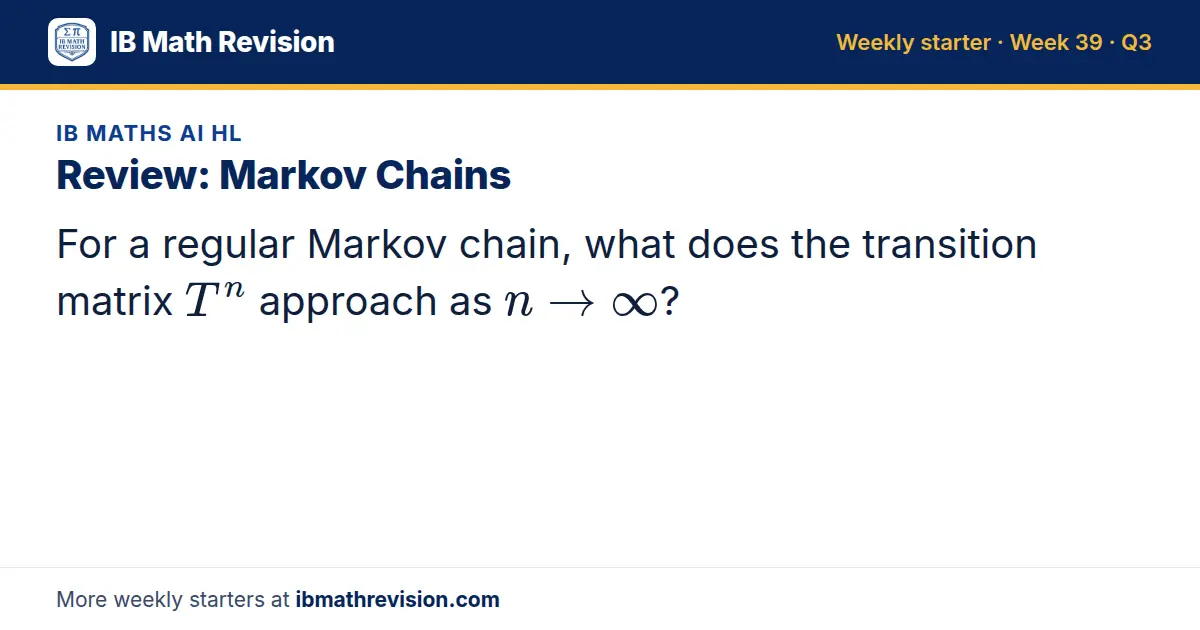
Question 3: Review: Markov Chains
For a regular Markov chain, what does the transition matrix T^n approach as n → ∞?
Week 40
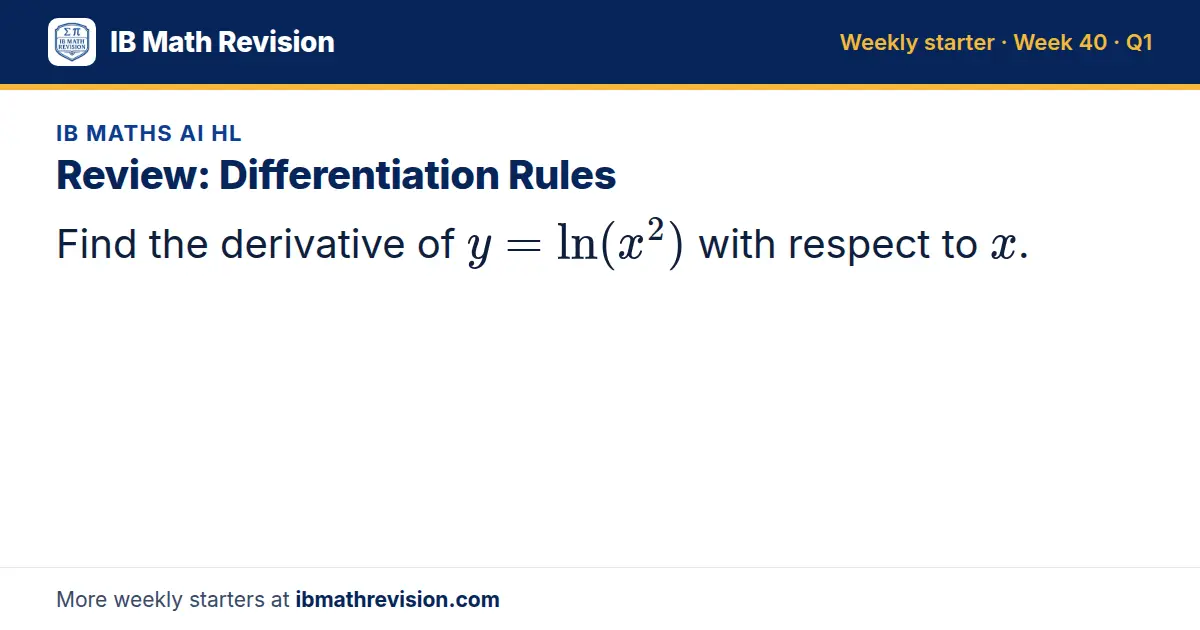
Question 1: Review: Differentiation Rules
Find the derivative of y = ln(x²) with respect to x.
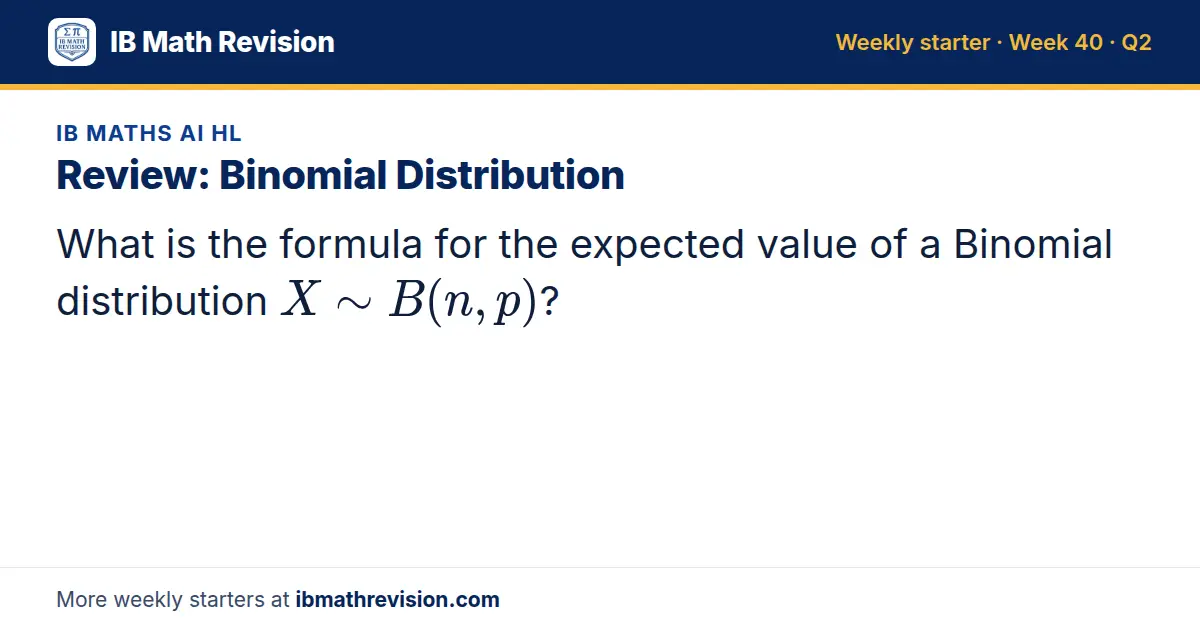
Question 2: Review: Binomial Distribution
What is the formula for the expected value of a Binomial distribution X B(n,p)?
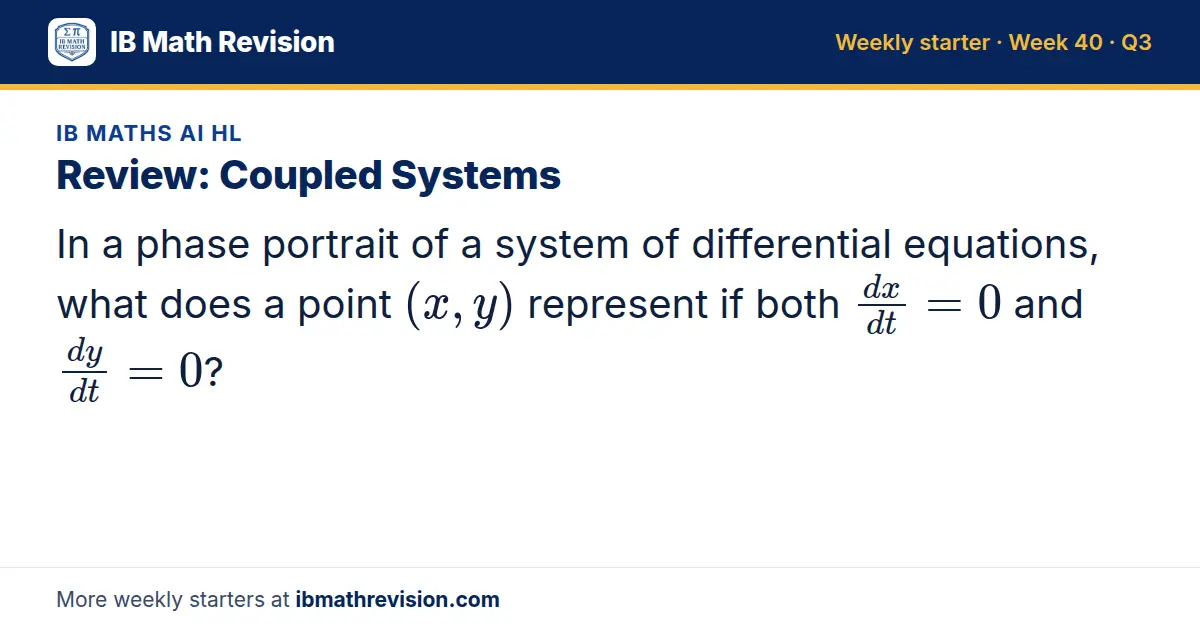
Question 3: Review: Coupled Systems
In a phase portrait of a system of differential equations, what does a point (x, y) represent if both dx/dt = 0 and dy/dt = 0?
More starter questions
Other weeks: Weeks 1–13 · Weeks 14–26 · Weeks 27–40. Answers and mark schemes are in the starter tasks for teachers.