IB Maths AA SL starter questions: weeks 1–13
39 short questions to open a lesson for IB Maths Analysis and Approaches SL, weeks 1–13 of the teaching year, three or four a week. Each question is shown as an image with its text underneath; answers and mark schemes stay with teachers.
Week 1
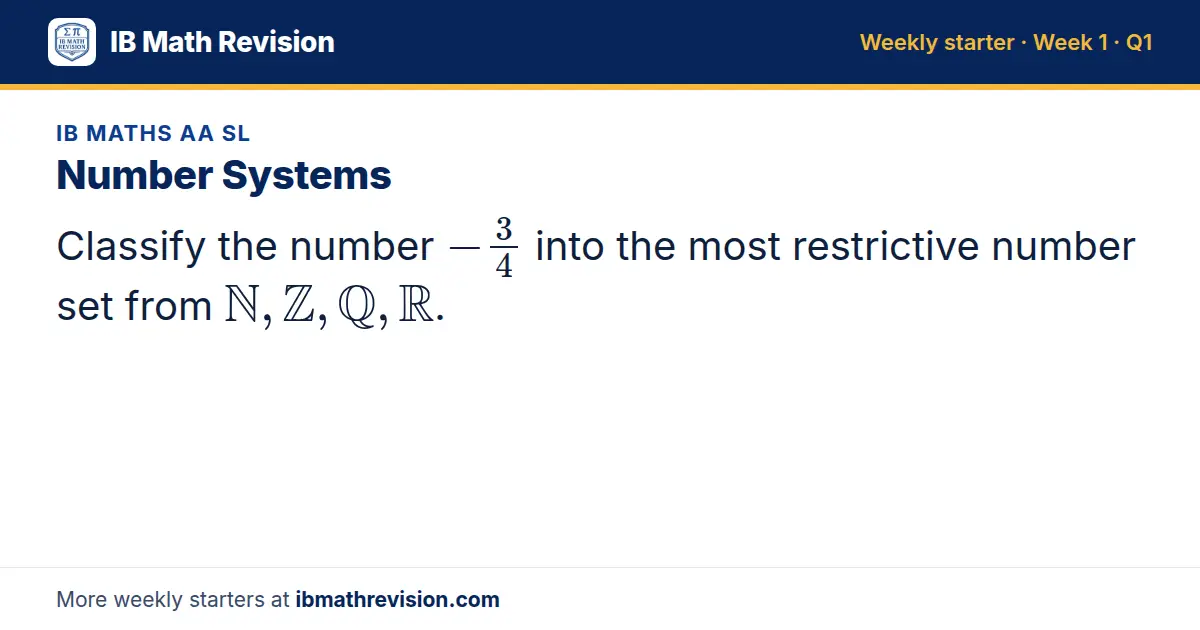
Question 1: Number Systems
Classify the number -3/4 into the most restrictive number set from ℕ, ℤ, ℚ, ℝ.
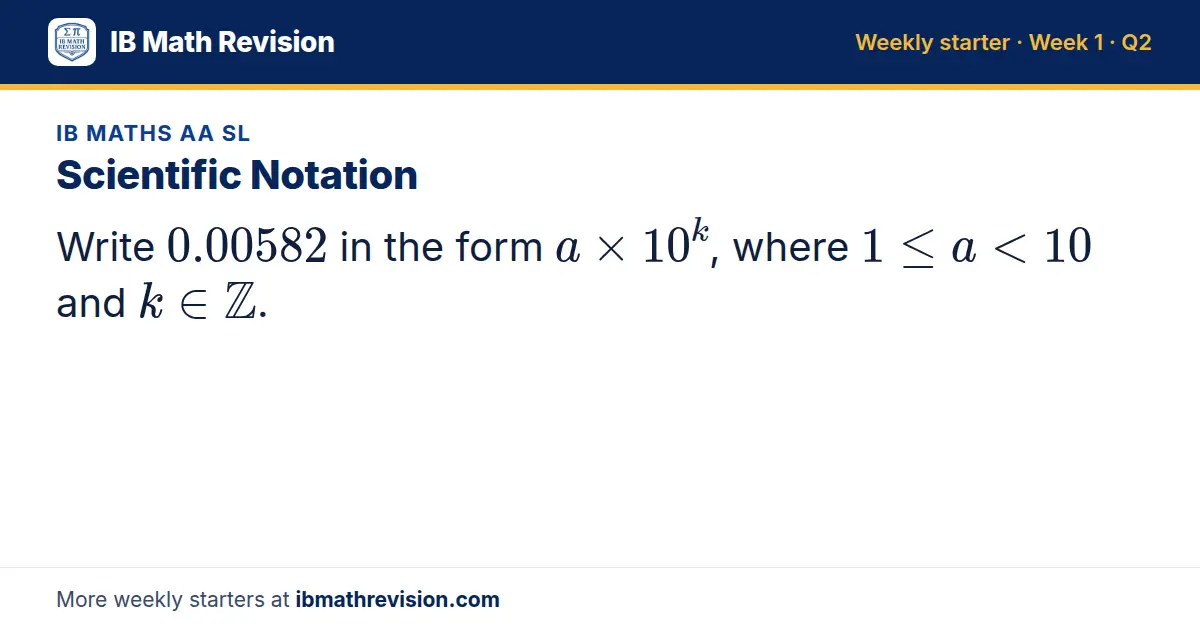
Question 2: Scientific Notation
Write 0.00582 in the form a × 10^k, where 1 ≤ a < 10 and k ∈ ℤ.
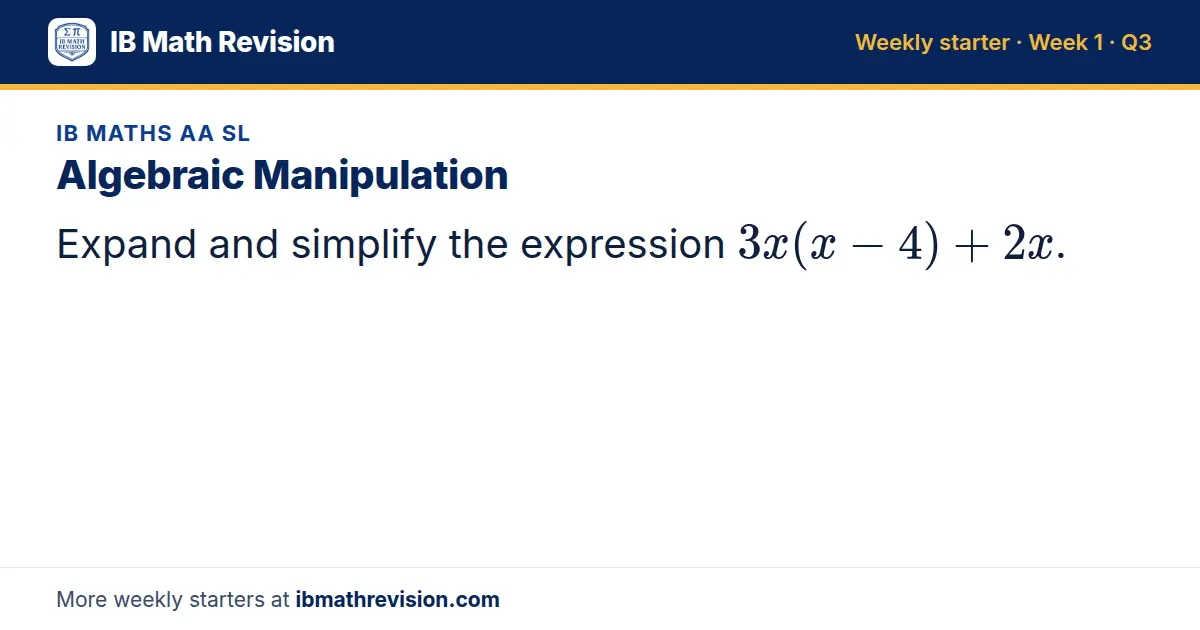
Question 3: Algebraic Manipulation
Expand and simplify the expression 3x(x - 4) + 2x.
Week 2
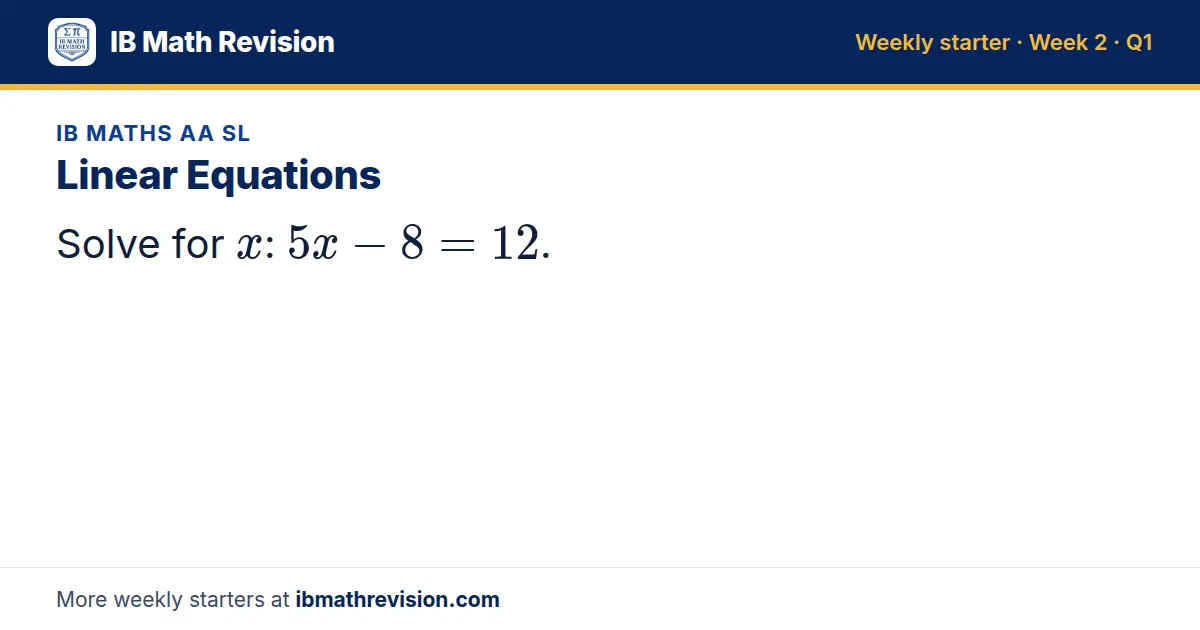
Question 1: Linear Equations
Solve for x: 5x - 8 = 12.
Question 2: Quadratics
Factorise the quadratic expression x² + 7x + 10 completely.
Question 3: Algebraic Fractions
Express as a single fraction in its simplest form: 2x/3 + x/4.
Week 3
Question 1: Surds
Simplify √18 into the form a√b where a, b ∈ ℤ.
Question 2: Exponents
Evaluate 9^(1/2).
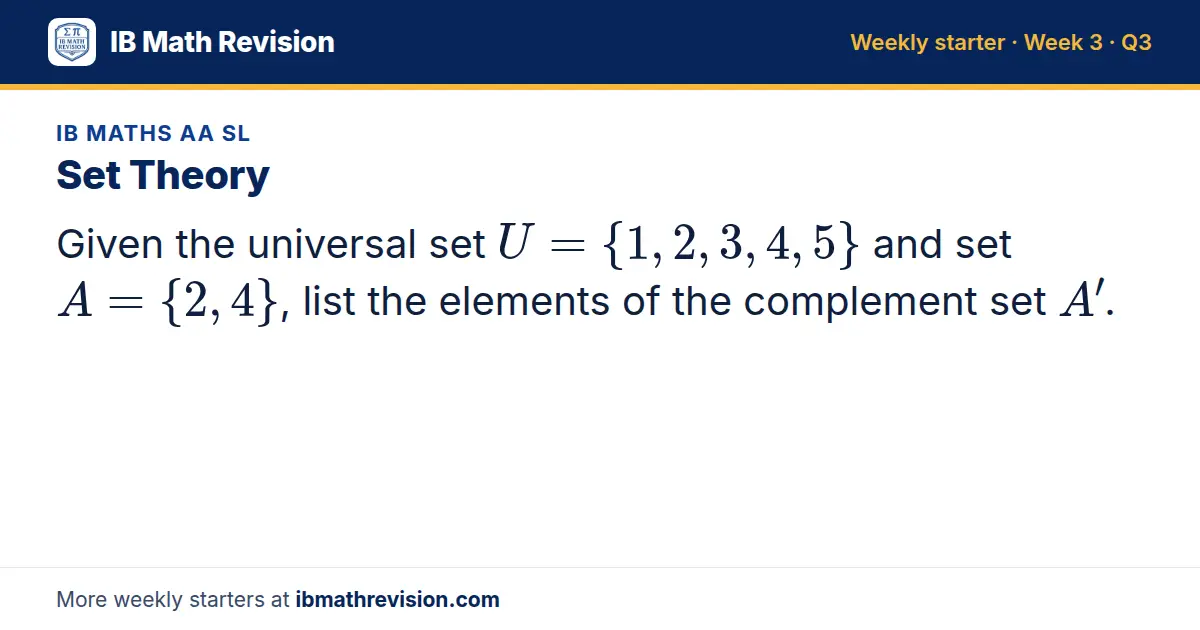
Question 3: Set Theory
Given the universal set U = 1, 2, 3, 4, 5 and set A = 2, 4, list the elements of the complement set A'.
Week 4
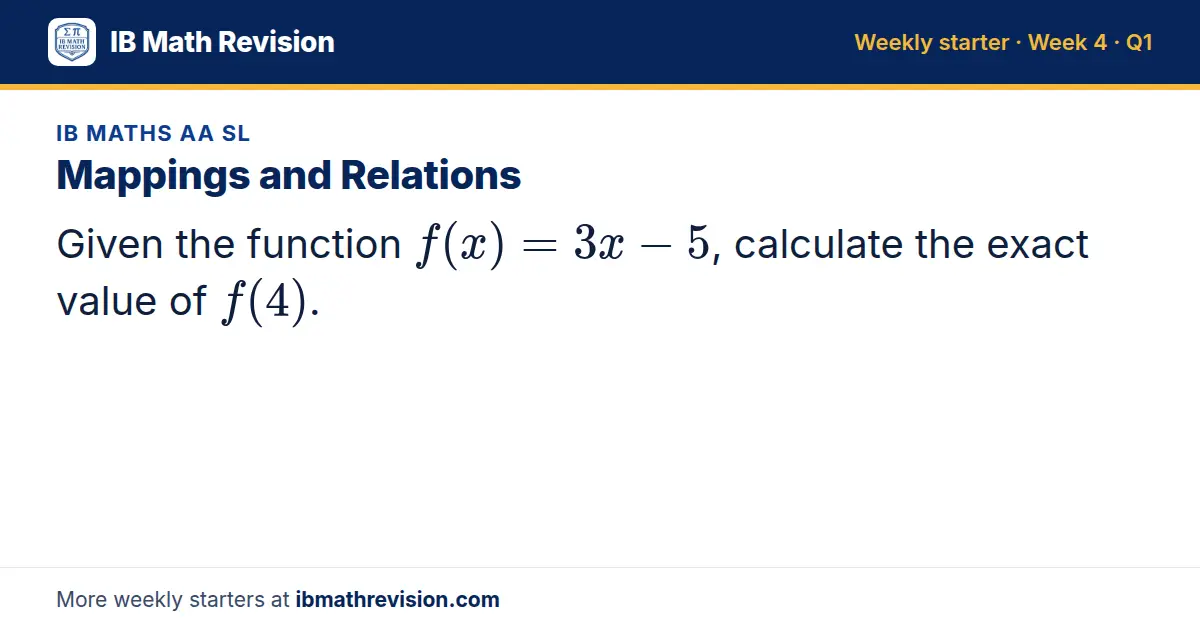
Question 1: Mappings and Relations
Given the function f(x) = 3x - 5, calculate the exact value of f(4).
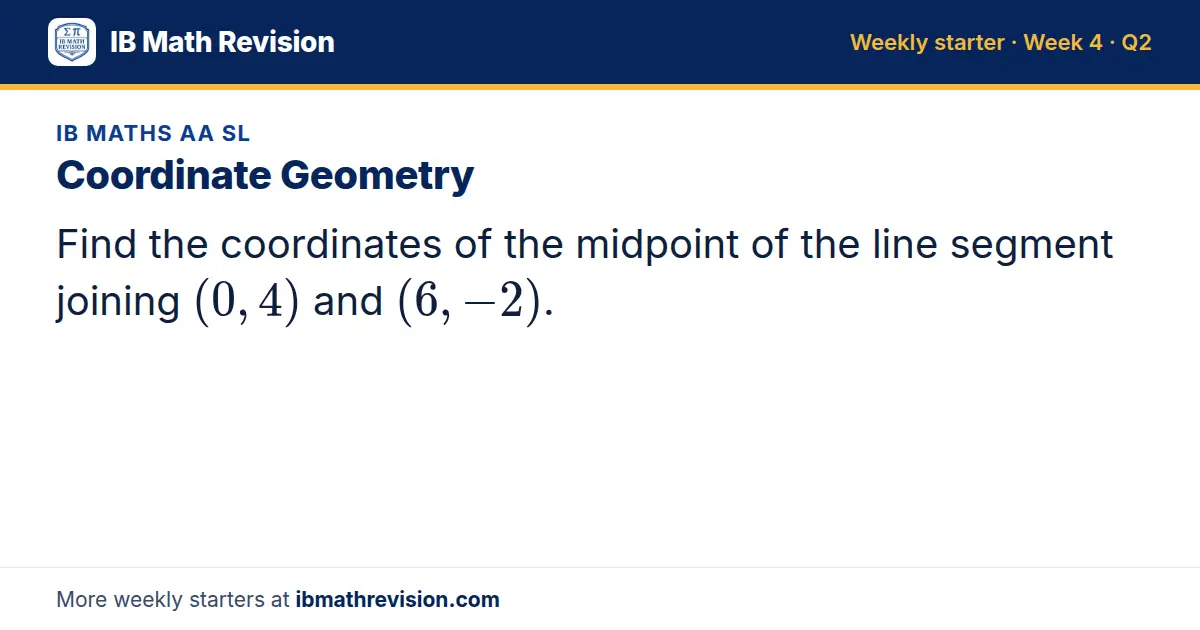
Question 2: Coordinate Geometry
Find the coordinates of the midpoint of the line segment joining (0, 4) and (6, -2).
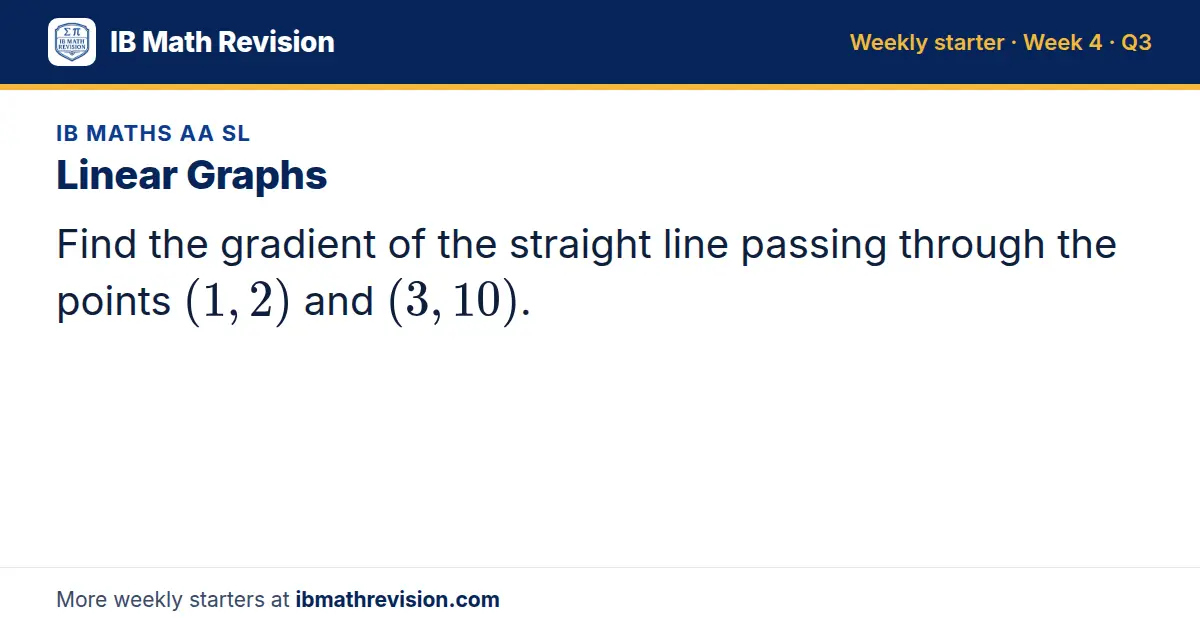
Question 3: Linear Graphs
Find the gradient of the straight line passing through the points (1, 2) and (3, 10).
Week 5
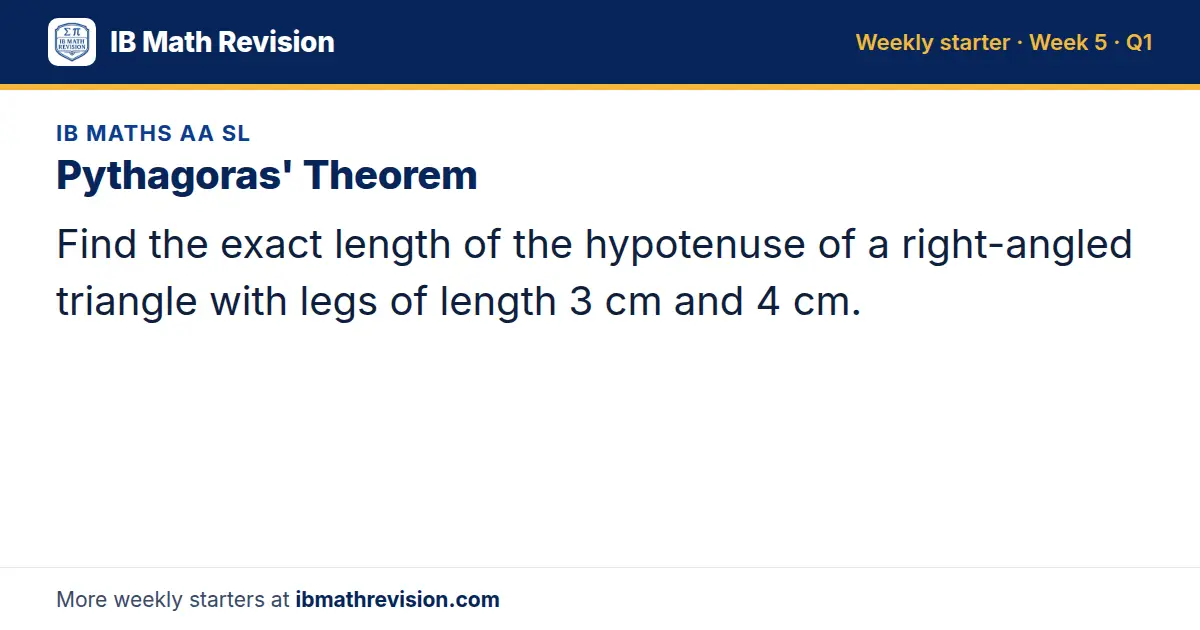
Question 1: Pythagoras' Theorem
Find the exact length of the hypotenuse of a right-angled triangle with legs of length 3 cm and 4 cm.
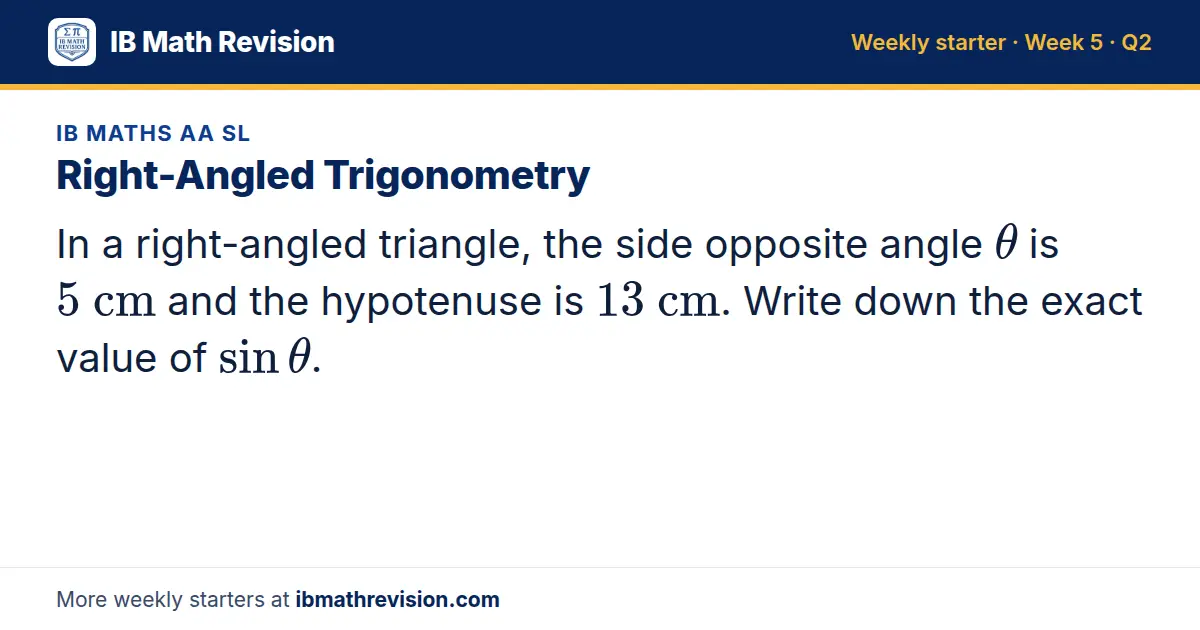
Question 2: Right-Angled Trigonometry
In a right-angled triangle, the side opposite angle θ is 5 cm and the hypotenuse is 13 cm. Write down the exact value of sin θ.
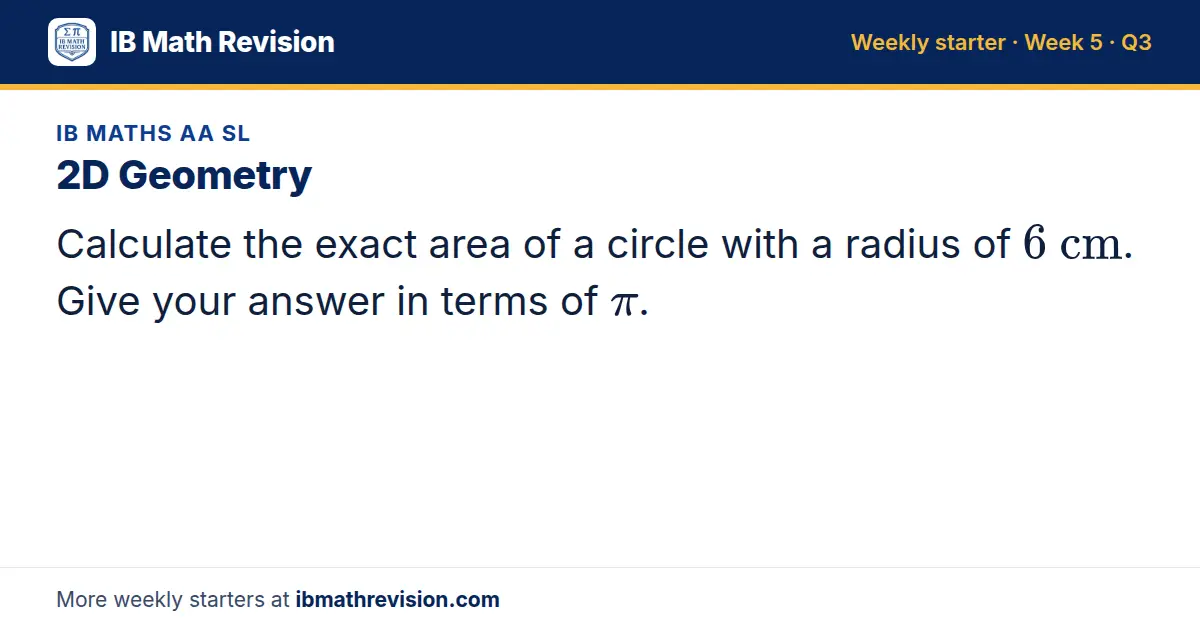
Question 3: 2D Geometry
Calculate the exact area of a circle with a radius of 6 cm. Give your answer in terms of π.
Week 6
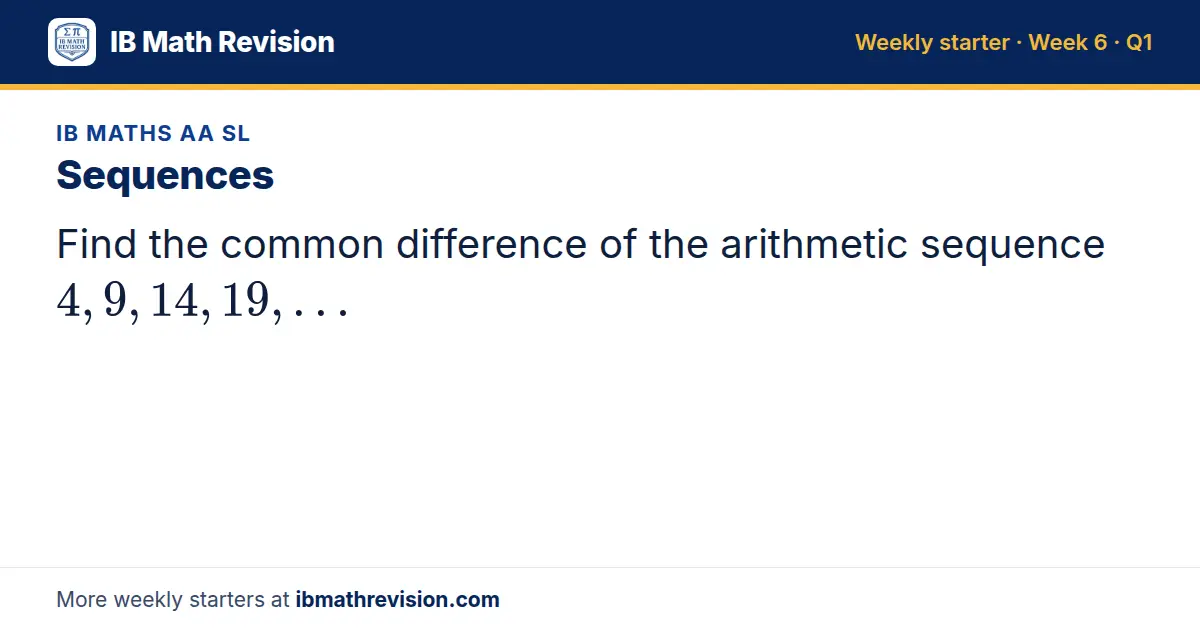
Question 1: Sequences
Find the common difference of the arithmetic sequence 4, 9, 14, 19, …
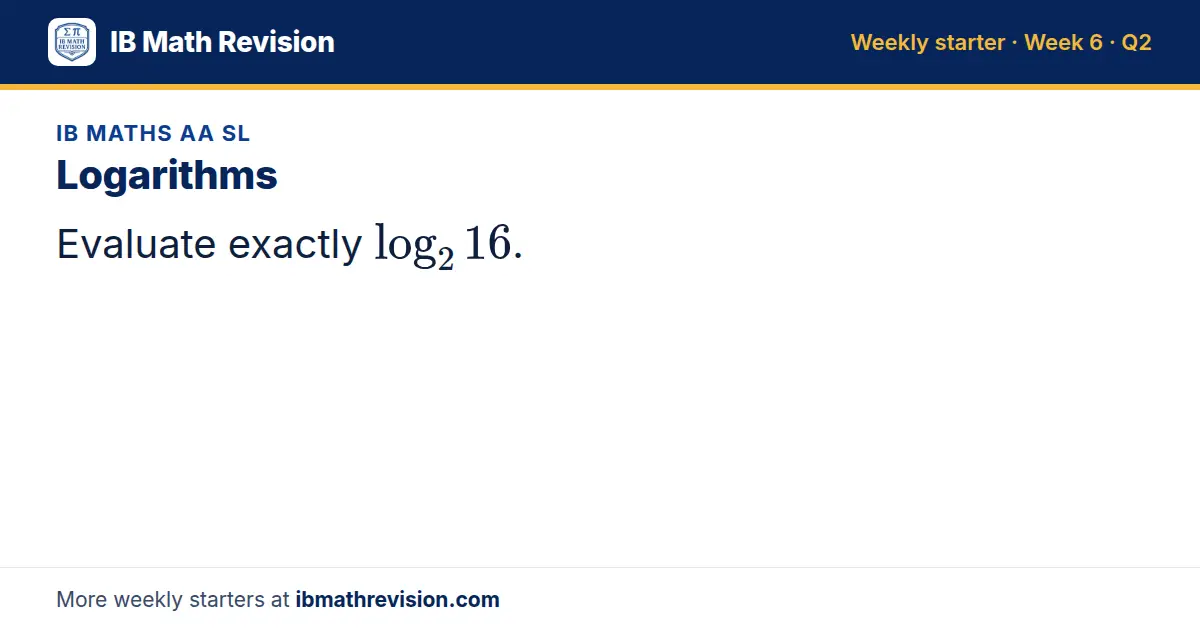
Question 2: Logarithms
Evaluate exactly log_2 16.
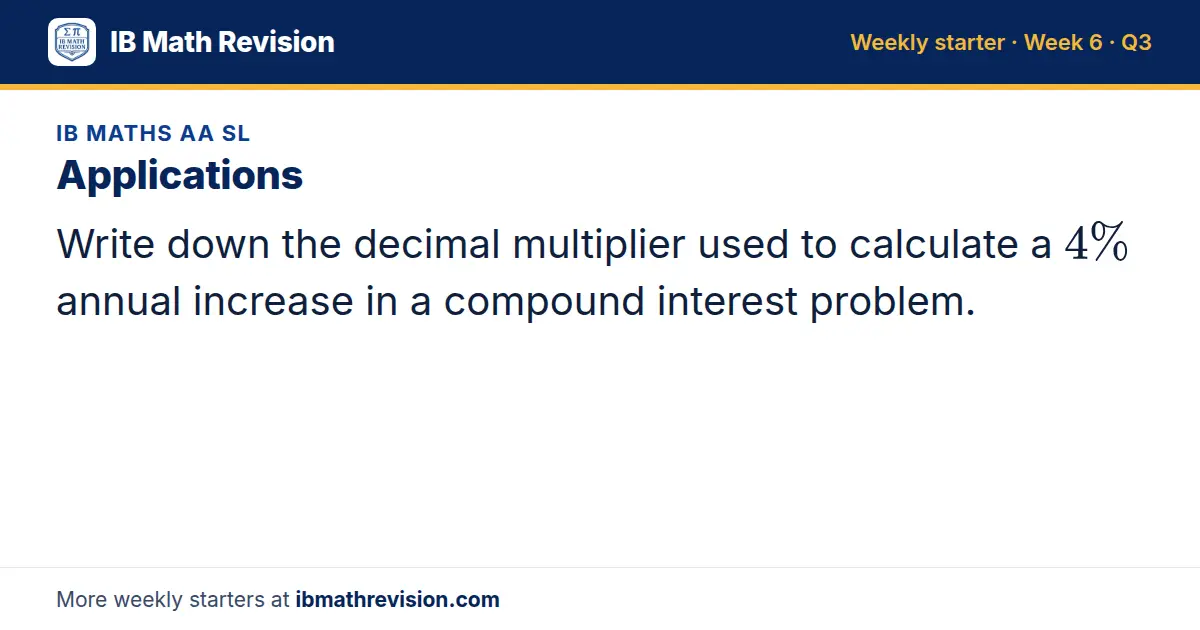
Question 3: Applications
Write down the decimal multiplier used to calculate a 4% annual increase in a compound interest problem.
Week 7
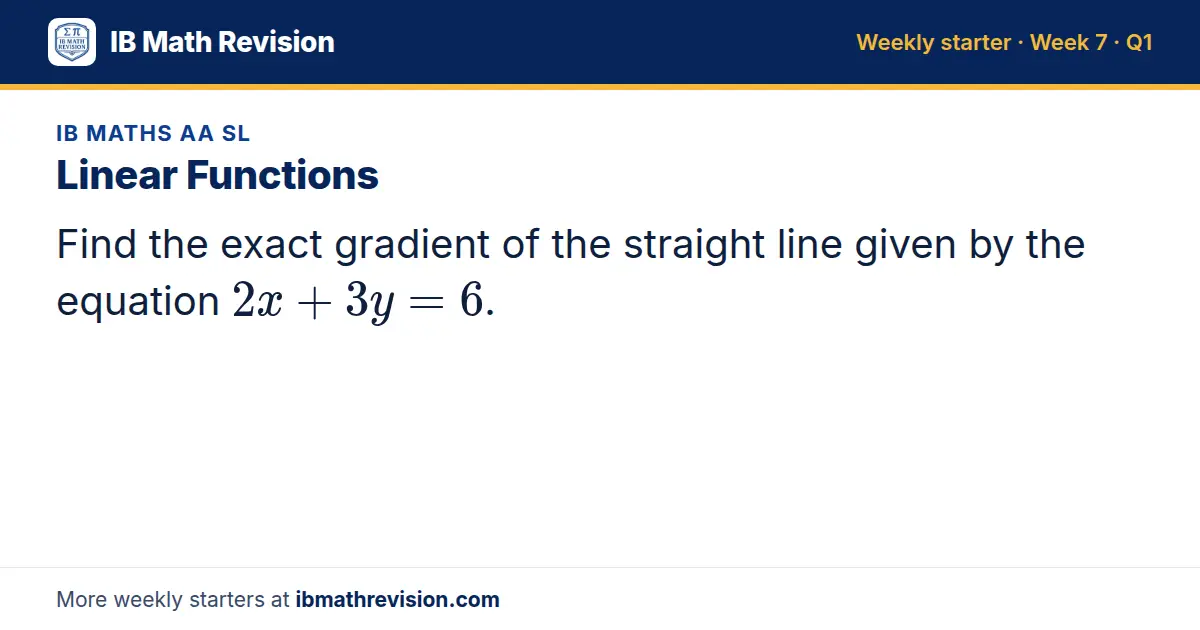
Question 1: Linear Functions
Find the exact gradient of the straight line given by the equation 2x + 3y = 6.
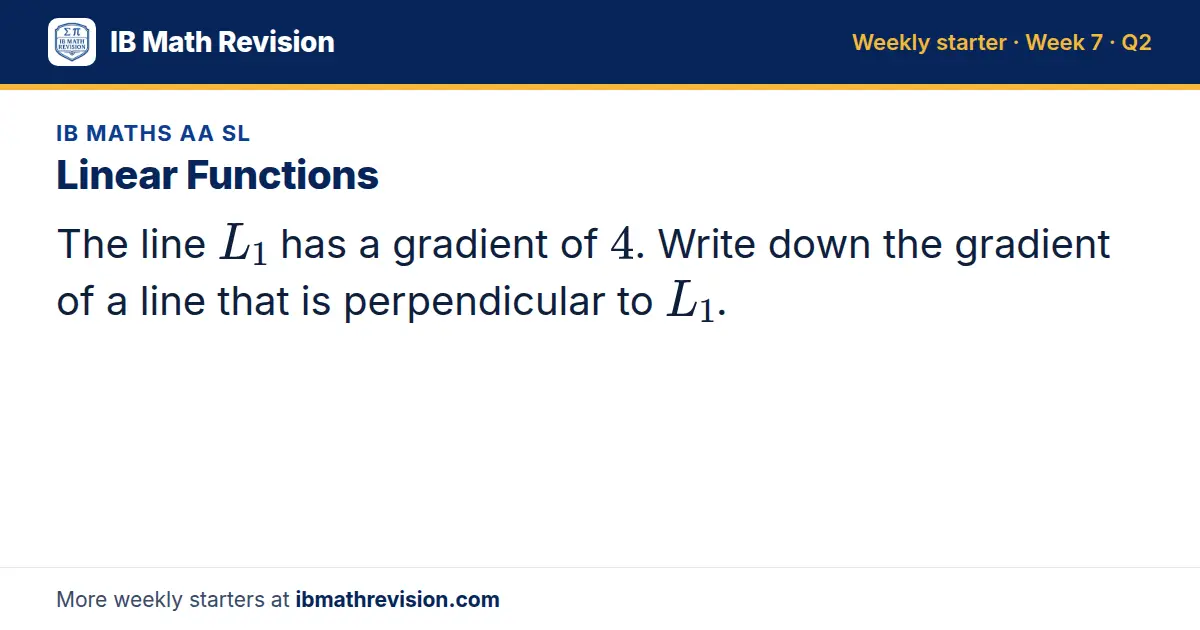
Question 2: Linear Functions
The line L_1 has a gradient of 4. Write down the gradient of a line that is perpendicular to L_1.
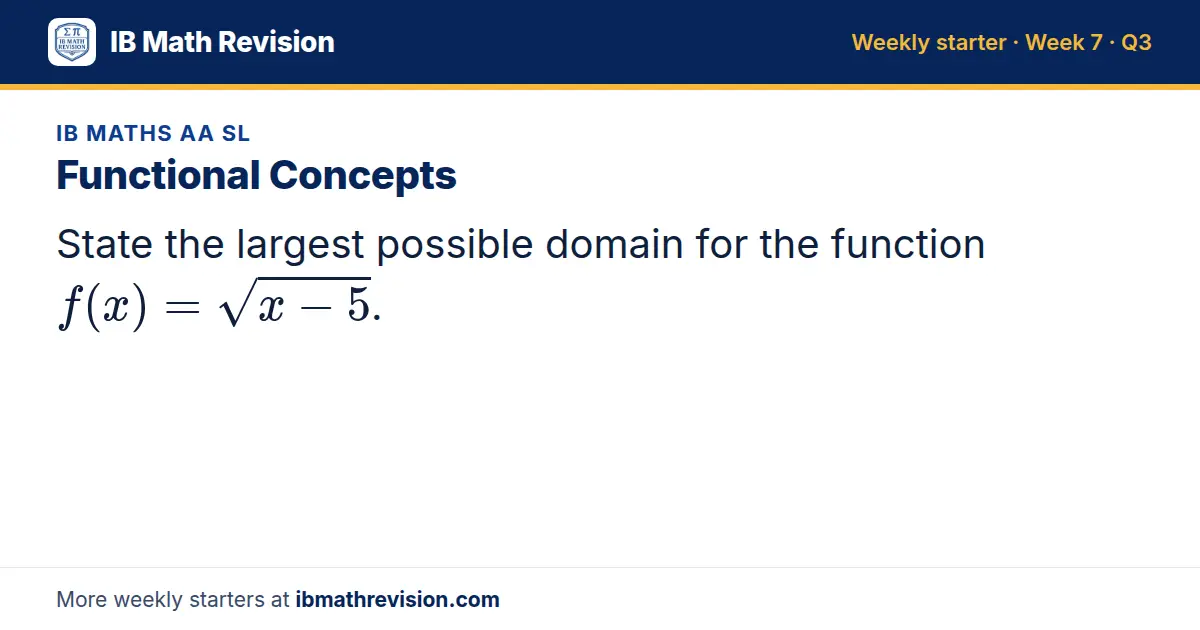
Question 3: Functional Concepts
State the largest possible domain for the function f(x) = √(x - 5).
Week 8
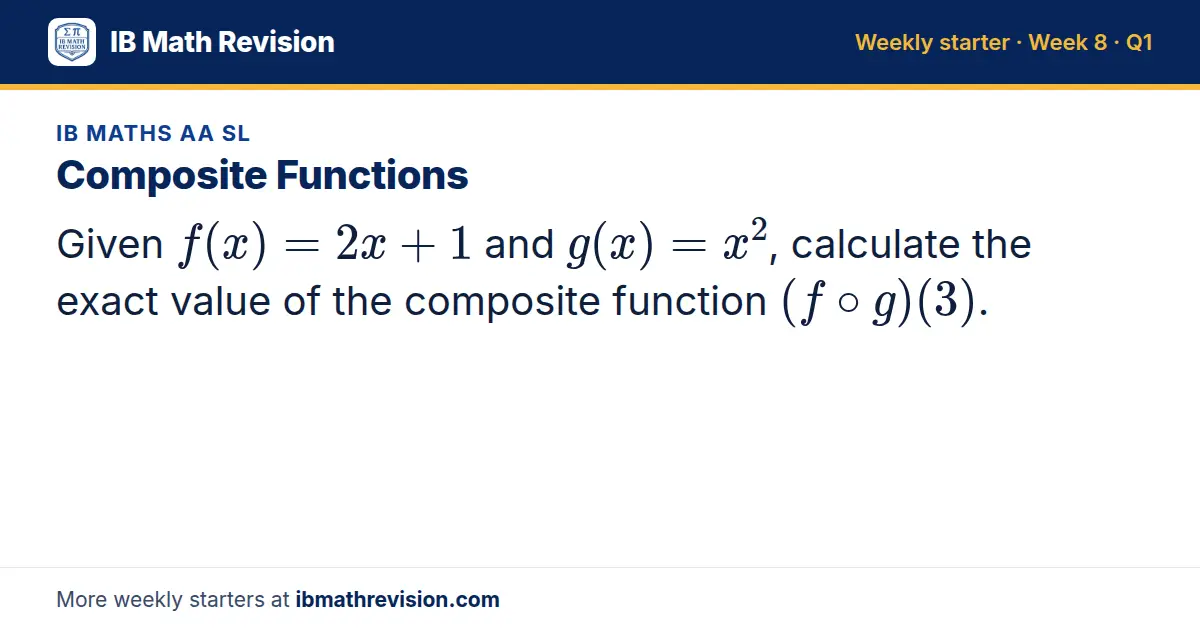
Question 1: Composite Functions
Given f(x) = 2x + 1 and g(x) = x², calculate the exact value of the composite function (f ∘ g)(3).
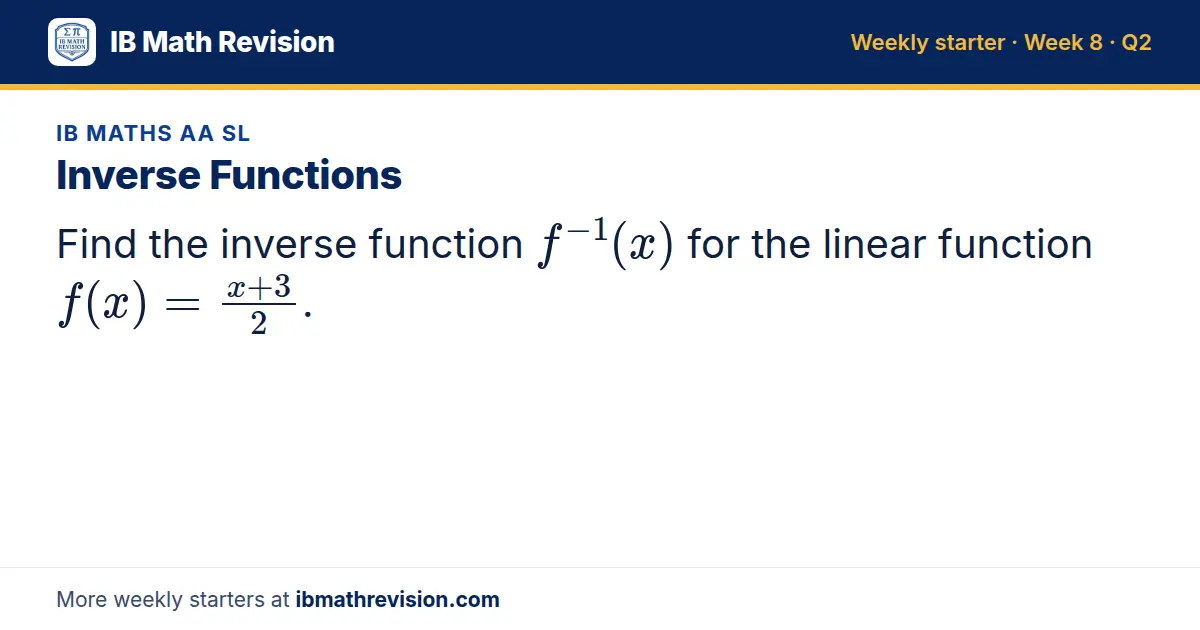
Question 2: Inverse Functions
Find the inverse function f⁻¹(x) for the linear function f(x) = (x + 3)/2.
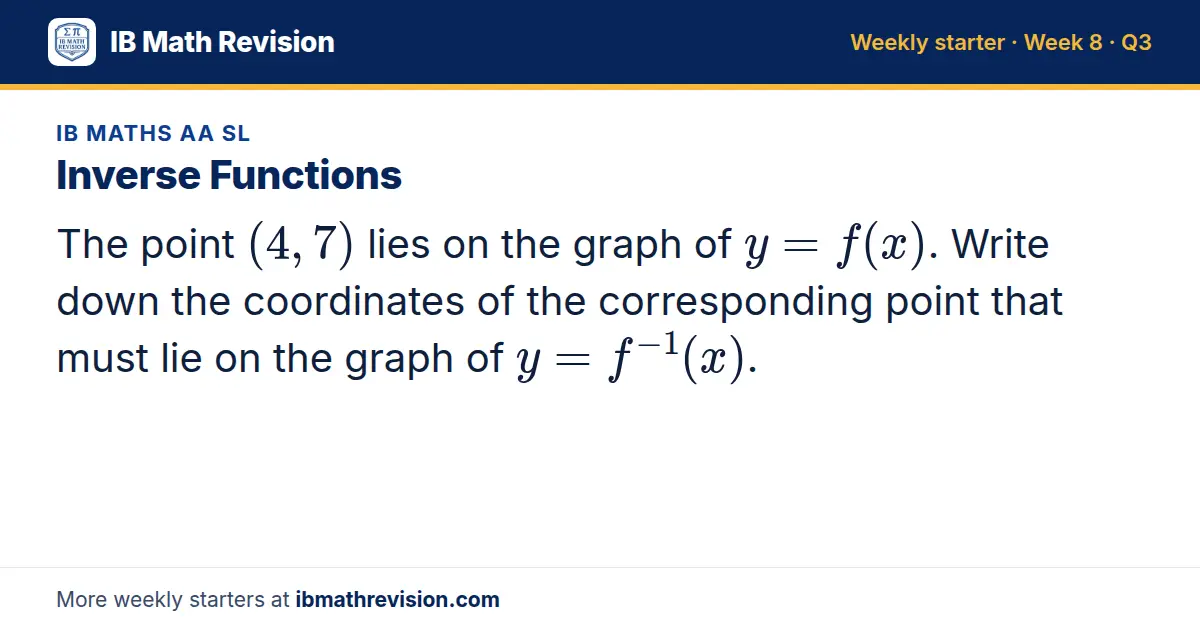
Question 3: Inverse Functions
The point (4, 7) lies on the graph of y = f(x). Write down the coordinates of the corresponding point that must lie on the graph of y = f⁻¹(x).
Week 9
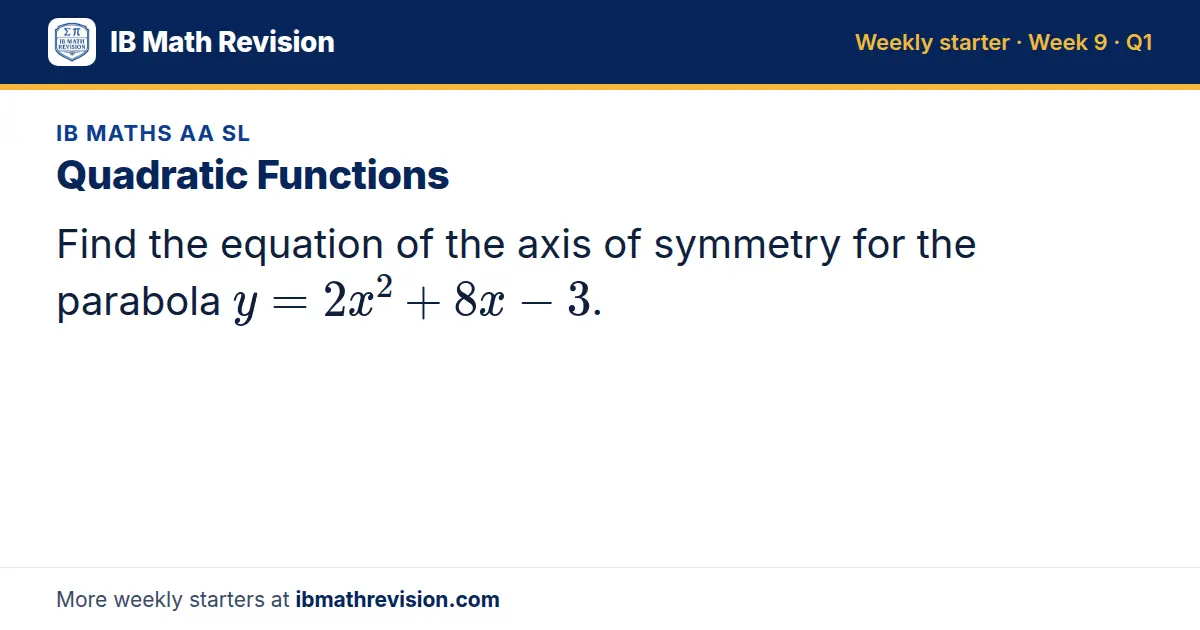
Question 1: Quadratic Functions
Find the equation of the axis of symmetry for the parabola y = 2x² + 8x - 3.
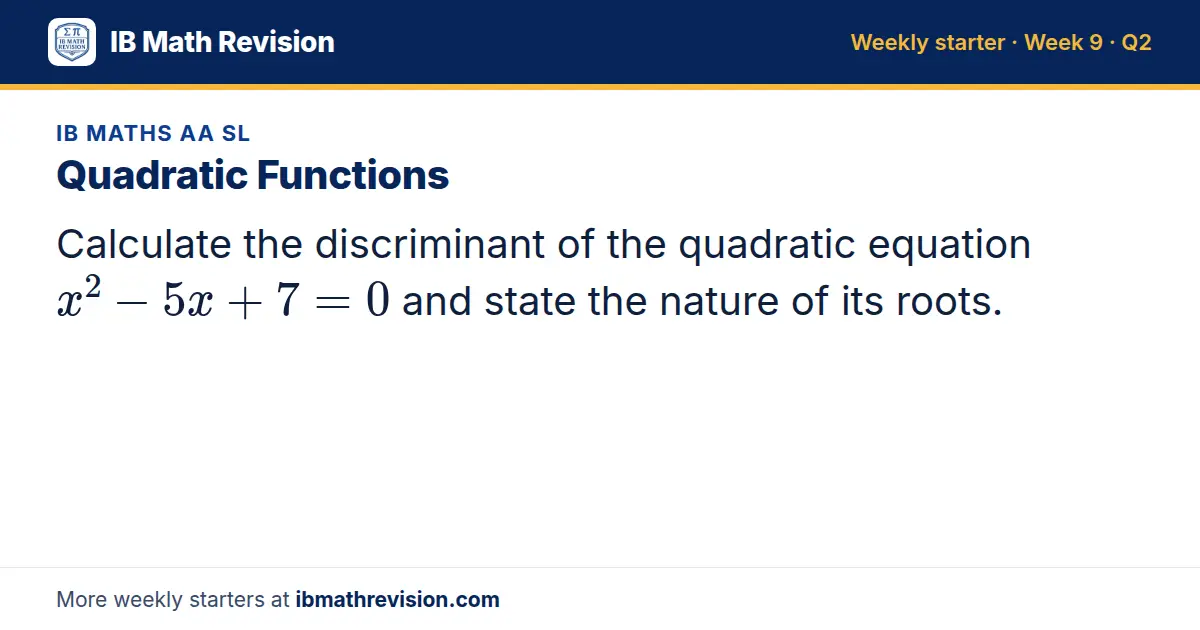
Question 2: Quadratic Functions
Calculate the discriminant of the quadratic equation x² - 5x + 7 = 0 and state the nature of its roots.
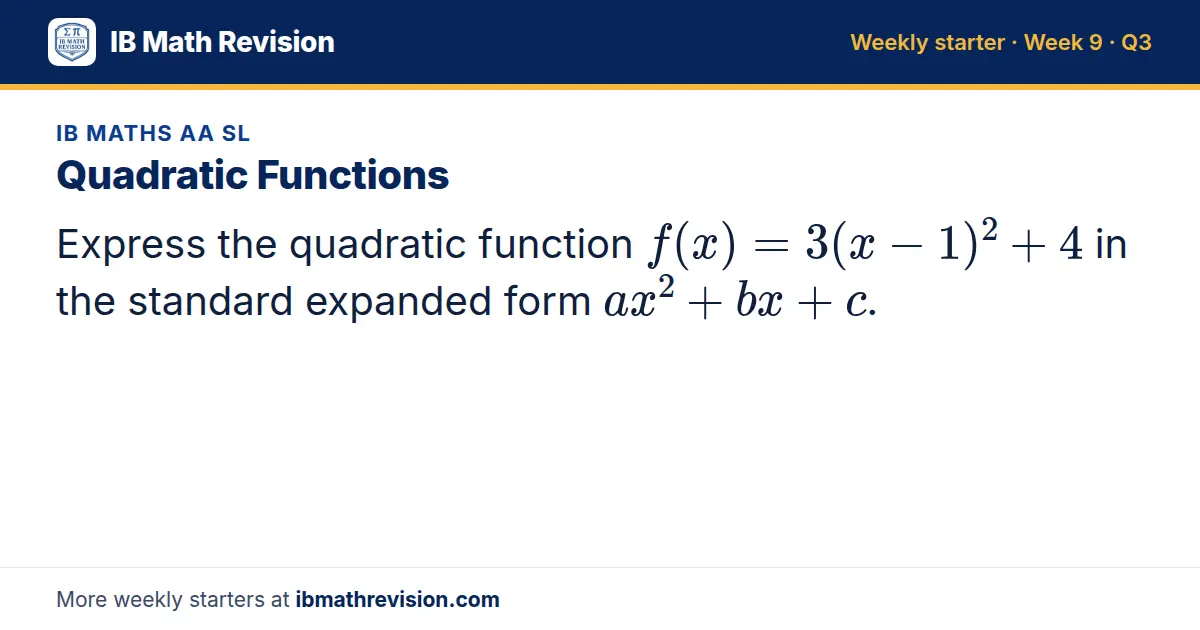
Question 3: Quadratic Functions
Express the quadratic function f(x) = 3(x - 1)² + 4 in the standard expanded form ax² + bx + c.
Week 10
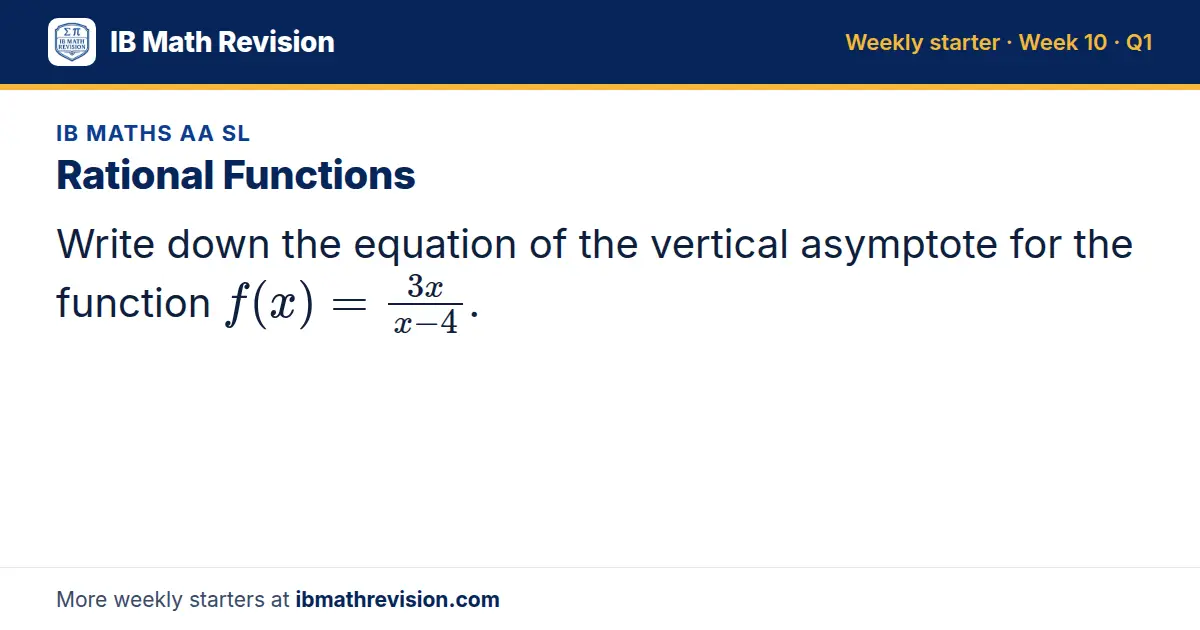
Question 1: Rational Functions
Write down the equation of the vertical asymptote for the function f(x) = 3x/(x - 4).
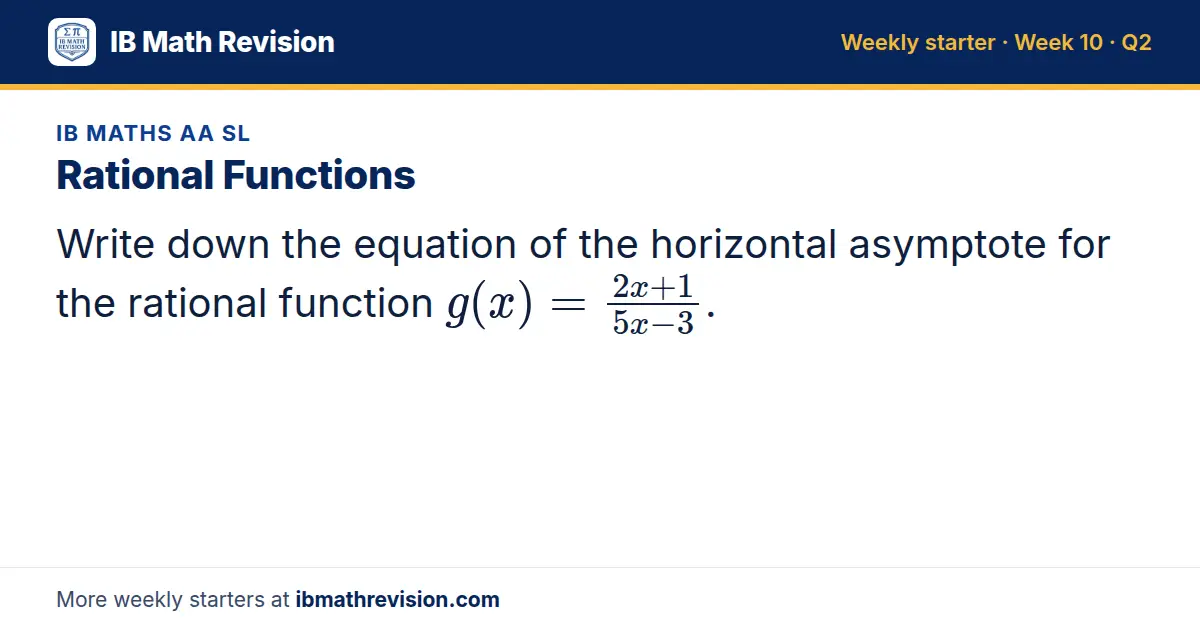
Question 2: Rational Functions
Write down the equation of the horizontal asymptote for the rational function g(x) = (2x + 1)/(5x - 3).
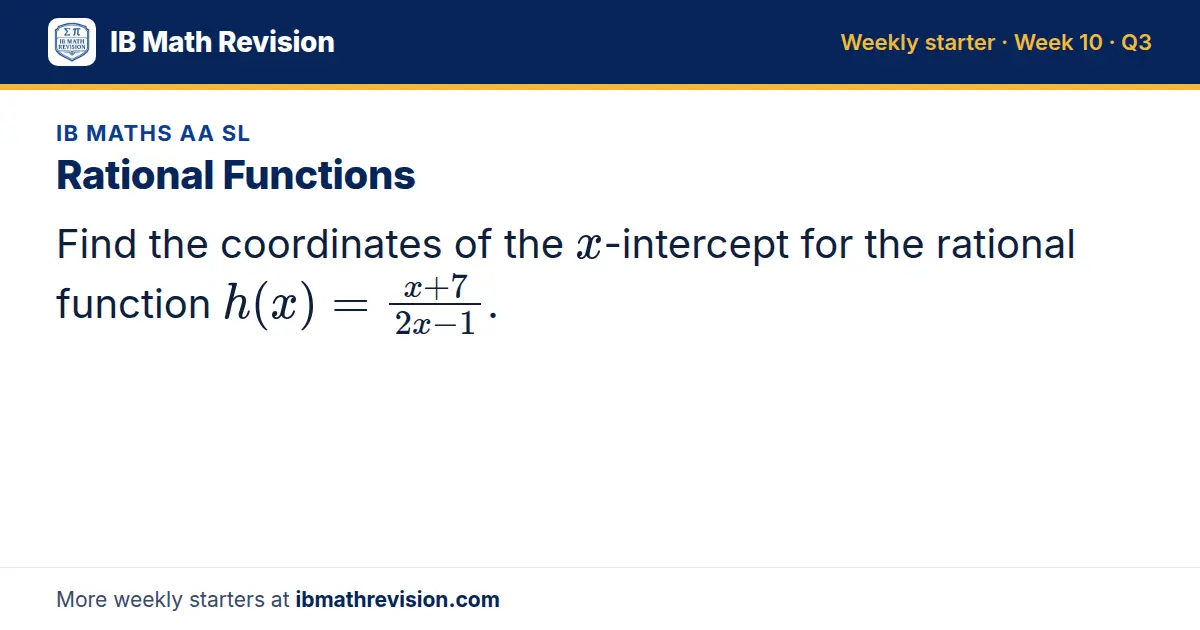
Question 3: Rational Functions
Find the coordinates of the x-intercept for the rational function h(x) = (x + 7)/(2x - 1).
Week 11
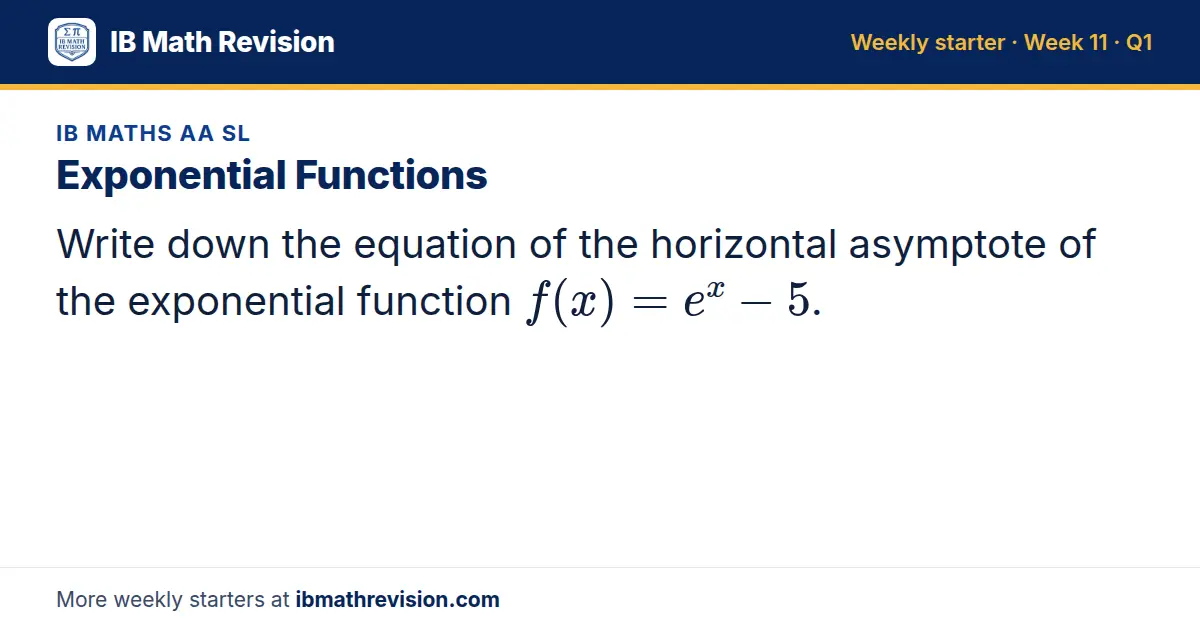
Question 1: Exponential Functions
Write down the equation of the horizontal asymptote of the exponential function f(x) = e^x - 5.
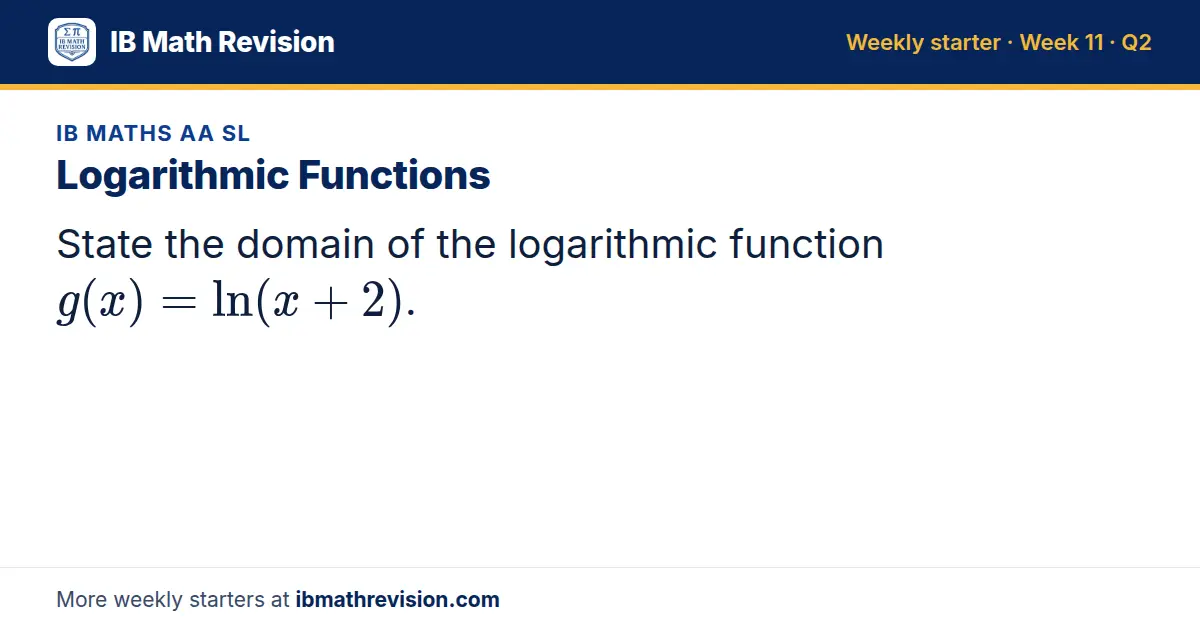
Question 2: Logarithmic Functions
State the domain of the logarithmic function g(x) = ln(x + 2).
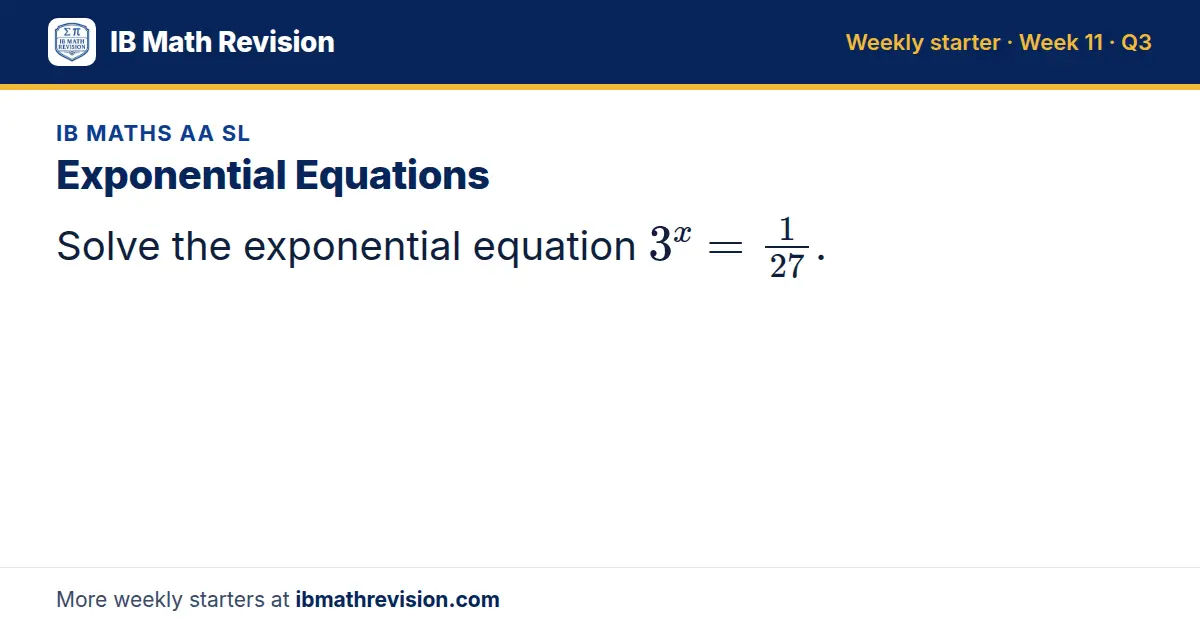
Question 3: Exponential Equations
Solve the exponential equation 3^x = 1/27.
Week 12
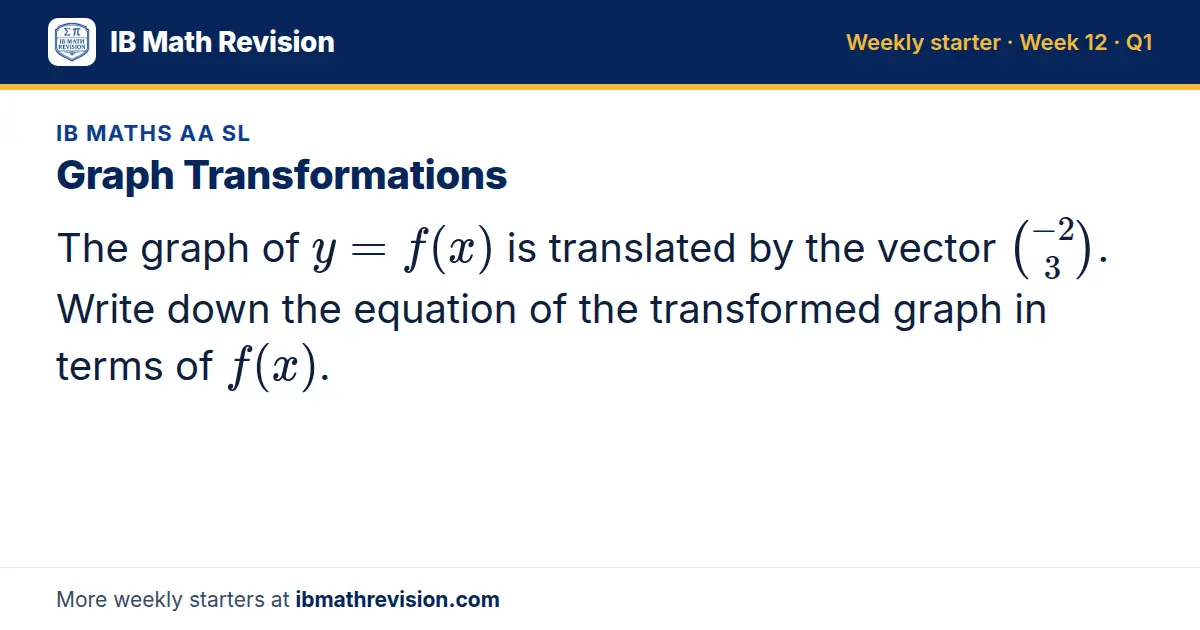
Question 1: Graph Transformations
The graph of y = f(x) is translated by the vector -23. Write down the equation of the transformed graph in terms of f(x).
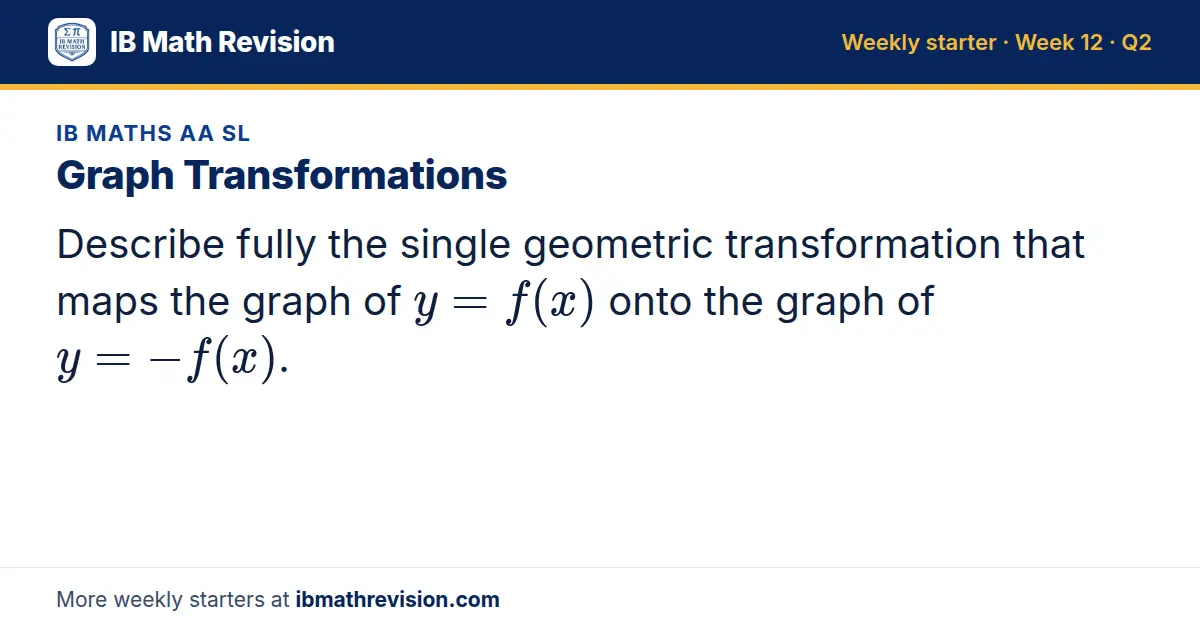
Question 2: Graph Transformations
Describe fully the single geometric transformation that maps the graph of y = f(x) onto the graph of y = -f(x).
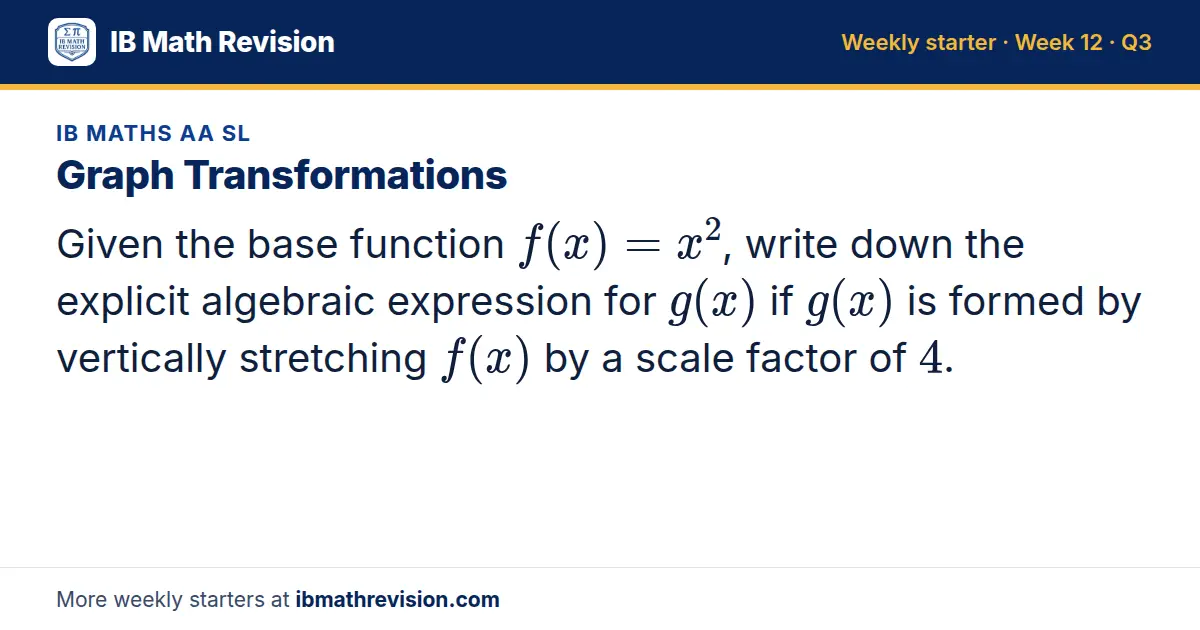
Question 3: Graph Transformations
Given the base function f(x) = x², write down the explicit algebraic expression for g(x) if g(x) is formed by vertically stretching f(x) by a scale factor of 4.
Week 13
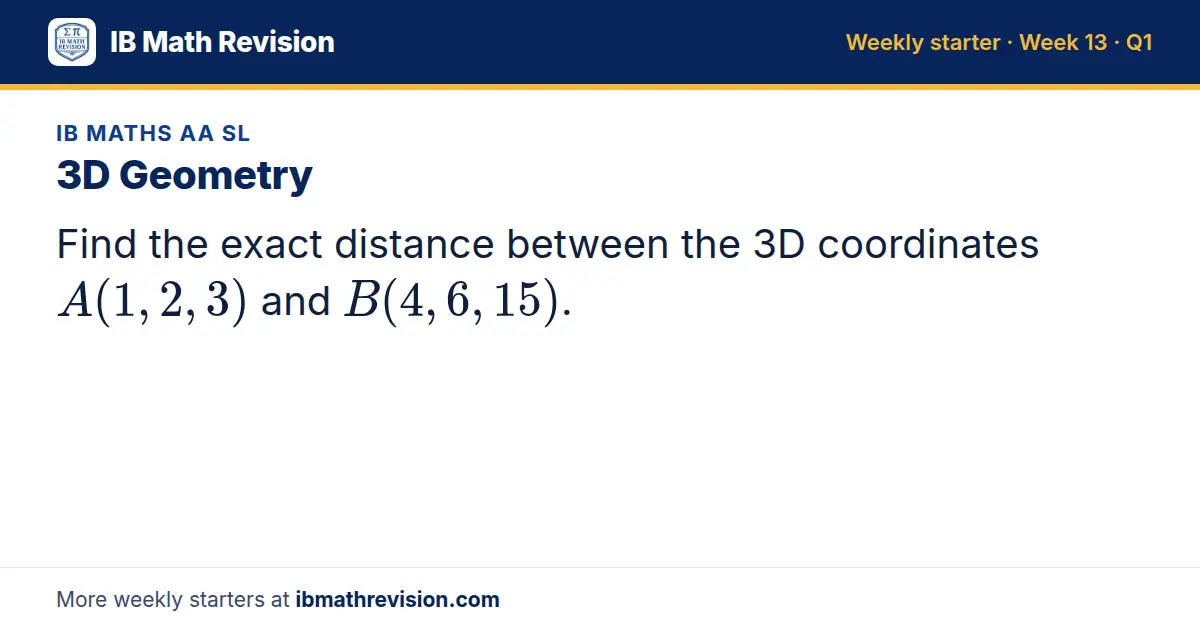
Question 1: 3D Geometry
Find the exact distance between the 3D coordinates A(1, 2, 3) and B(4, 6, 15).
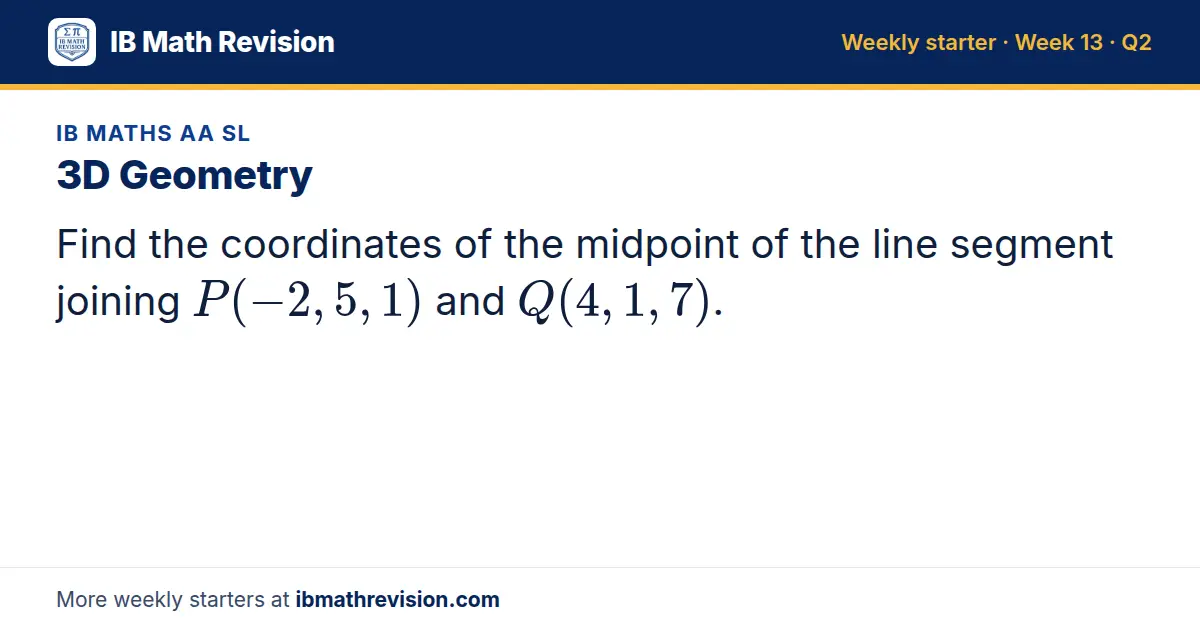
Question 2: 3D Geometry
Find the coordinates of the midpoint of the line segment joining P(-2, 5, 1) and Q(4, 1, 7).
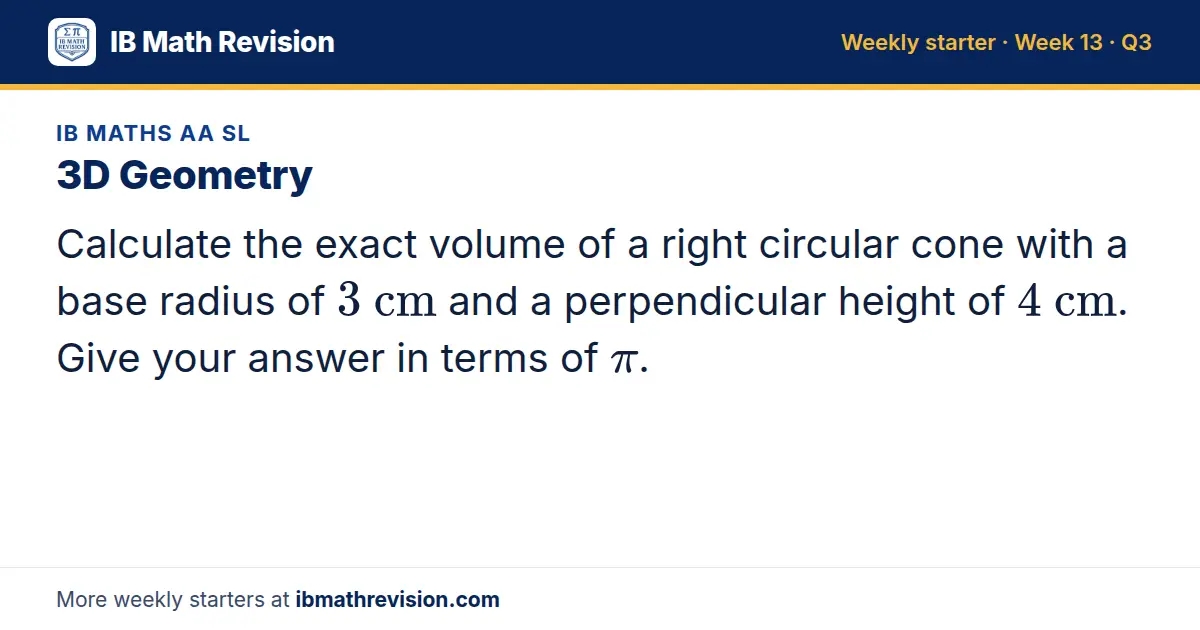
Question 3: 3D Geometry
Calculate the exact volume of a right circular cone with a base radius of 3 cm and a perpendicular height of 4 cm. Give your answer in terms of π.
More starter questions
Other weeks: Weeks 1–13 · Weeks 14–26 · Weeks 27–40. Answers and mark schemes are in the starter tasks for teachers.