IB Maths AI SL starter questions: weeks 14–26
39 short questions to open a lesson for IB Maths Applications and Interpretation SL, weeks 14–26 of the teaching year, three or four a week. Each question is shown as an image with its text underneath; answers and mark schemes stay with teachers.
Week 14
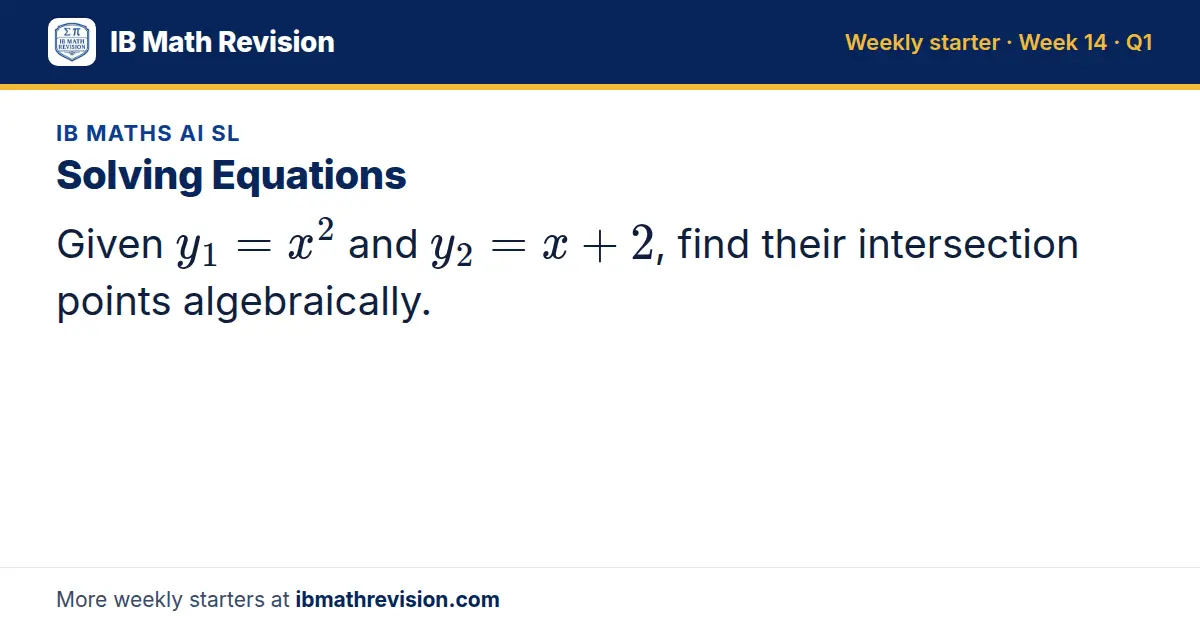
Question 1: Solving Equations
Given y_1 = x² and y_2 = x+2, find their intersection points algebraically.
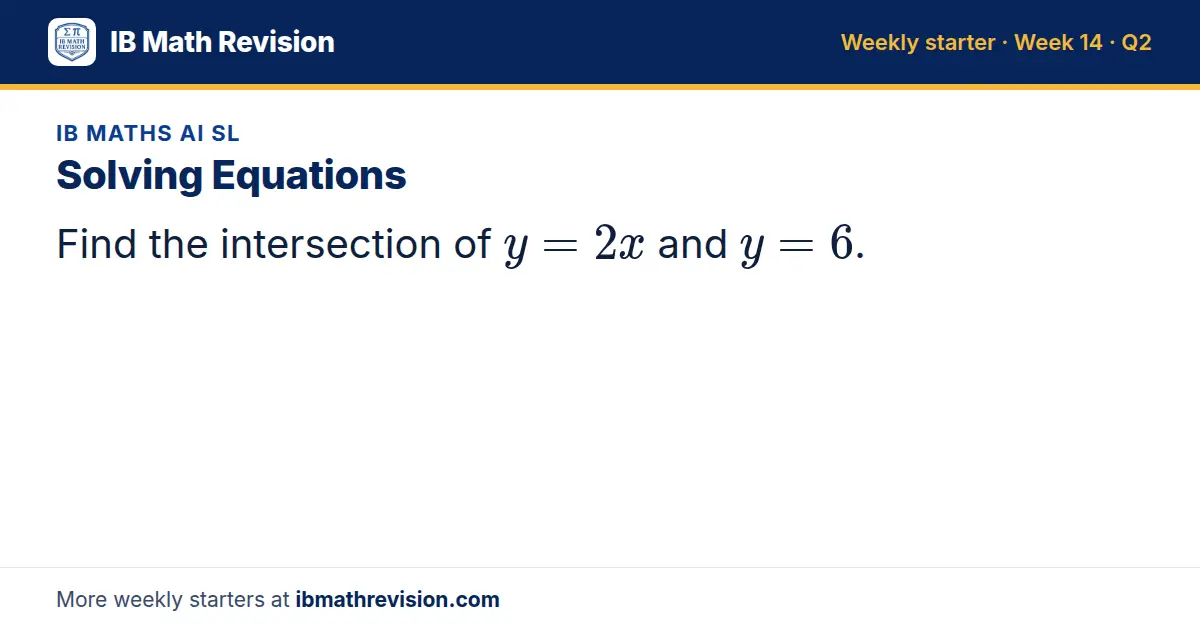
Question 2: Solving Equations
Find the intersection of y = 2x and y = 6.
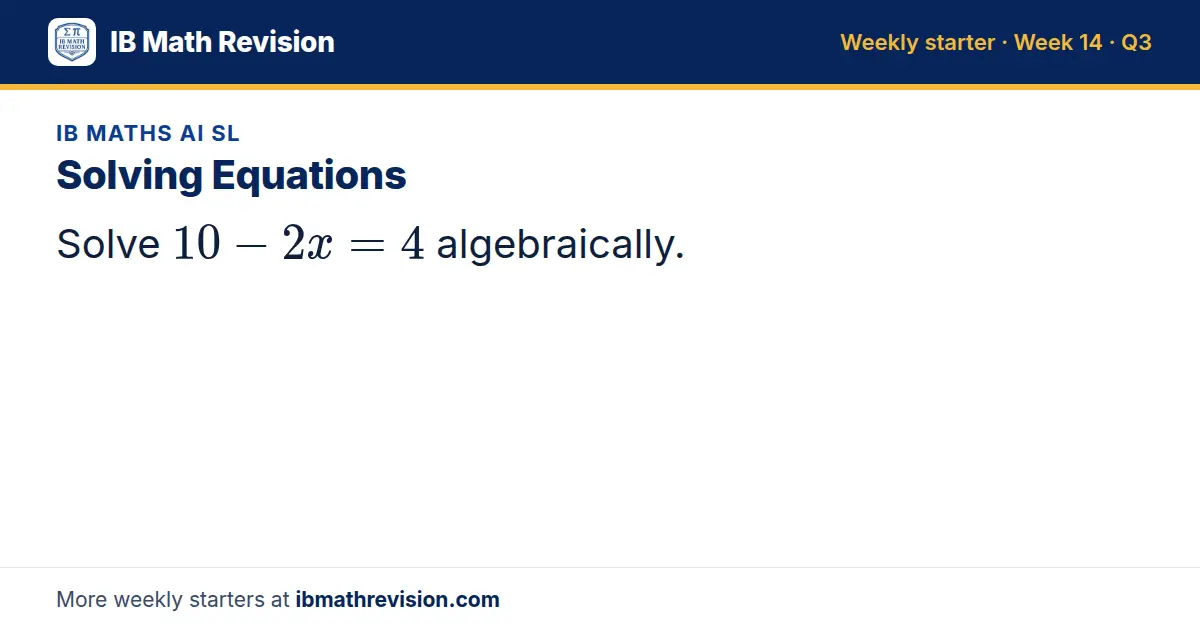
Question 3: Solving Equations
Solve 10 - 2x = 4 algebraically.
Week 15
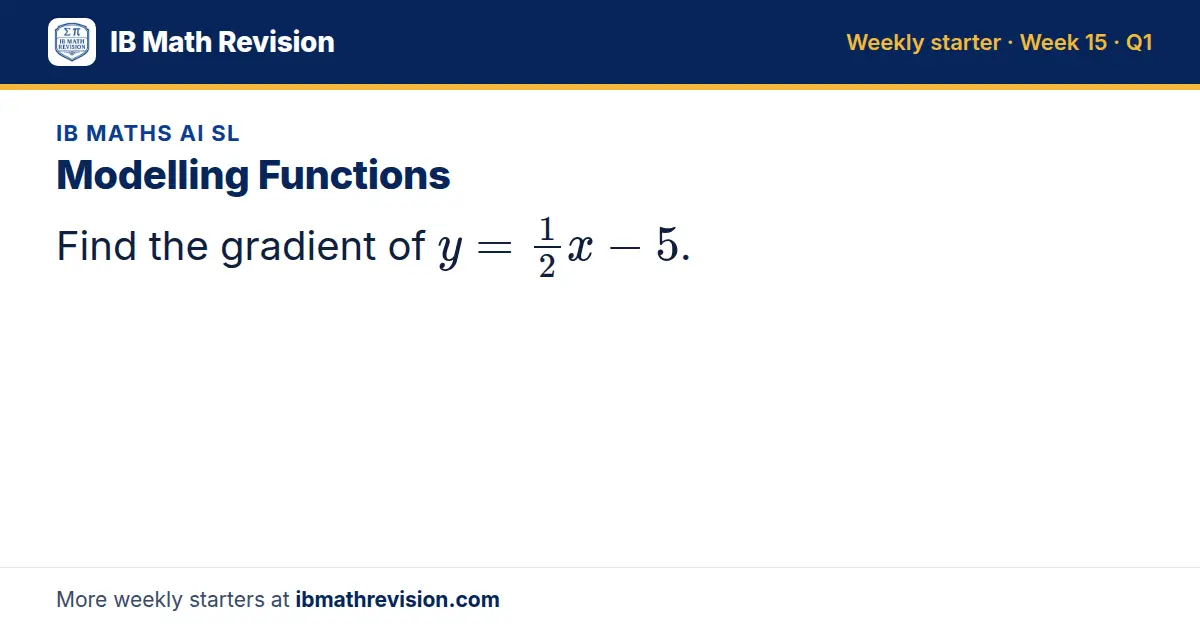
Question 1: Modelling Functions
Find the gradient of y = 1/2x - 5.
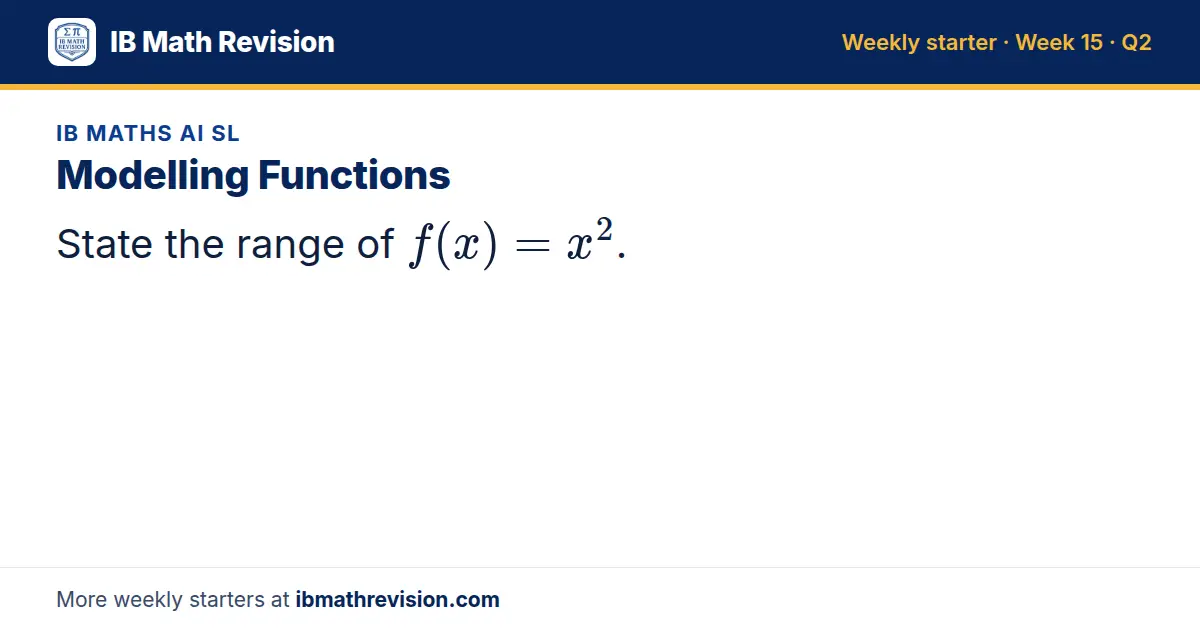
Question 2: Modelling Functions
State the range of f(x) = x^2.
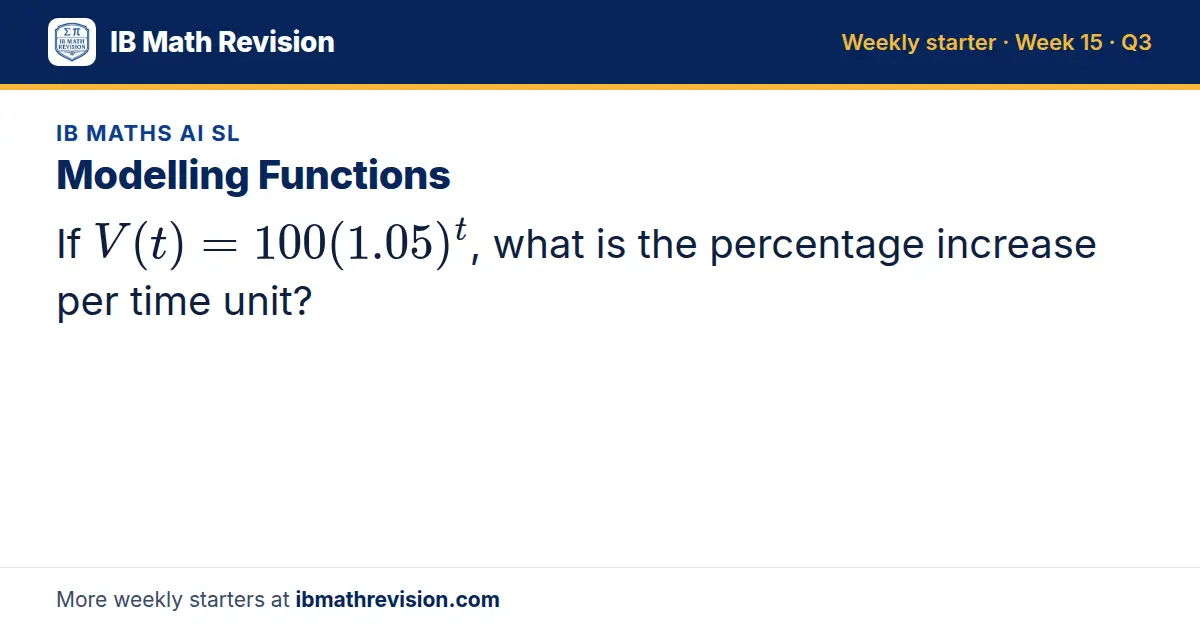
Question 3: Modelling Functions
If V(t) = 100(1.05)^t, what is the percentage increase per time unit?
Week 16
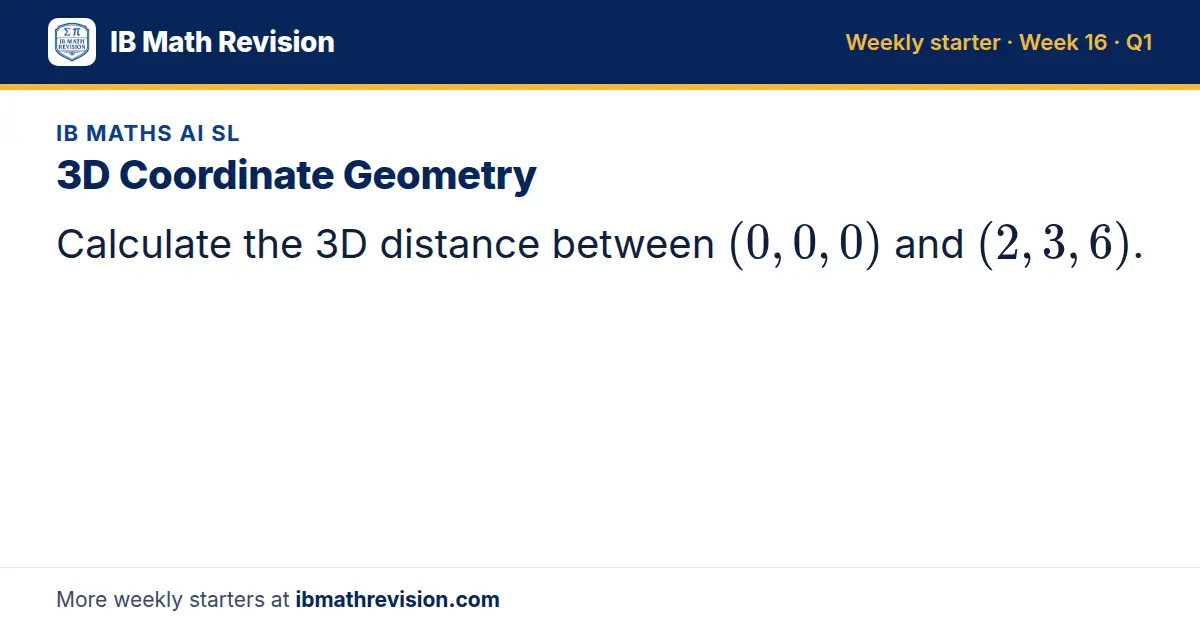
Question 1: 3D Coordinate Geometry
Calculate the 3D distance between (0,0,0) and (2,3,6).
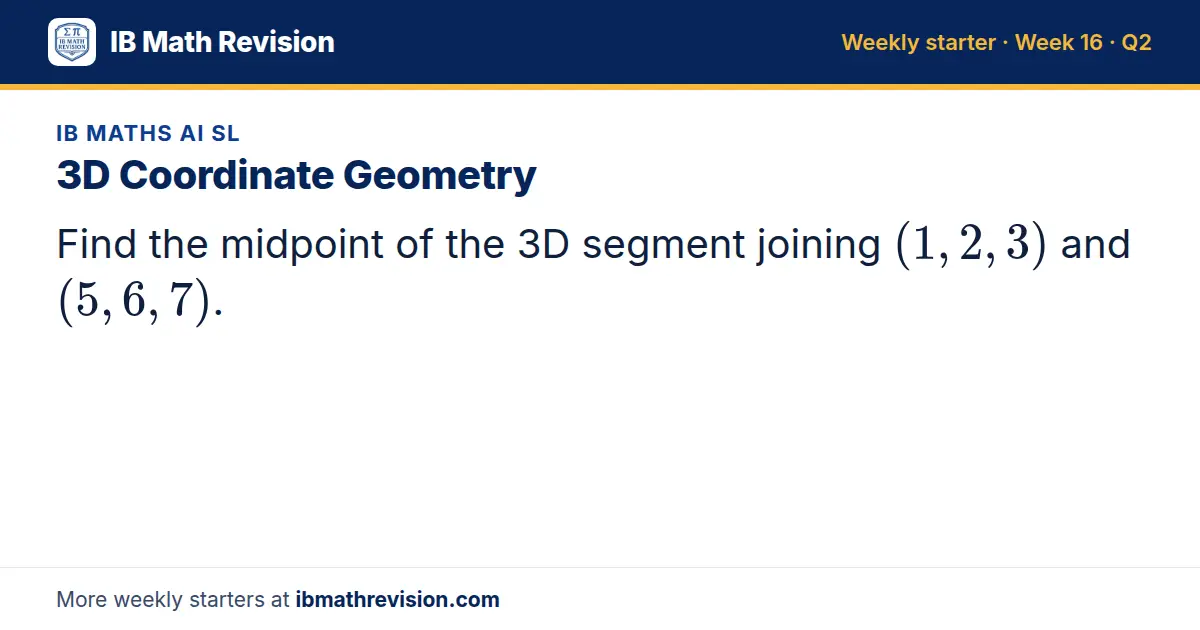
Question 2: 3D Coordinate Geometry
Find the midpoint of the 3D segment joining (1,2,3) and (5,6,7).
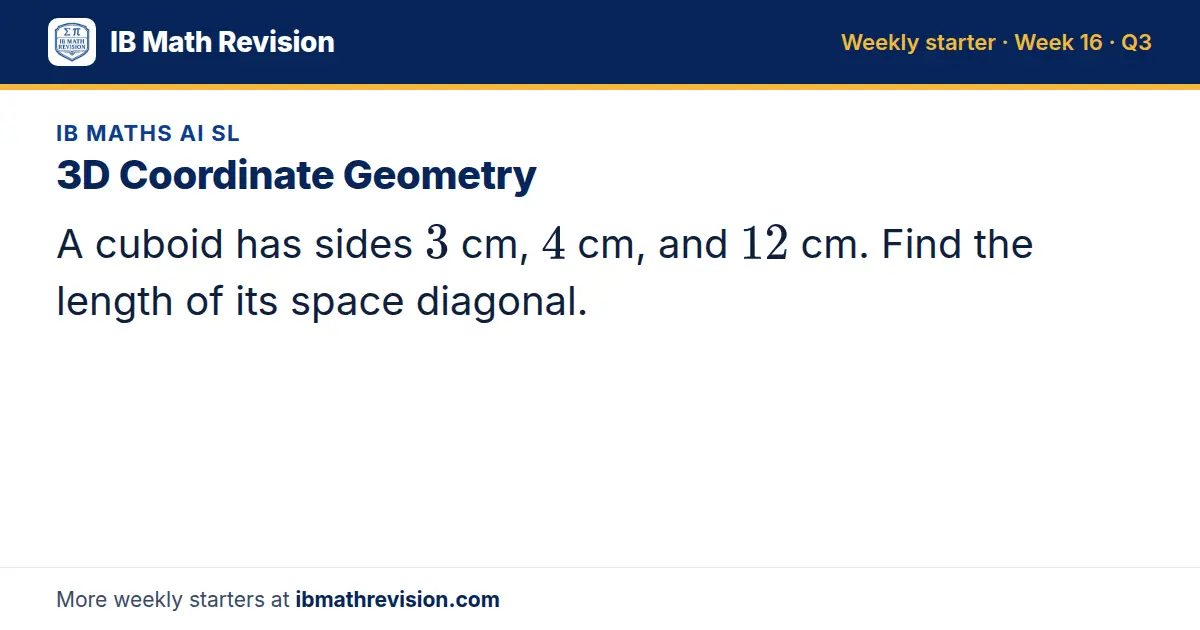
Question 3: 3D Coordinate Geometry
A cuboid has sides 3 cm, 4 cm, and 12 cm. Find the length of its space diagonal.
Week 17
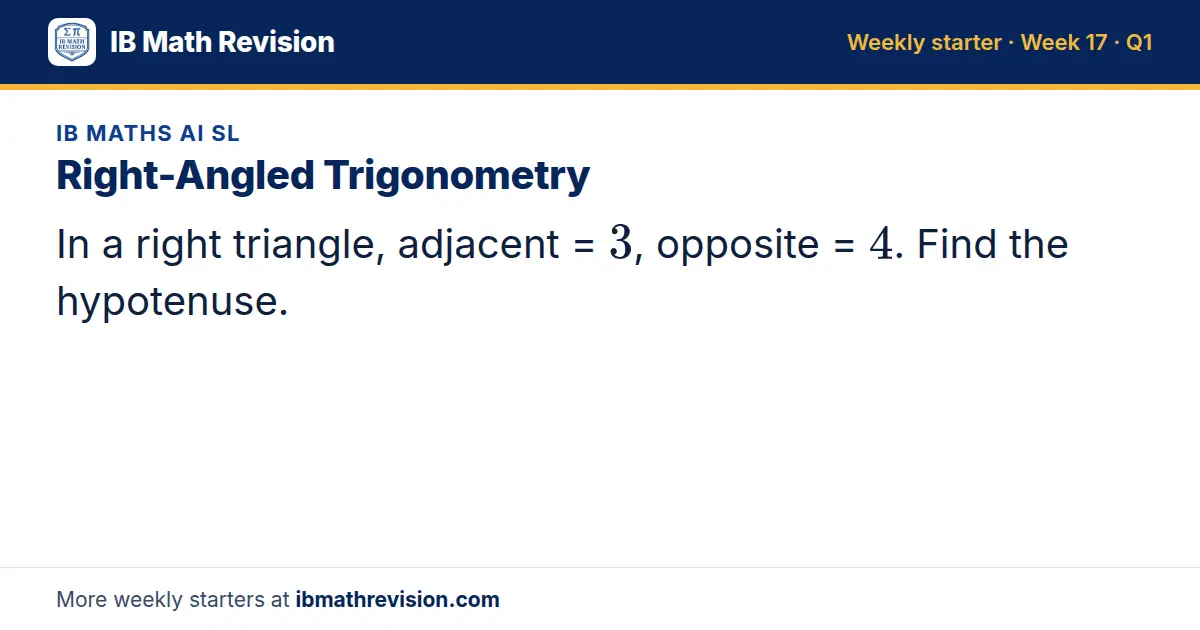
Question 1: Right-Angled Trigonometry
In a right triangle, adjacent = 3, opposite = 4. Find the hypotenuse.
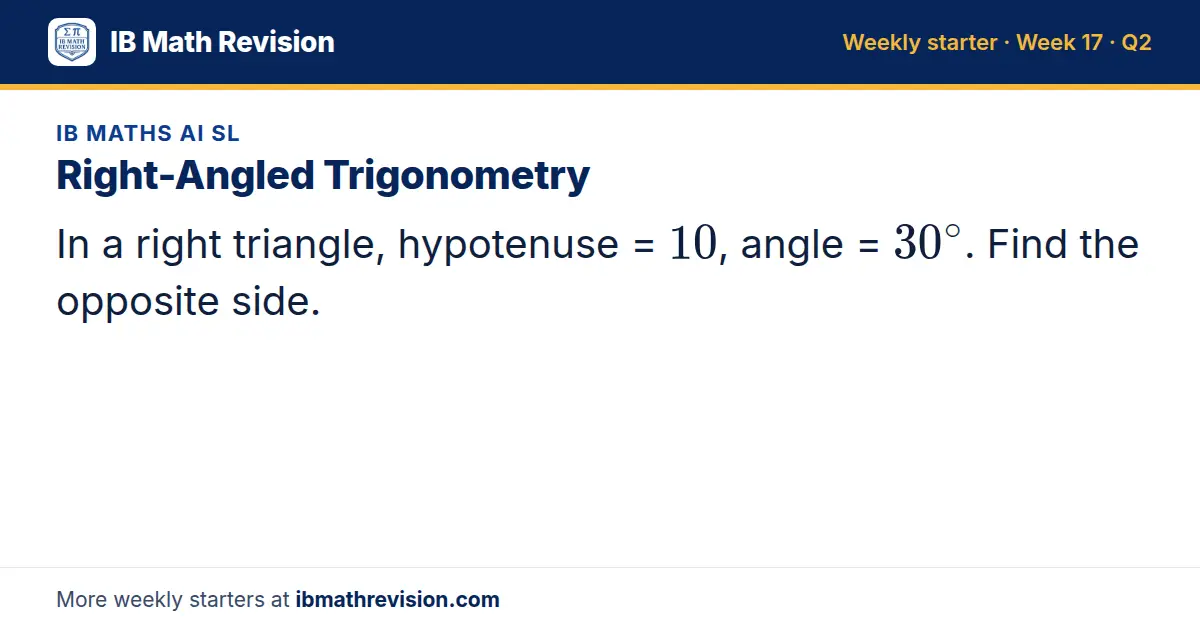
Question 2: Right-Angled Trigonometry
In a right triangle, hypotenuse = 10, angle = 30^∘. Find the opposite side.
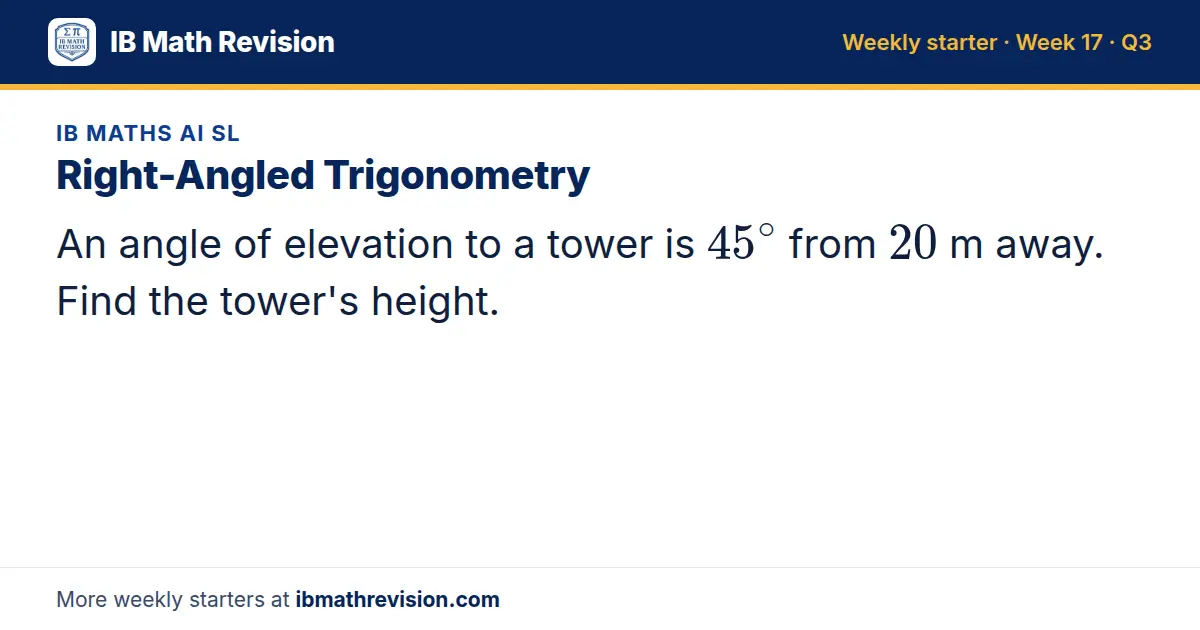
Question 3: Right-Angled Trigonometry
An angle of elevation to a tower is 45^∘ from 20 m away. Find the tower's height.
Week 18
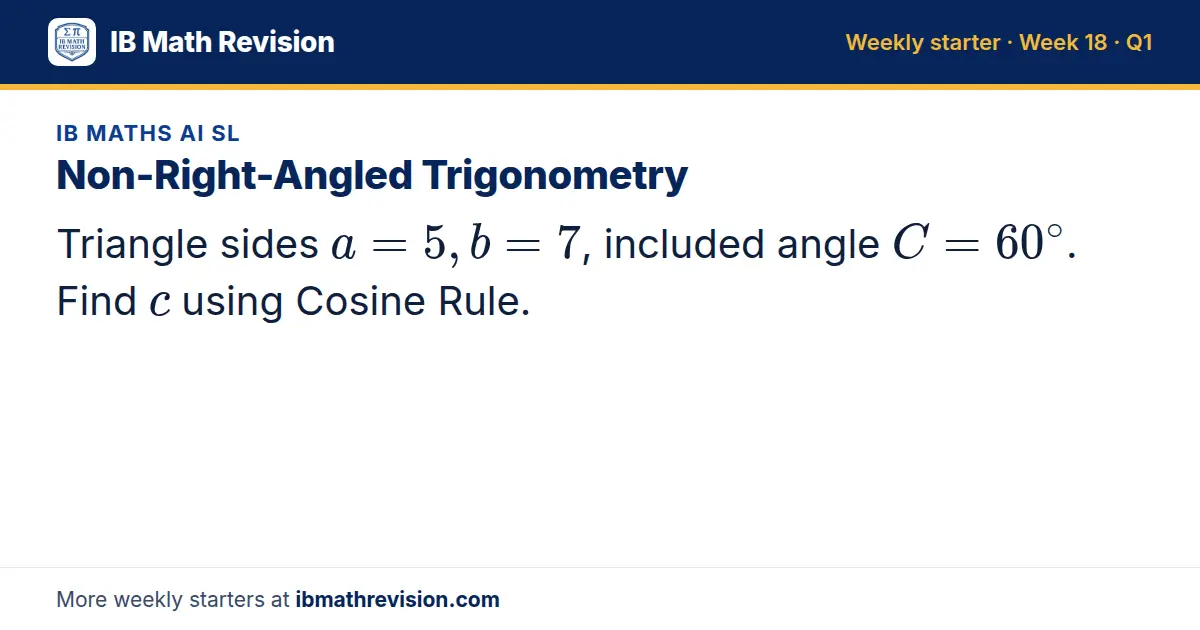
Question 1: Non-Right-Angled Trigonometry
Triangle sides a=5, b=7, included angle C=60^∘. Find c using Cosine Rule.
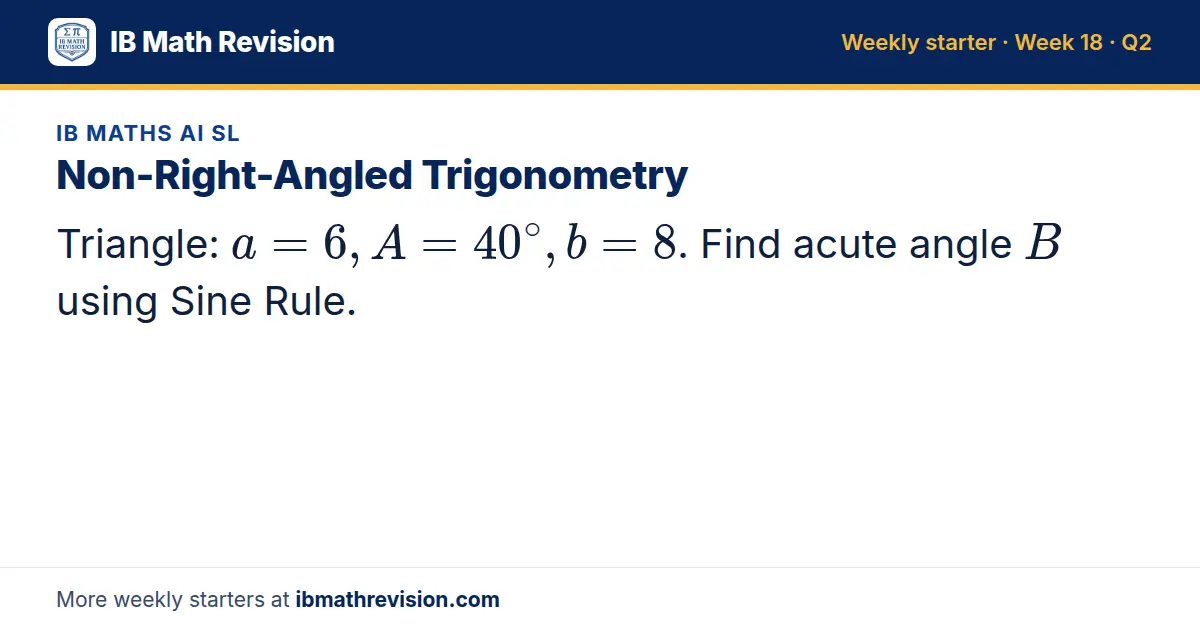
Question 2: Non-Right-Angled Trigonometry
Triangle: a=6, A=40^∘, b=8. Find acute angle B using Sine Rule.
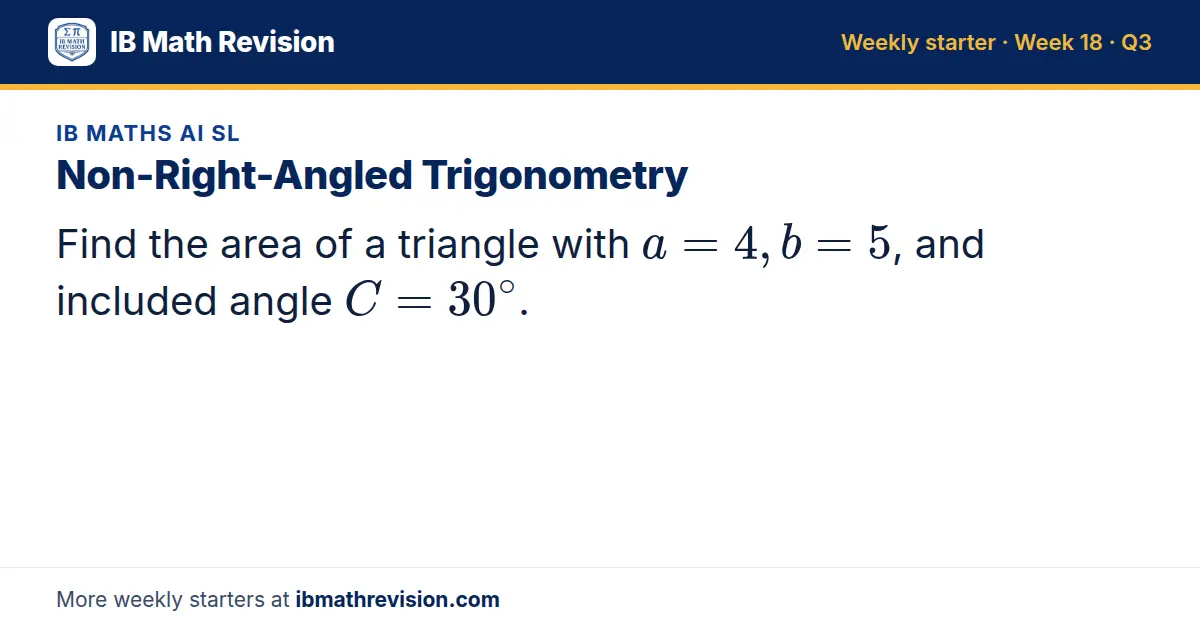
Question 3: Non-Right-Angled Trigonometry
Find the area of a triangle with a=4, b=5, and included angle C=30^∘.
Week 19
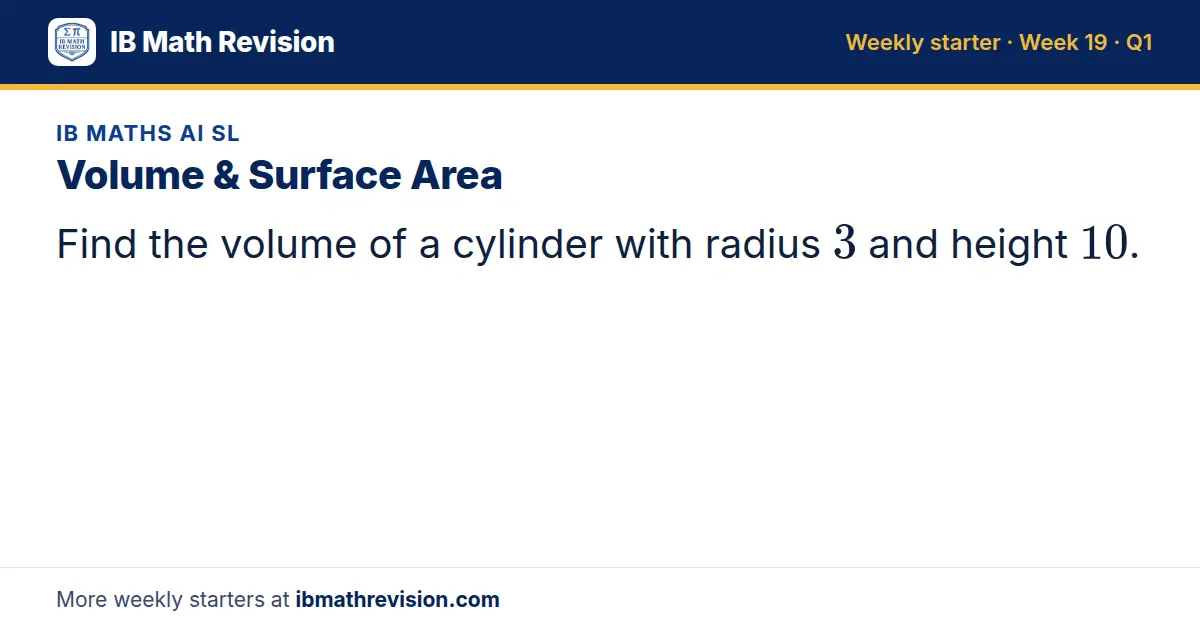
Question 1: Volume & Surface Area
Find the volume of a cylinder with radius 3 and height 10.
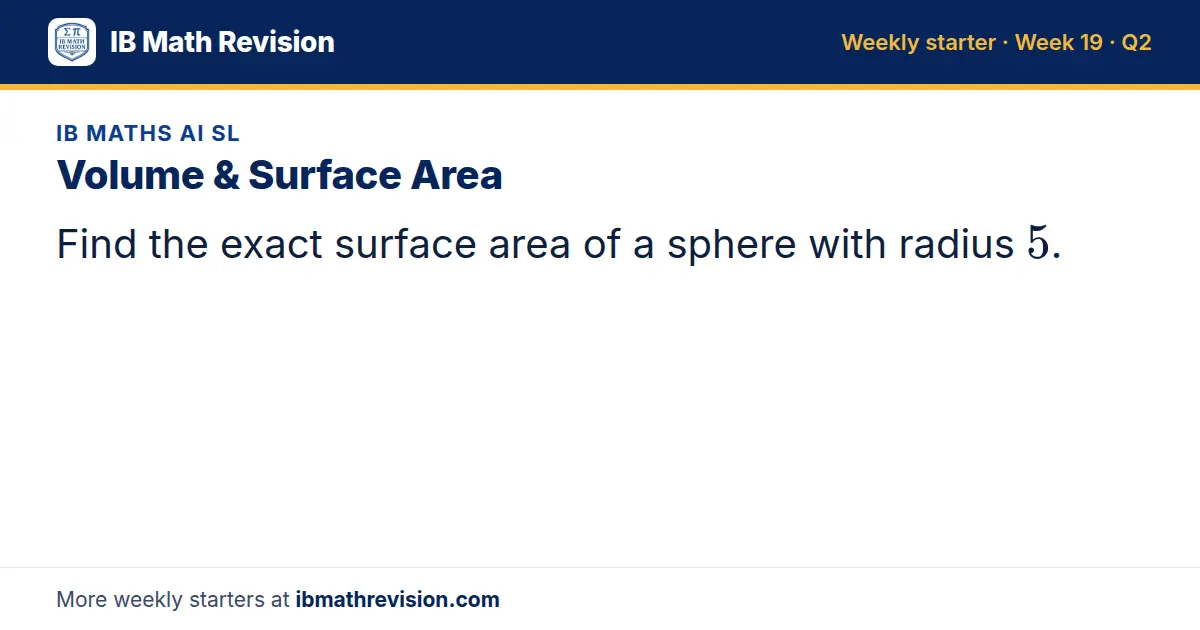
Question 2: Volume & Surface Area
Find the exact surface area of a sphere with radius 5.
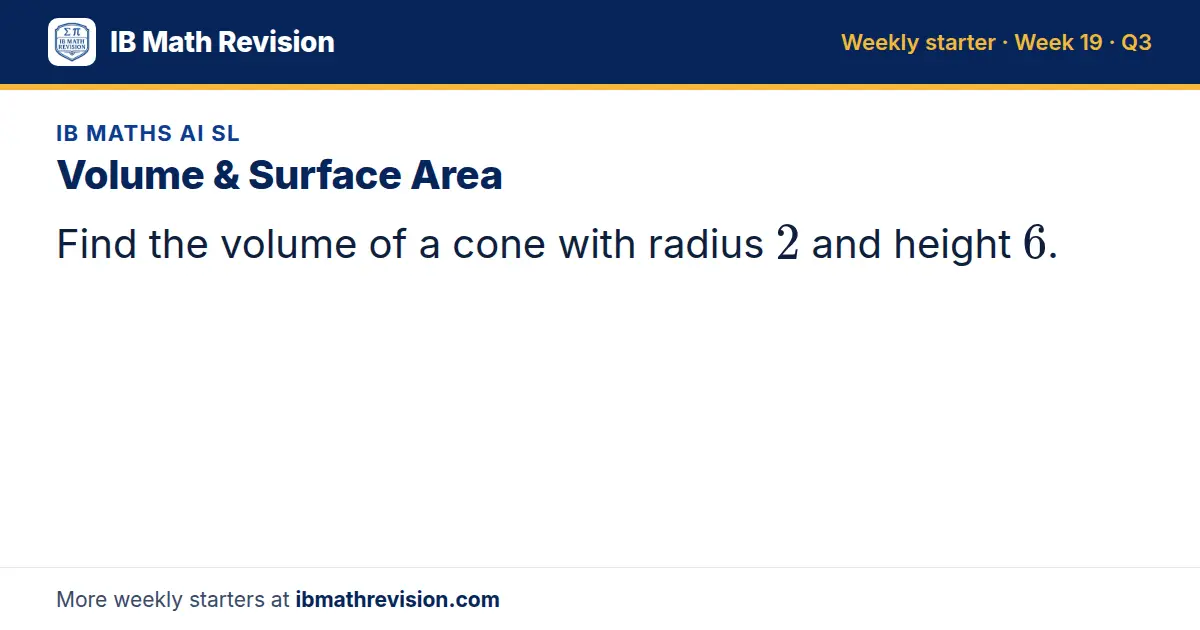
Question 3: Volume & Surface Area
Find the volume of a cone with radius 2 and height 6.
Week 20
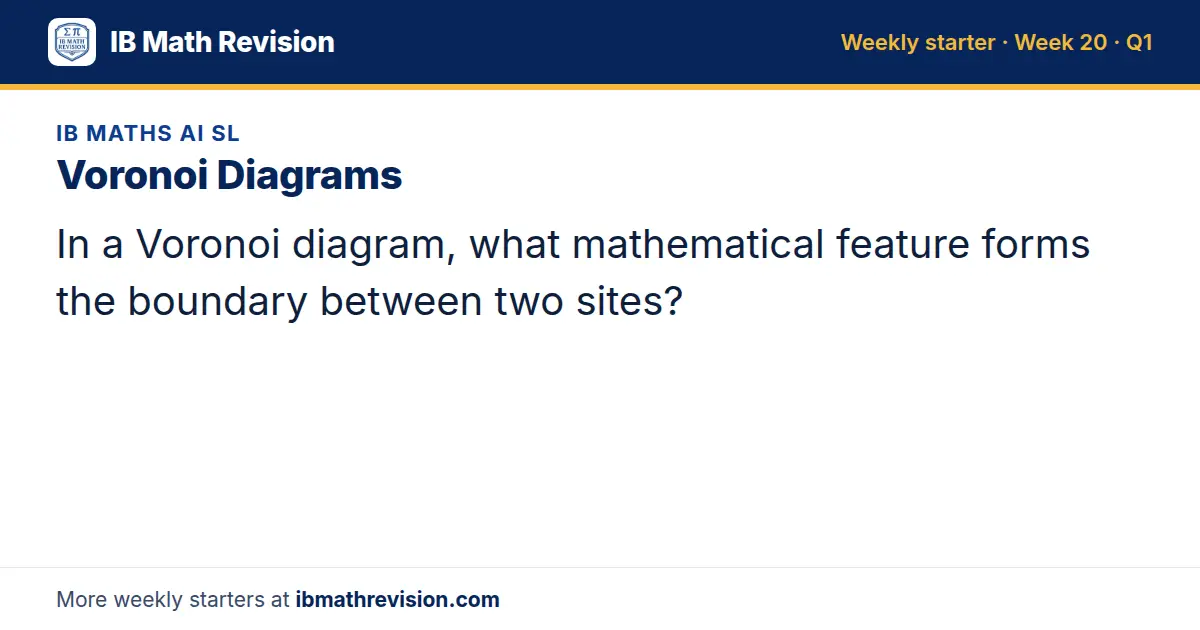
Question 1: Voronoi Diagrams
In a Voronoi diagram, what mathematical feature forms the boundary between two sites?
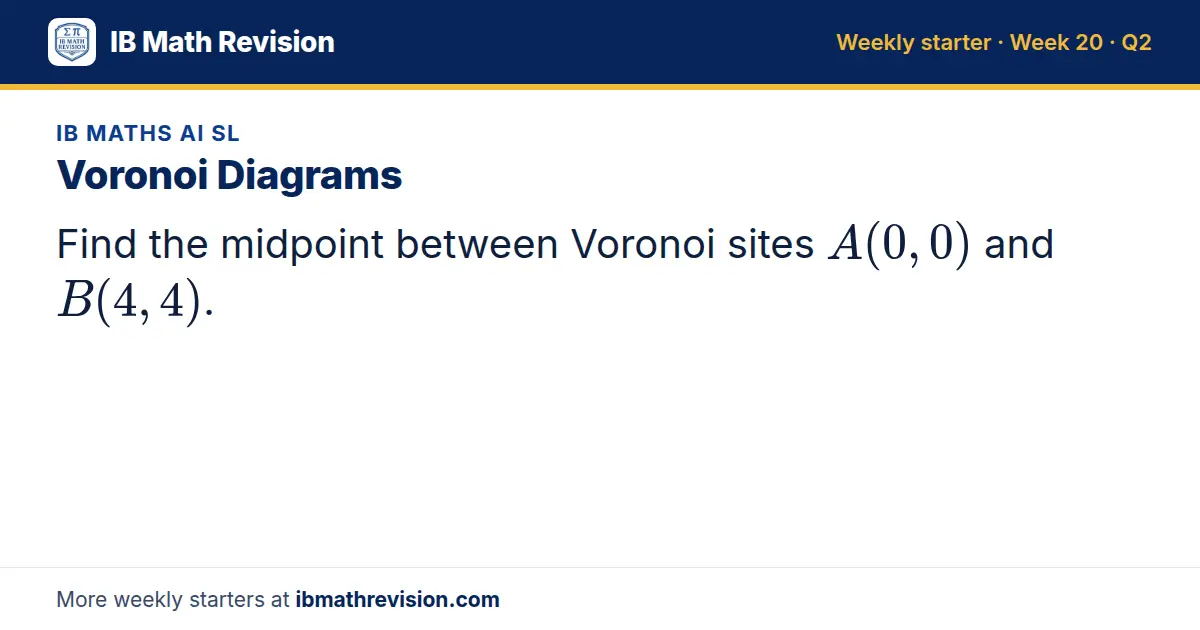
Question 2: Voronoi Diagrams
Find the midpoint between Voronoi sites A(0,0) and B(4,4).
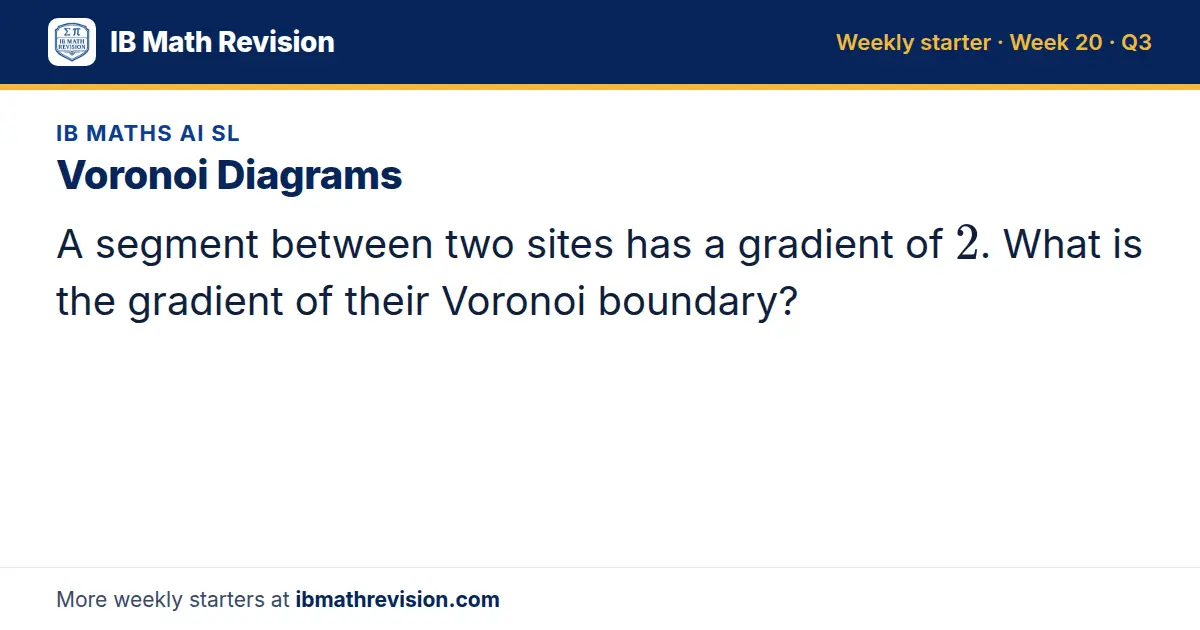
Question 3: Voronoi Diagrams
A segment between two sites has a gradient of 2. What is the gradient of their Voronoi boundary?
Week 21
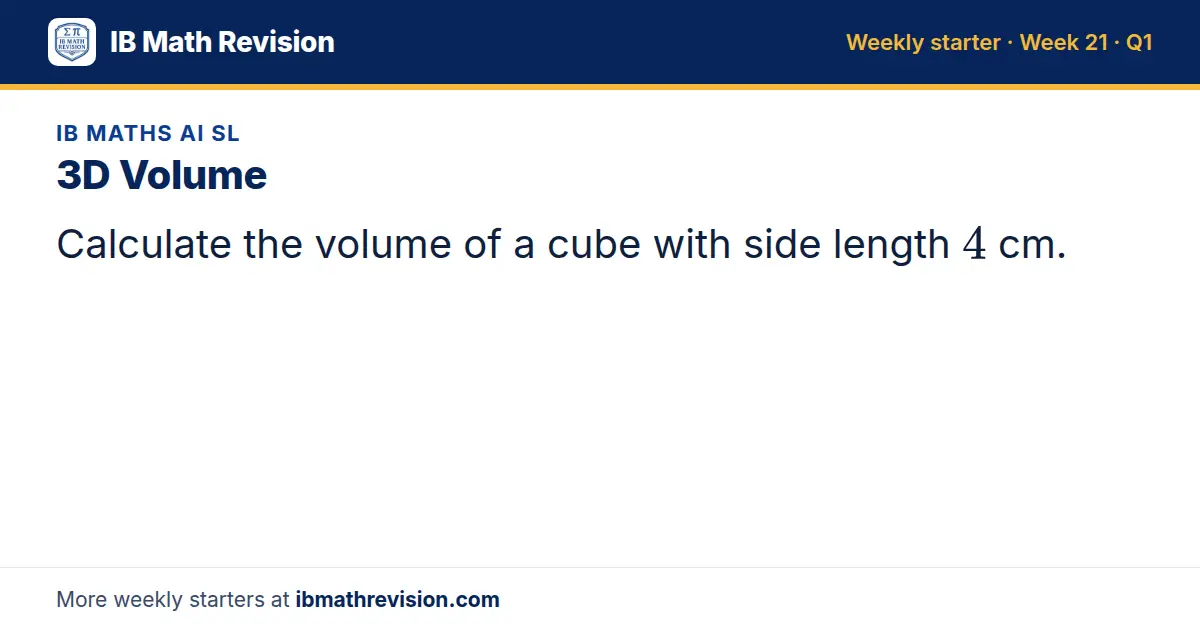
Question 1: 3D Volume
Calculate the volume of a cube with side length 4 cm.
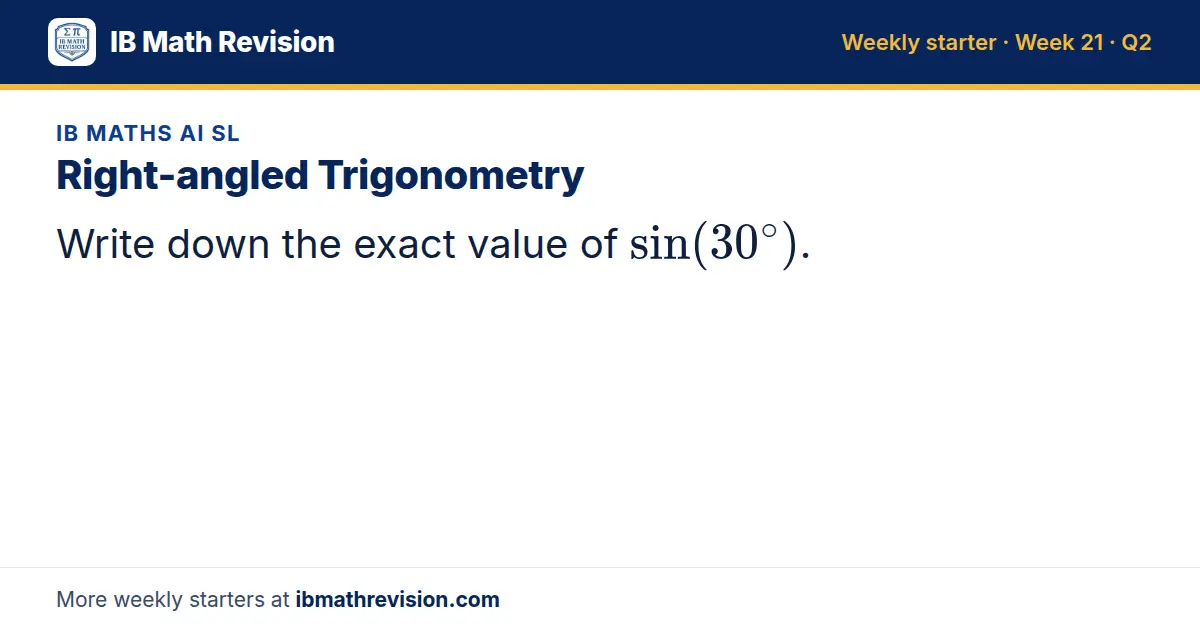
Question 2: Right-angled Trigonometry
Write down the exact value of sin(30^∘).
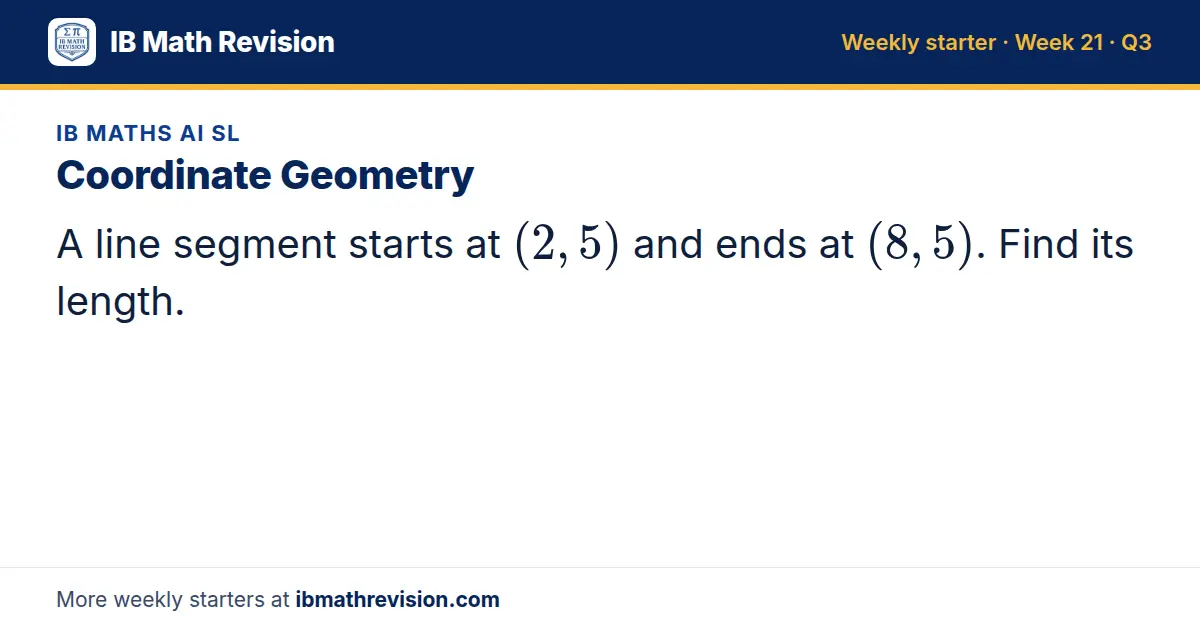
Question 3: Coordinate Geometry
A line segment starts at (2,5) and ends at (8,5). Find its length.
Week 22
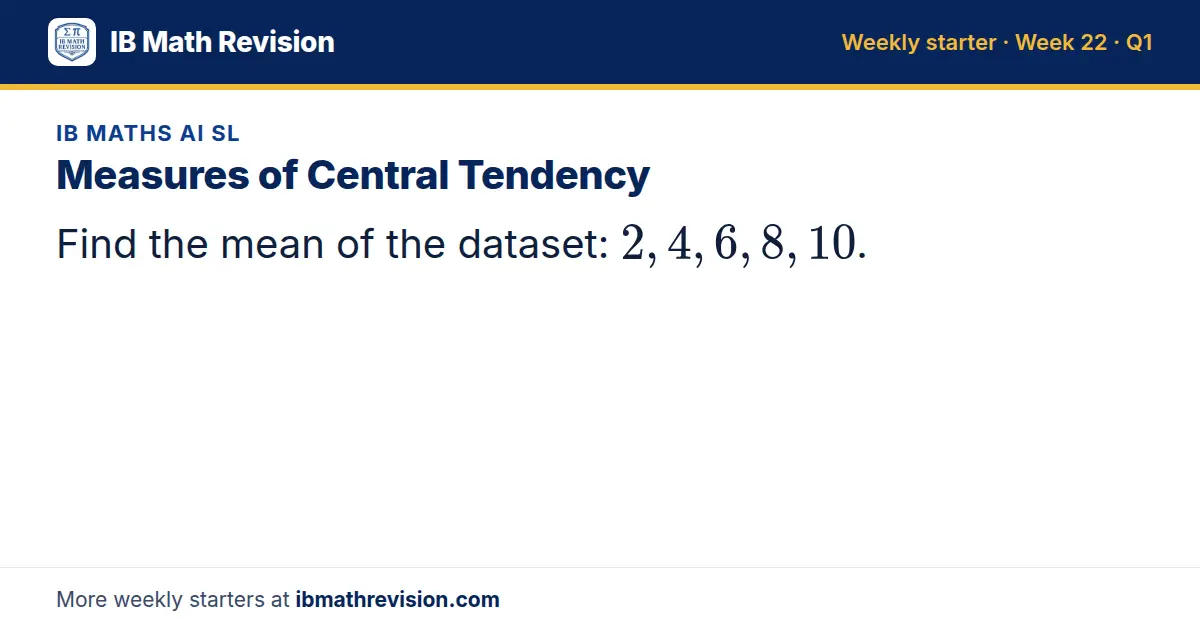
Question 1: Measures of Central Tendency
Find the mean of the dataset: 2, 4, 6, 8, 10.
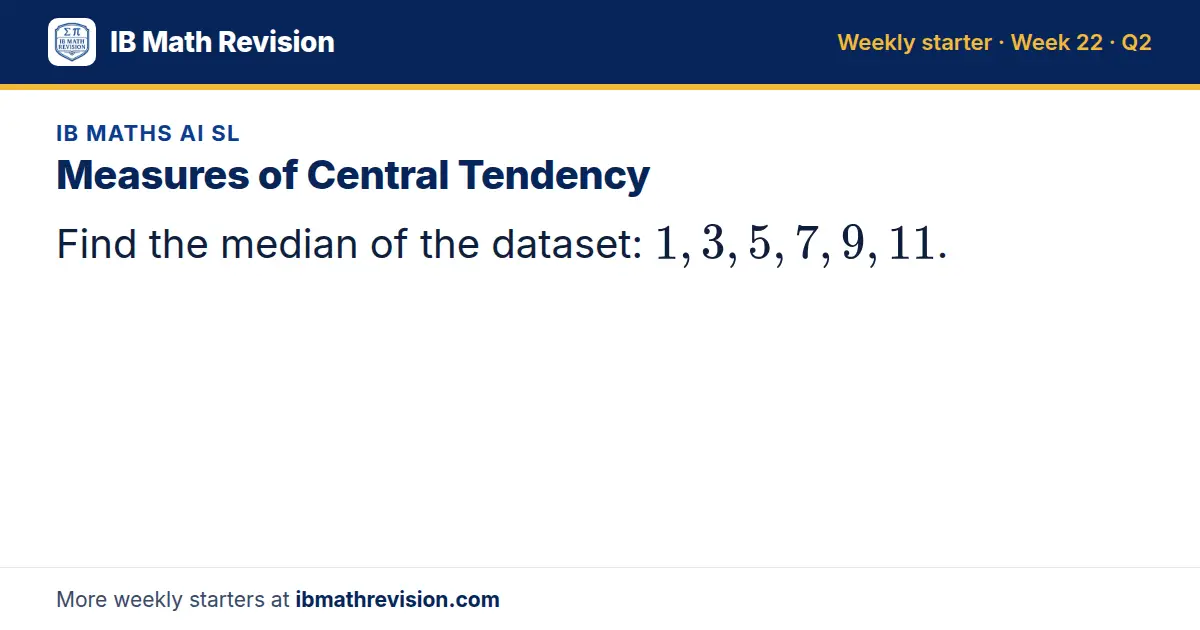
Question 2: Measures of Central Tendency
Find the median of the dataset: 1, 3, 5, 7, 9, 11.
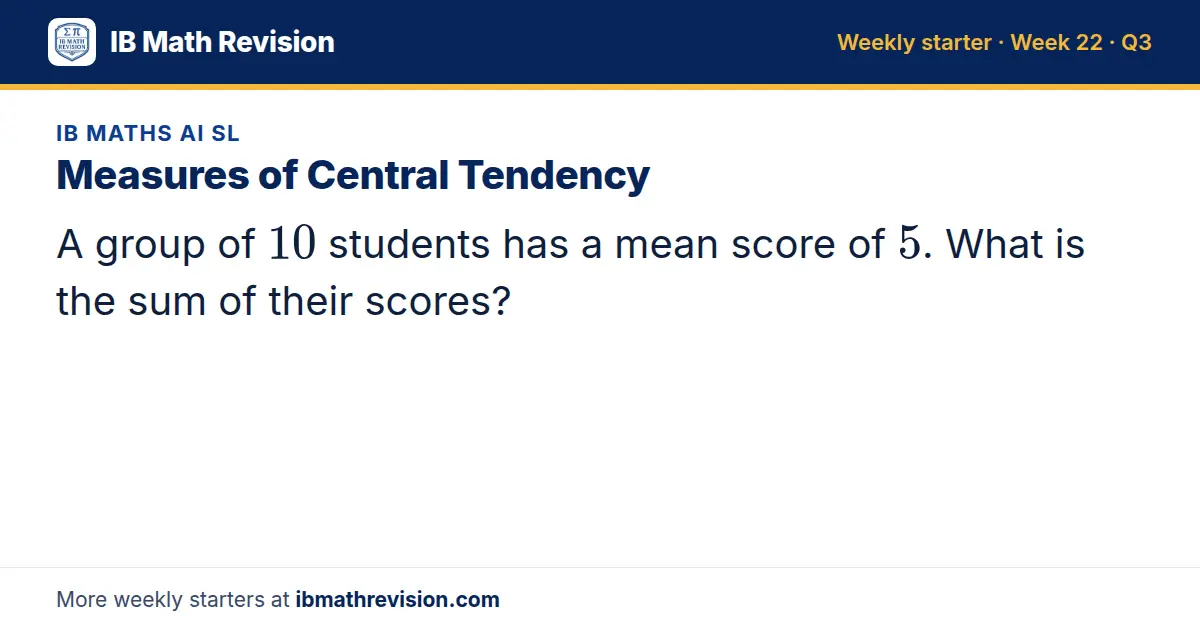
Question 3: Measures of Central Tendency
A group of 10 students has a mean score of 5. What is the sum of their scores?
Week 23
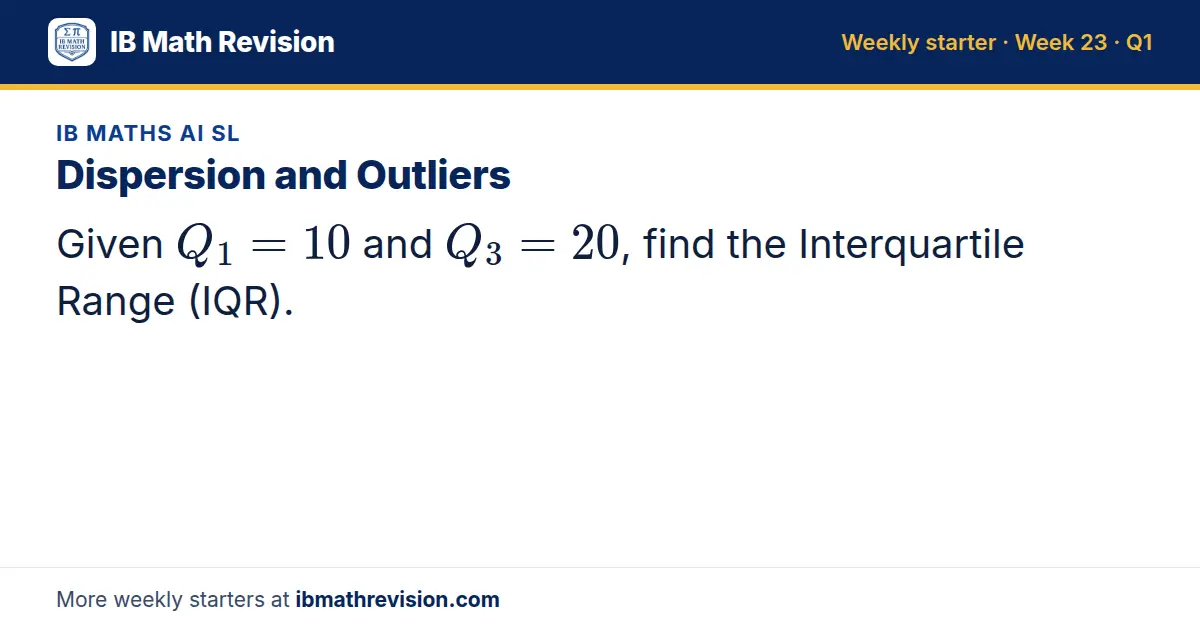
Question 1: Dispersion and Outliers
Given Q_1 = 10 and Q_3 = 20, find the Interquartile Range (IQR).
Question 2: Dispersion and Outliers
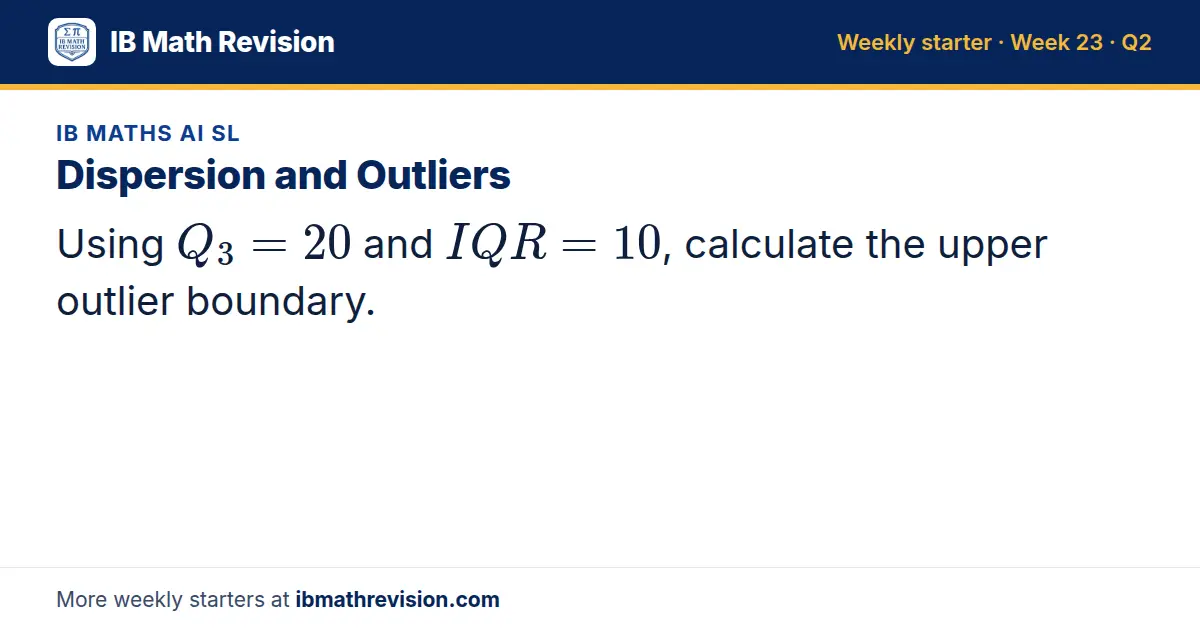
Using Q_3 = 20 and IQR = 10, calculate the upper outlier boundary.
Question 3: Dispersion and Outliers
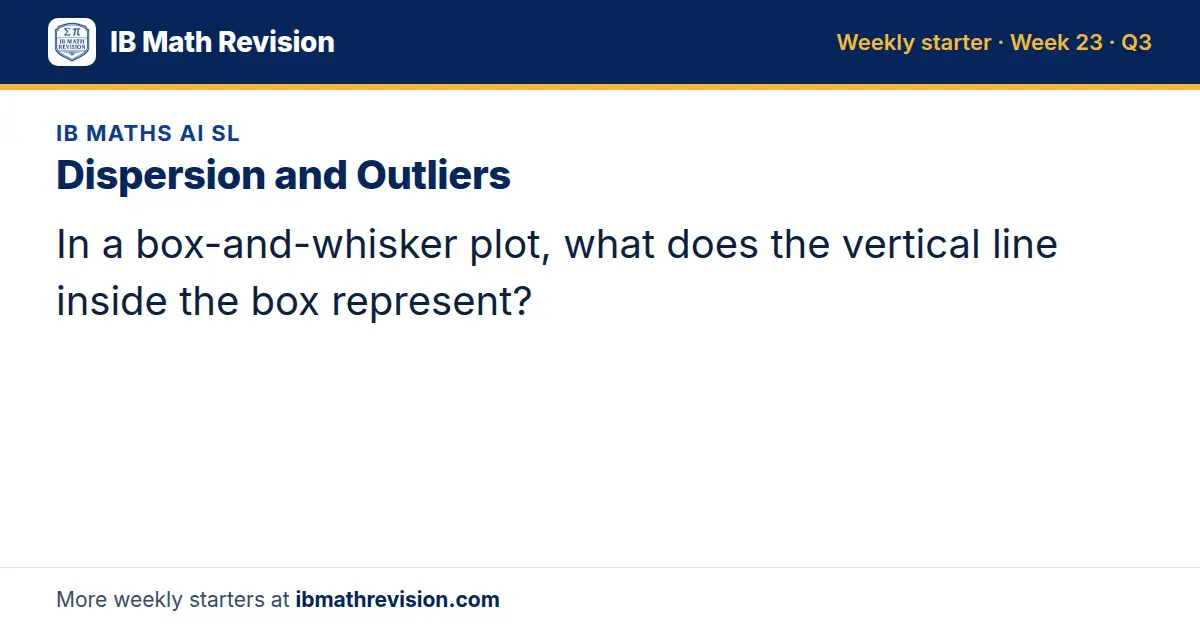
In a box-and-whisker plot, what does the vertical line inside the box represent?
Week 24
Question 1: Correlation
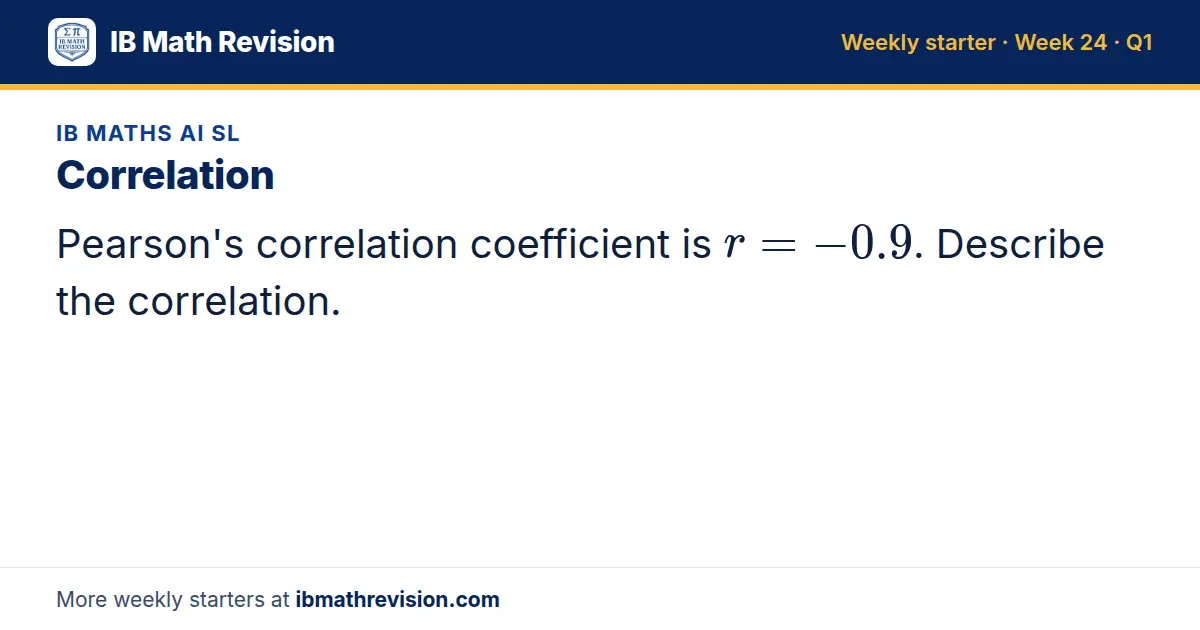
Pearson's correlation coefficient is r = -0.9. Describe the correlation.
Question 2: Correlation
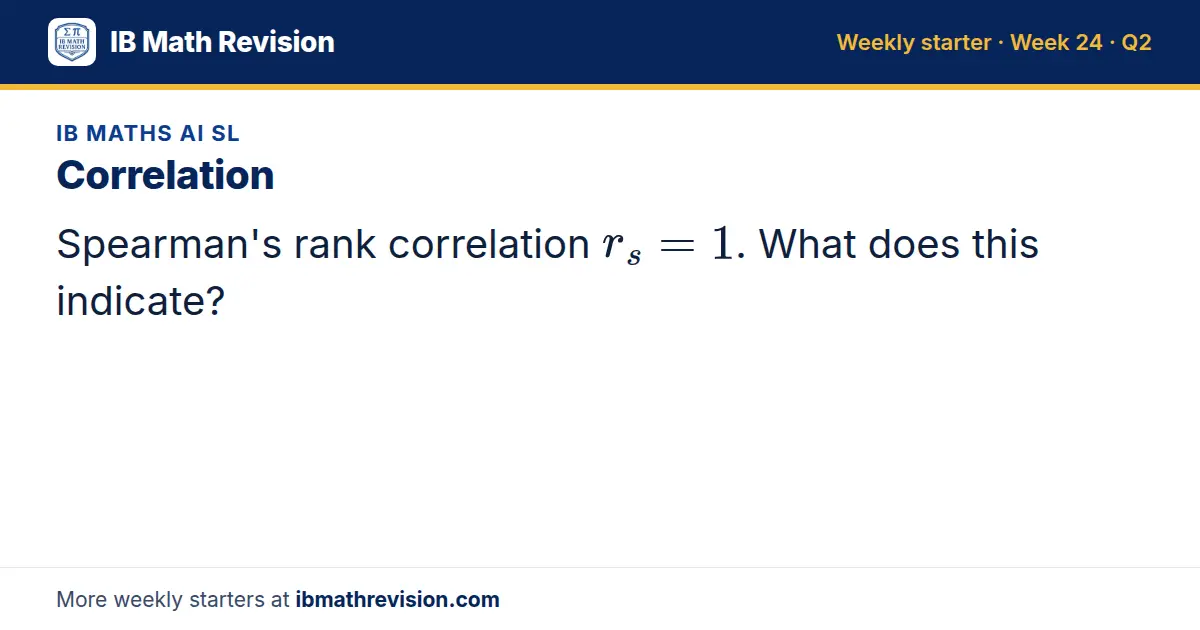
Spearman's rank correlation r_s = 1. What does this indicate?
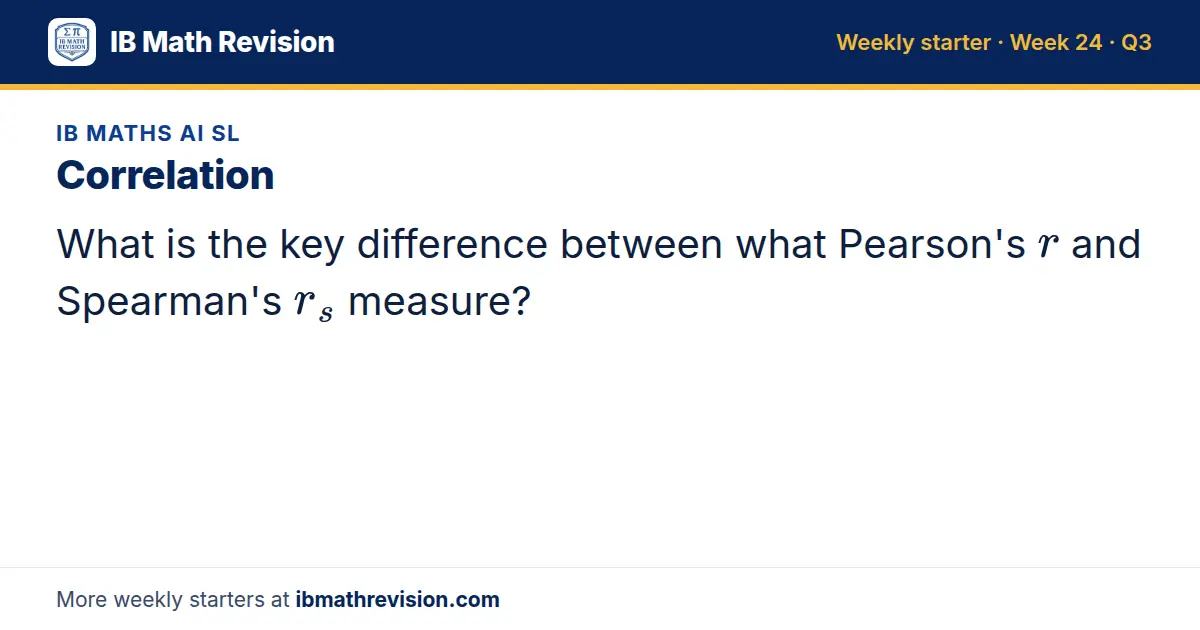
Question 3: Correlation
What is the key difference between what Pearson's r and Spearman's r_s measure?
Week 25
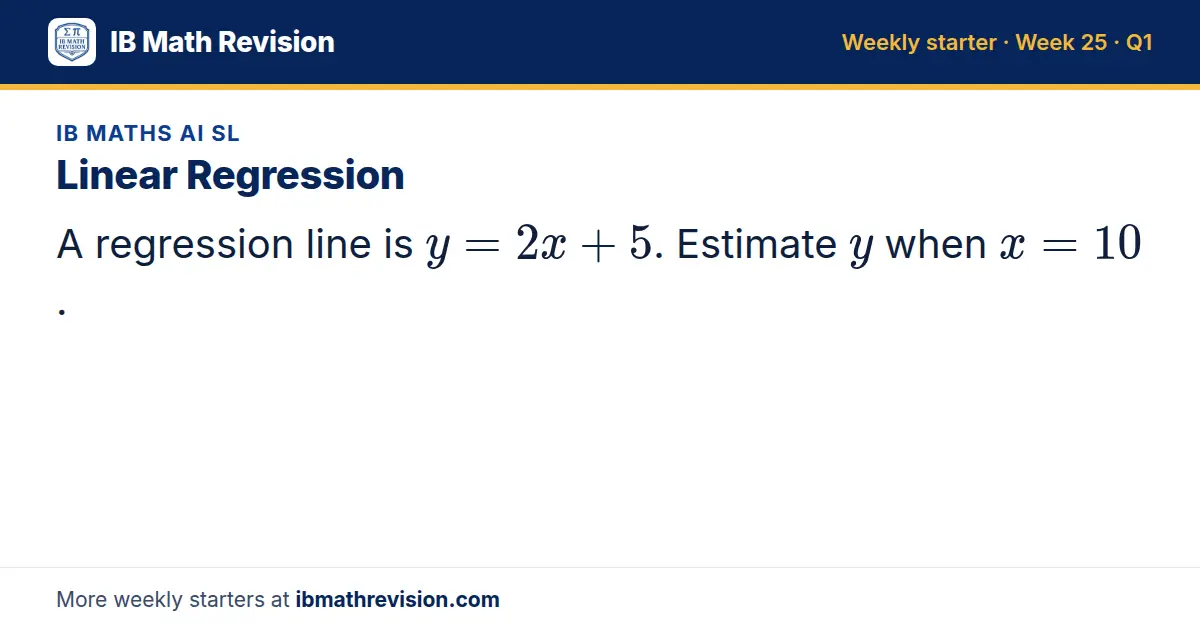
Question 1: Linear Regression
A regression line is y = 2x + 5. Estimate y when x = 10.
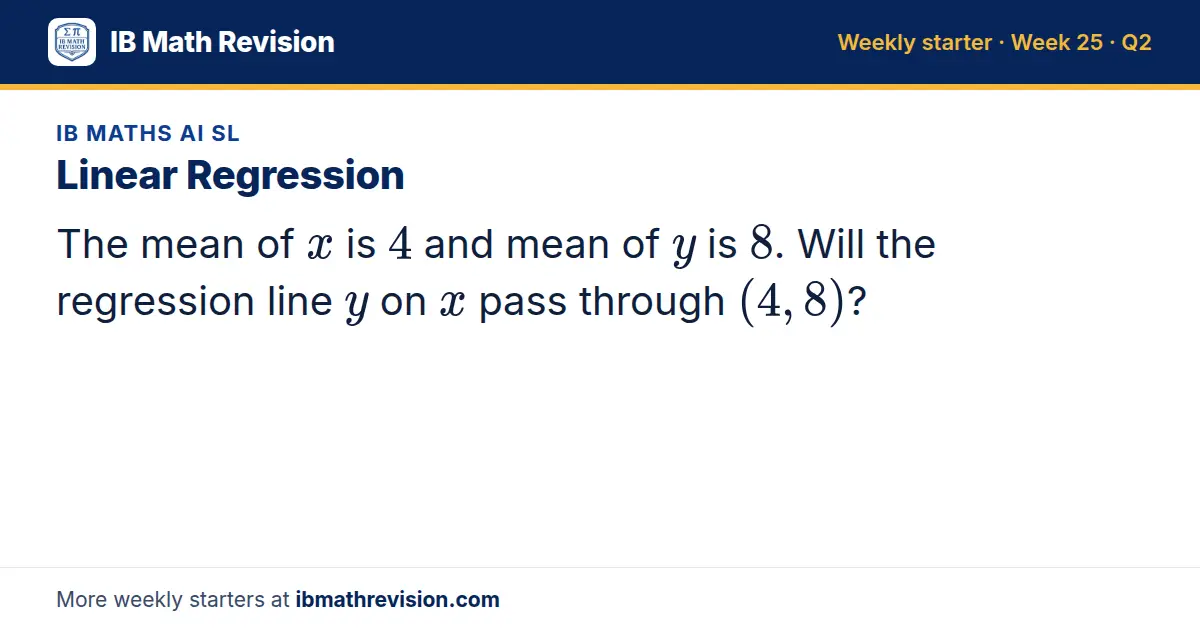
Question 2: Linear Regression
The mean of x is 4 and mean of y is 8. Will the regression line y on x pass through (4,8)?
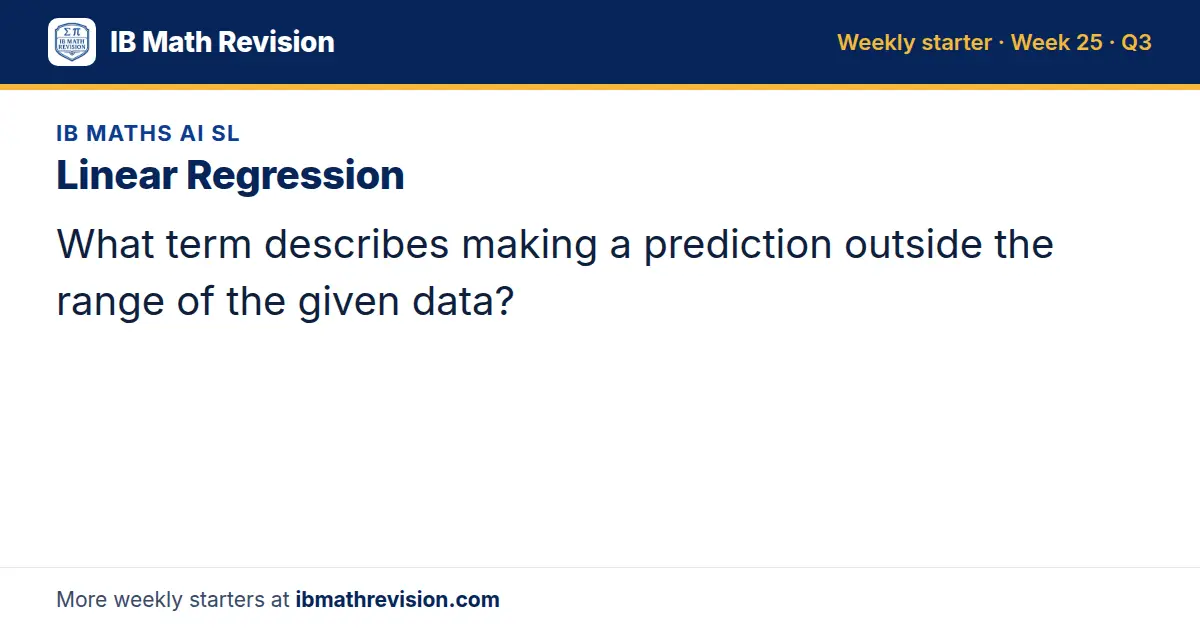
Question 3: Linear Regression
What term describes making a prediction outside the range of the given data?
Week 26
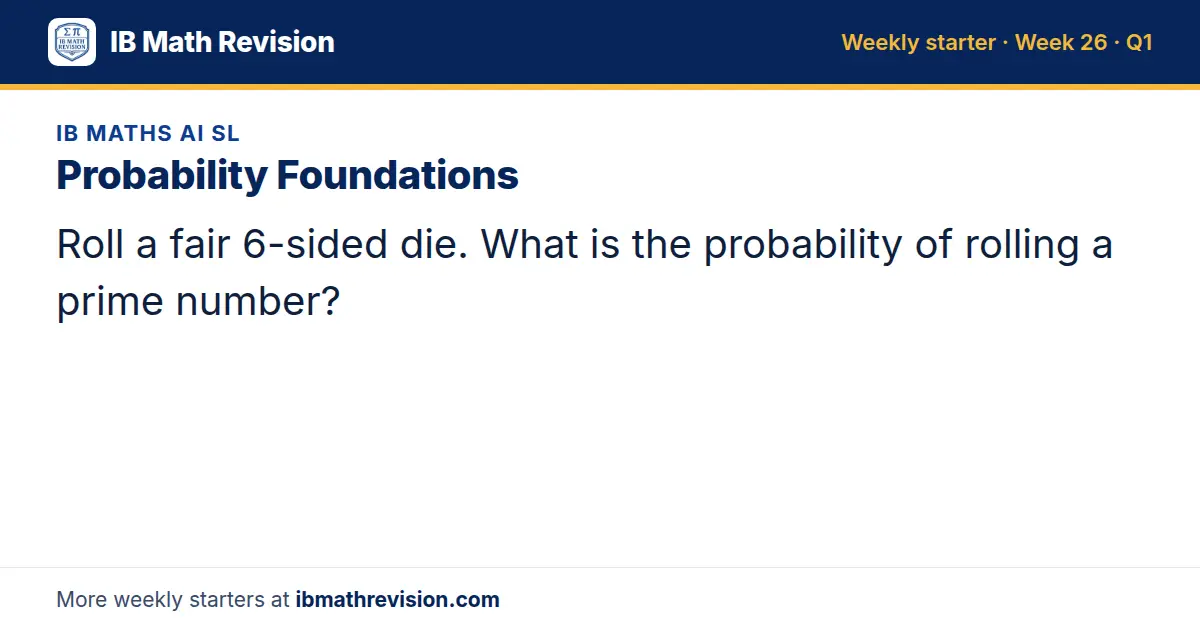
Question 1: Probability Foundations
Roll a fair 6-sided die. What is the probability of rolling a prime number?
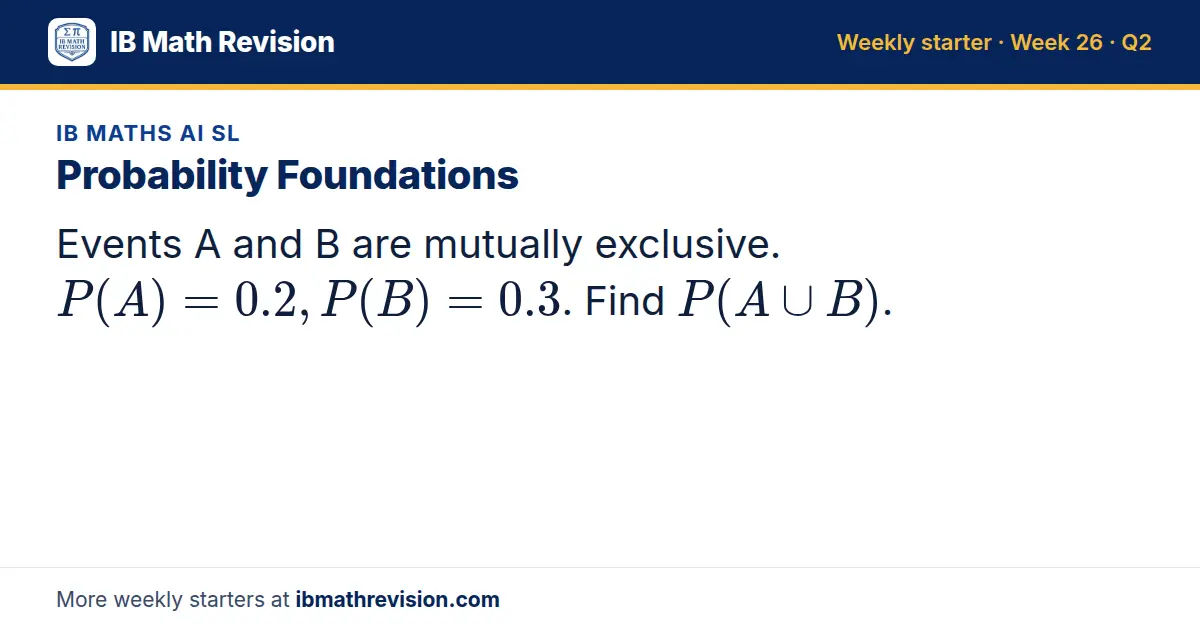
Question 2: Probability Foundations
Events A and B are mutually exclusive. P(A)=0.2, P(B)=0.3. Find P(A ∪ B).
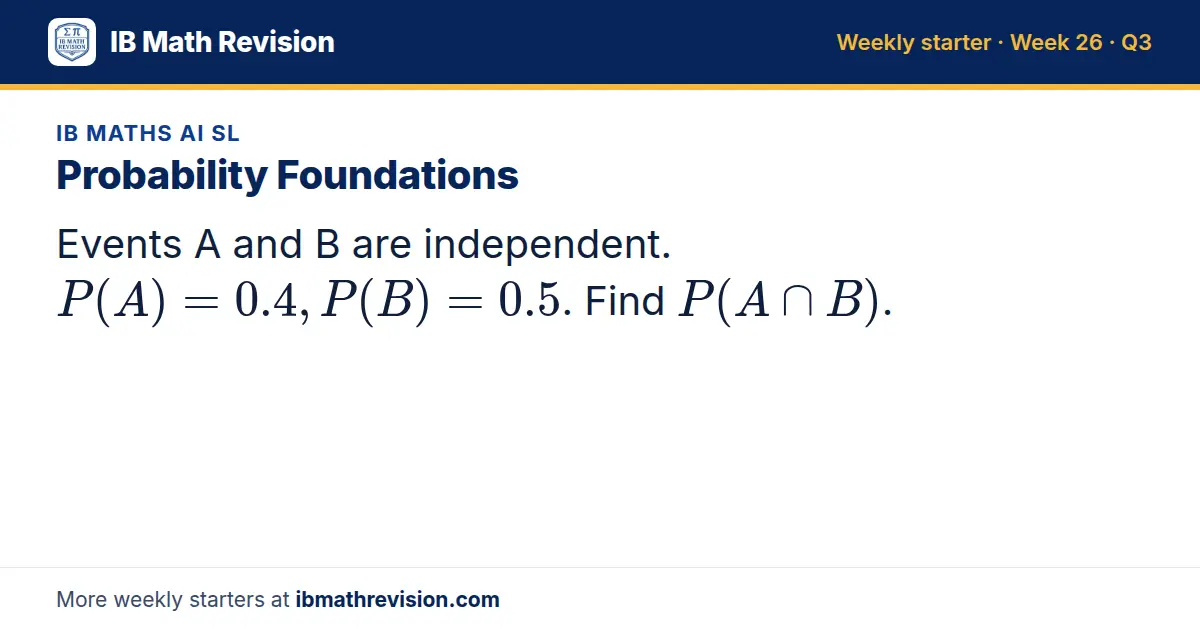
Question 3: Probability Foundations
Events A and B are independent. P(A)=0.4, P(B)=0.5. Find P(A ∩ B).
More starter questions
Other weeks: Weeks 1–13 · Weeks 14–26 · Weeks 27–40. Answers and mark schemes are in the starter tasks for teachers.